SaaS platform, B2C Mobile app, Branding
2025 - 2026
United States
MyPeptide — A dual-sided AI health education platform
100K
Funding raised in a week of POC release
5
Partners acquired in POC stage
3
Months sprint
Problem
The peptide health market lacks reliable, structured education and safety guidance.
Many users rely on fragmented online forums and anecdotal sources to understand peptide usage. Information is scattered, inconsistent, and often unverified. At the same time, legitimate peptide brands lack a trusted platform to educate buyers responsibly and build long-term credibility.
This results in:
Misinformation and unsafe usage patterns
Low trust in available information sources
Difficulty distinguishing credible brands from unreliable sellers
Limited educational infrastructure for informed decision-making
The challenge was to design a product that could deliver trustworthy, guided education while supporting a future partner and vendor ecosystem.
Scope of my work
End-to-end product design, UX strategy, brand & launch assets.
Product team size
Product manager : 2, Product owner : 1, Software dev : 2, Core design : 1 ( just me ), Marketing and sales : 4
Constraints
The constraints I found:
Health-adjacent topic requiring trust and clarity in UX language.
Tight 3-month MVP sprint timeline.
AI interaction needed guardrails and structured flows.
The AI itself needs to work perfectly and produce accurate outputs.
The necessity to cater towards users as well as business operations.
Dual-audience platform (users + vendors).
Future B2B model planned but not yet active at the MVP stage.
Product context
As a solution, MyPeptide needed to be designed as a dual-sided platform:
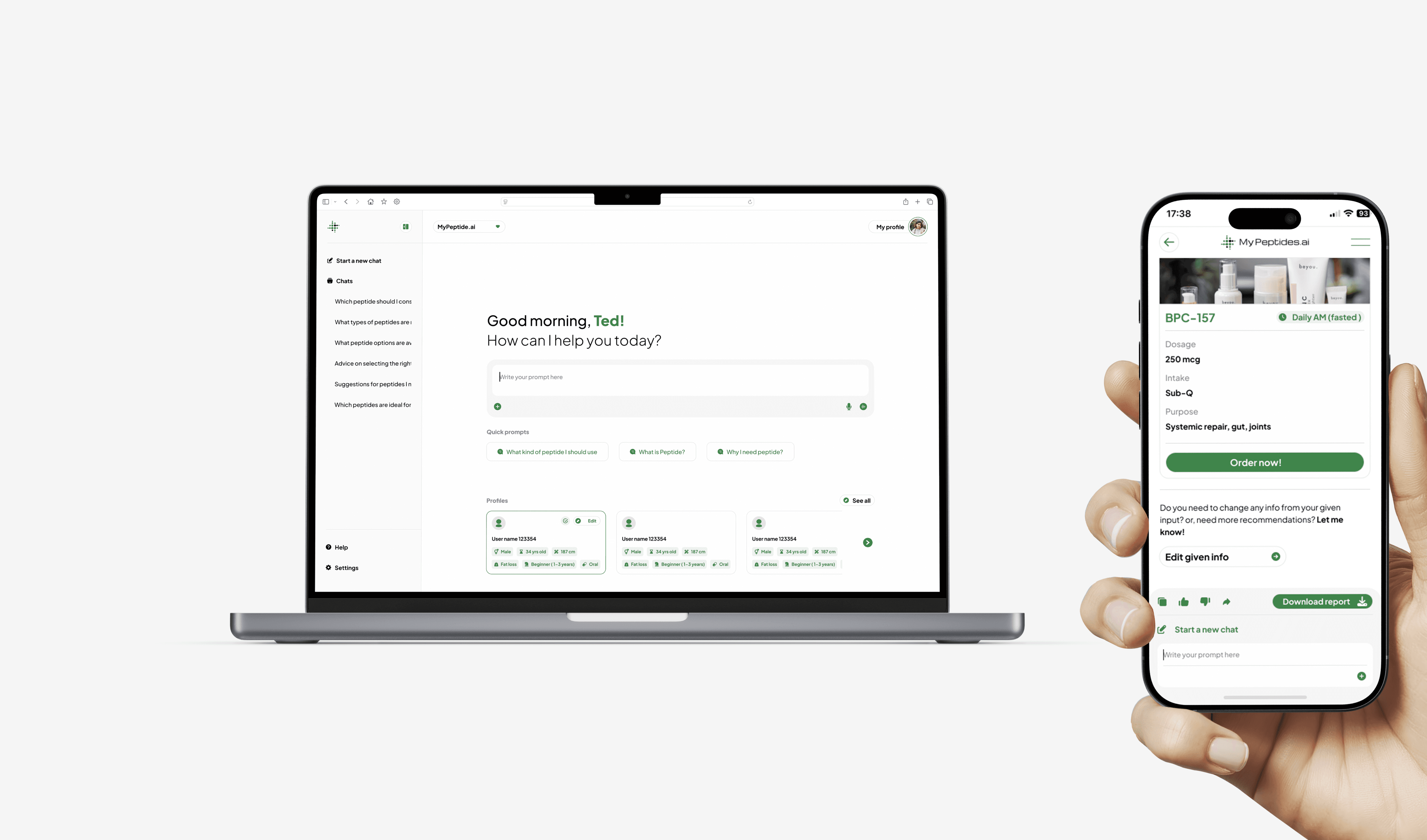
B2C side: AI-powered educational assistant for peptide knowledge and safety guidance. A responsive web app that is usable on any screen.
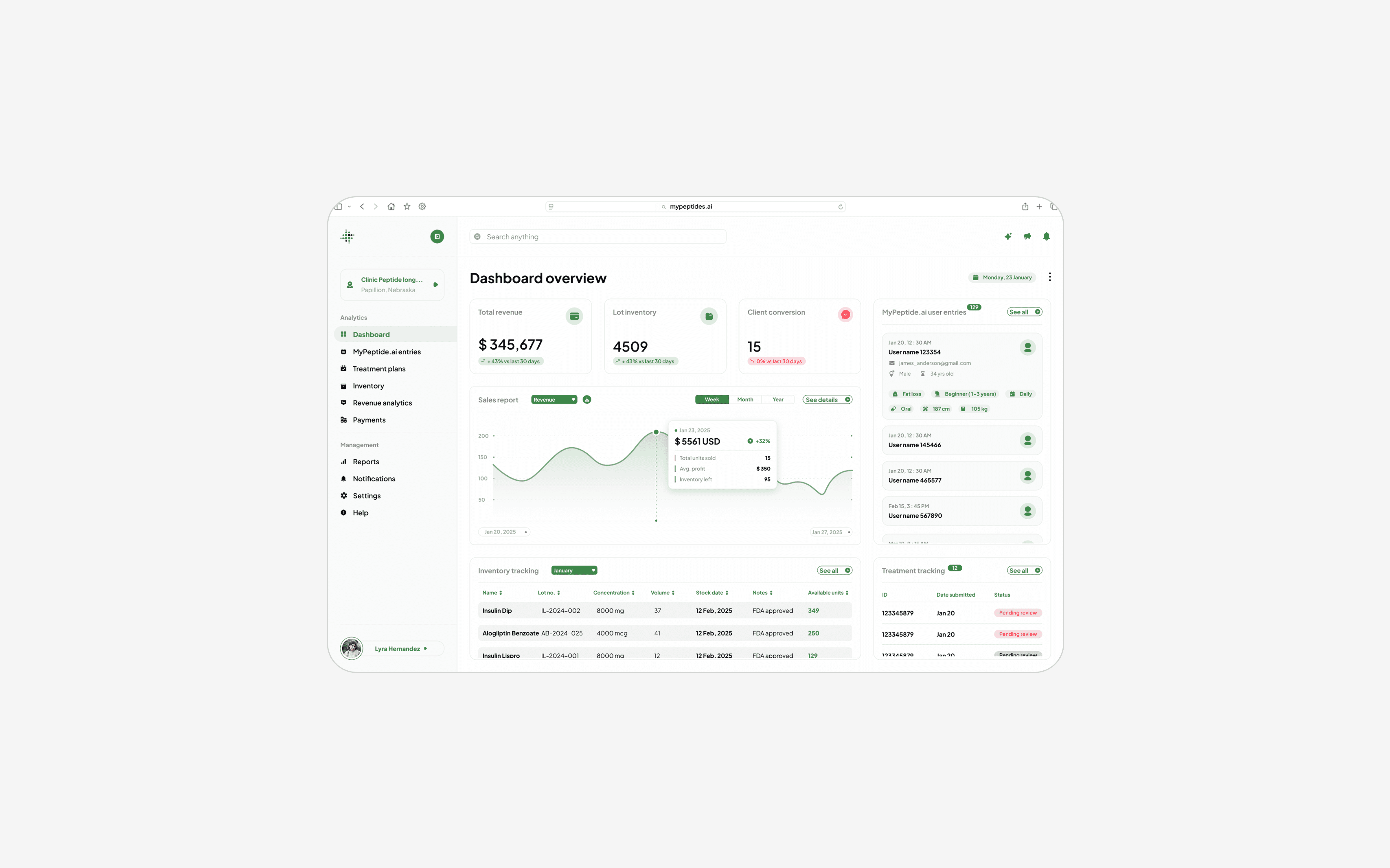
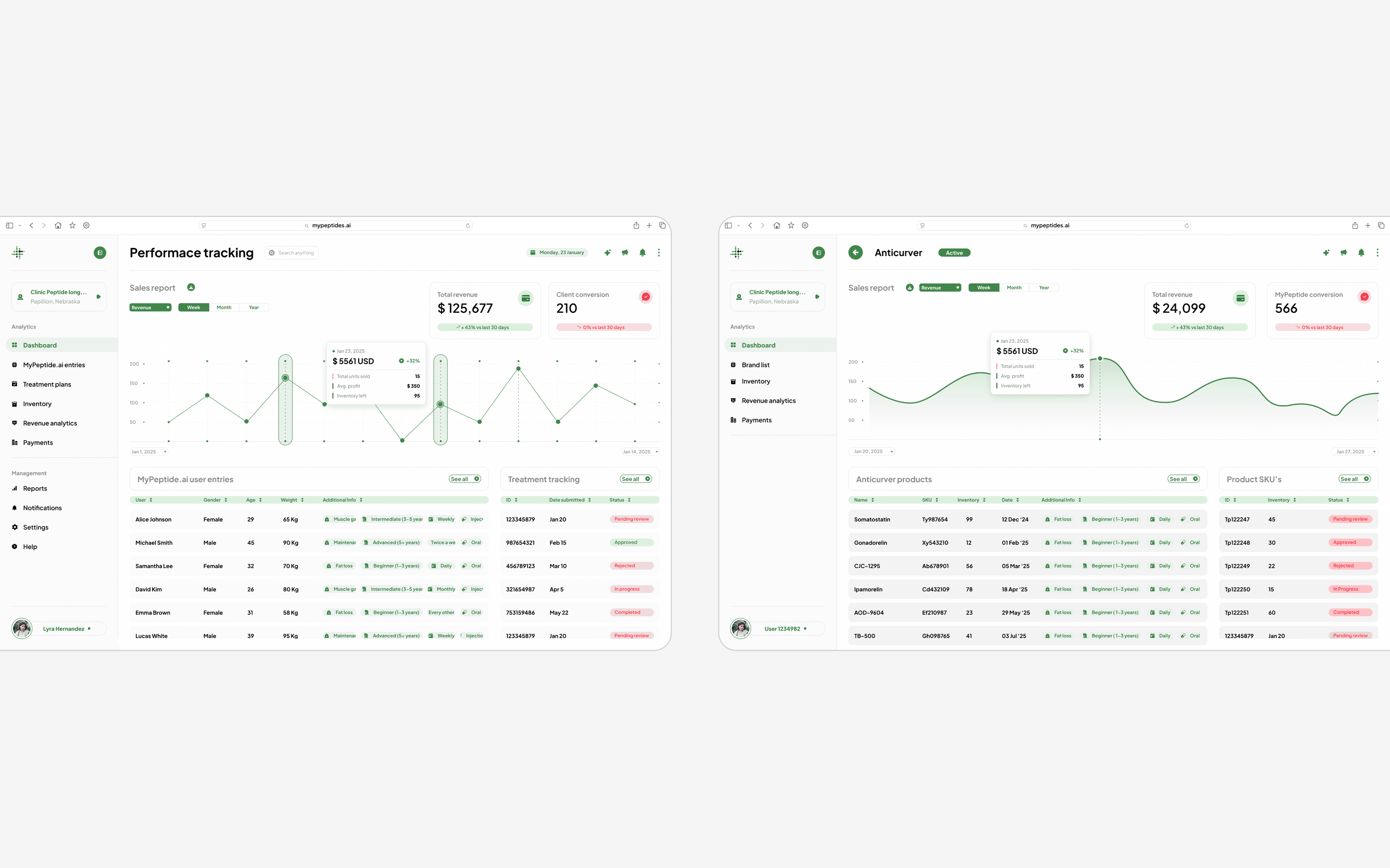
B2B side: Vendor and partner analytics platform for brand participation and affiliate models.
The product needed to strike a balance between:
Educational clarity
Responsible AI interaction
User trust
Future commercial scalability
Regulatory sensitivity in a health-adjacent domain
WCAG standard
Product goal was:
Provide structured, safer peptide education through guided AI interaction.
Reduce misinformation and unstructured forum dependency.
Build user trust through clear onboarding and transparent flows.
Create a scalable foundation for vendor and partner participation.
Deliver a launch-ready MVP within a compressed sprint timeline.
Project overview
Strategy
The UX strategy I followed was focused on trust, clarity, and guided interaction rather than open-ended exploration.
Key strategic directions:
Structured onboarding to understand user goals and context.
Guided AI conversation flows instead of freeform chat only.
Collect information from users to ensure of accurate data output.
Safety-aware information framing.
Step-by-step educational pathways.
Clear expectation setting around AI guidance limits.
Separation of education vs vendor ecosystem areas.
Brand guidelines to unify all product ideas.
My best interest was to reduce cognitive overload and prevent misinterpretation of health-related information.
Process
The full process I followed was to ensure the best use of UX in mind :
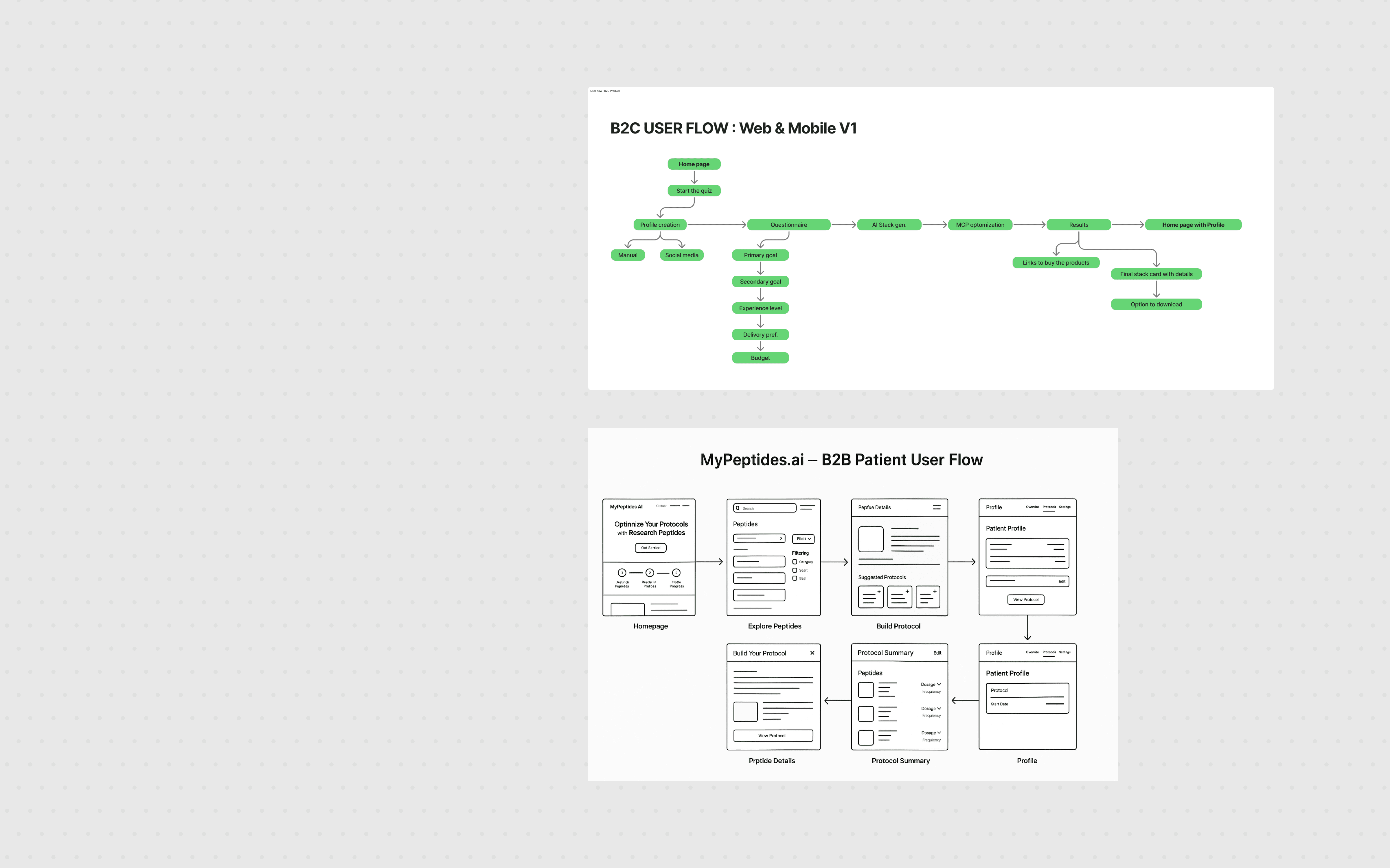
Product scope and dual-side platform mapping.
Deep research regarding the market using AI agents like ChatGPT, Gemini and Perplexity.
Initial wireframing solution using AI agents.
User journey definition for B2C education flows.
AI conversation structure and guardrail UX design.
Onboarding and goal-based guidance flow design.
Gather feedback from a focus group using the wireframes.
Moodboard setup using Figma Make and world-renowned UX design systems.
B2B vendor dashboard concept and module planning.
Final wireframes and interaction models using Figma Make.
High-fidelity UI and interface system custom design using Figma.
Design system creation.
Design changes after user feedback.
Design system dev handoff using Claude.
Brand identity and product visual language.
Marketing website and pitch deck design for launch.
Tech stack I used
Figma
Figma make
Claude
Gemini
Perplexity
Key design decisions
Featured decisions I took in designing the product:
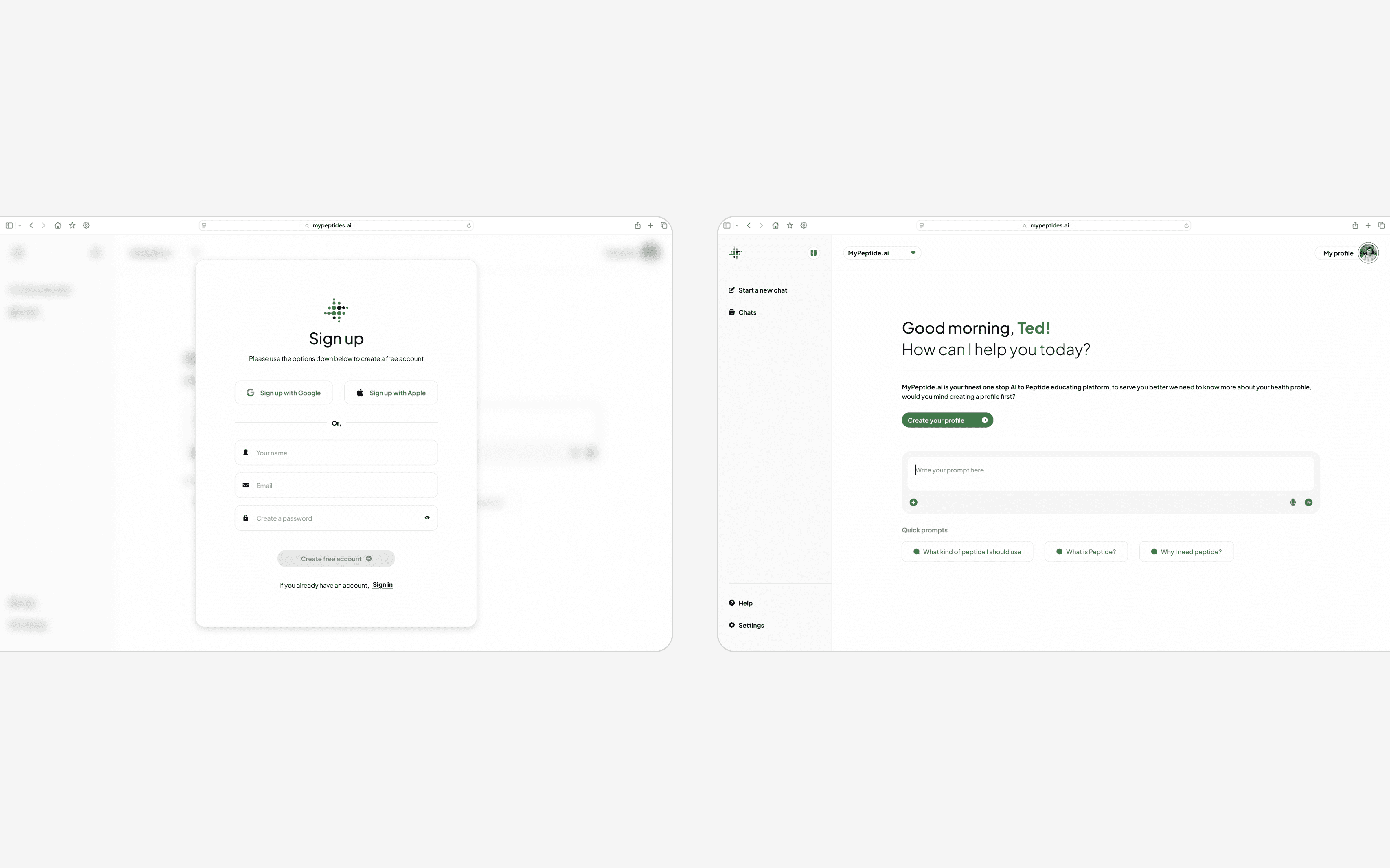
Structured AI onboarding before open interaction
Reasoning
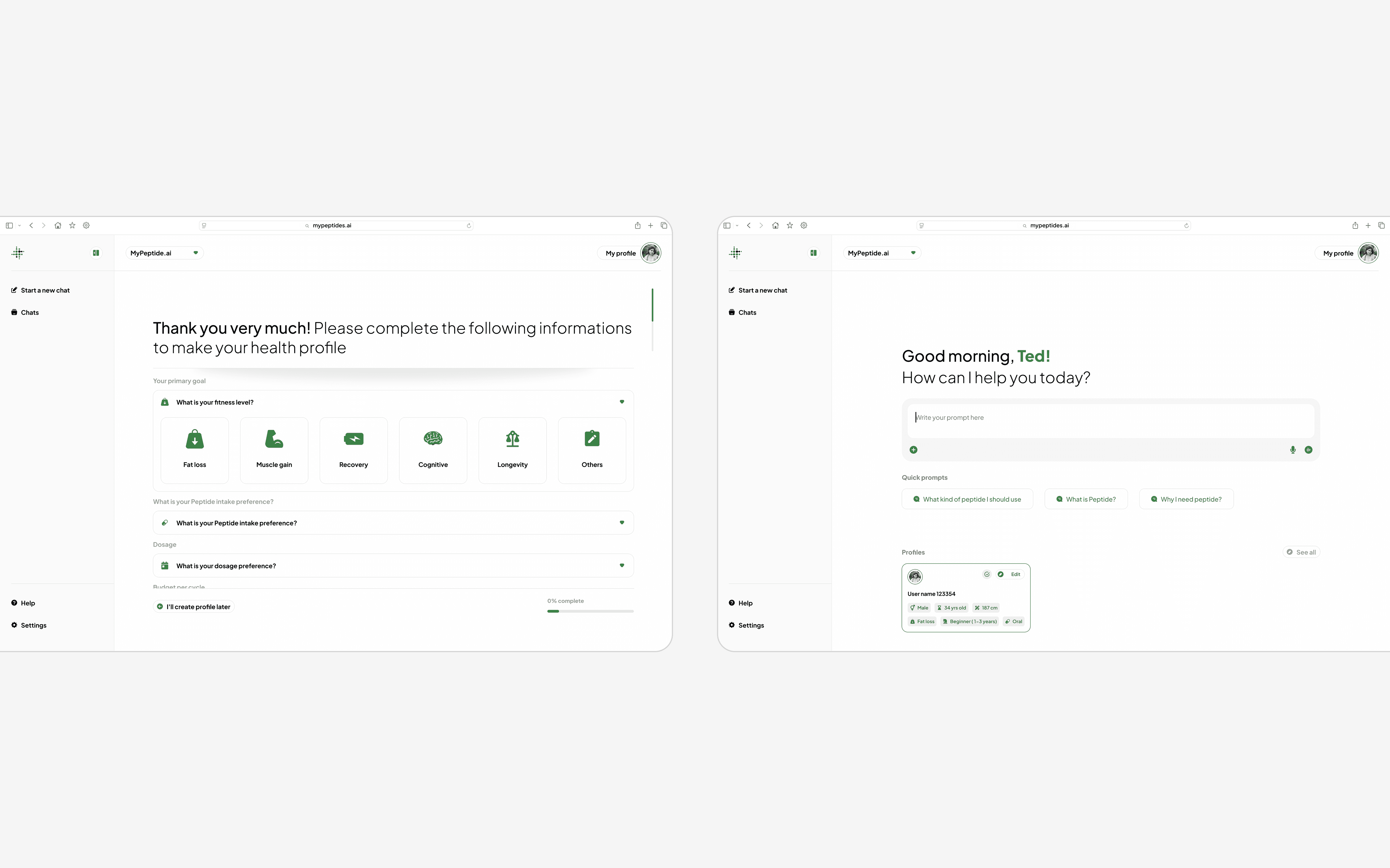
Goal-based education flows
Reasoning
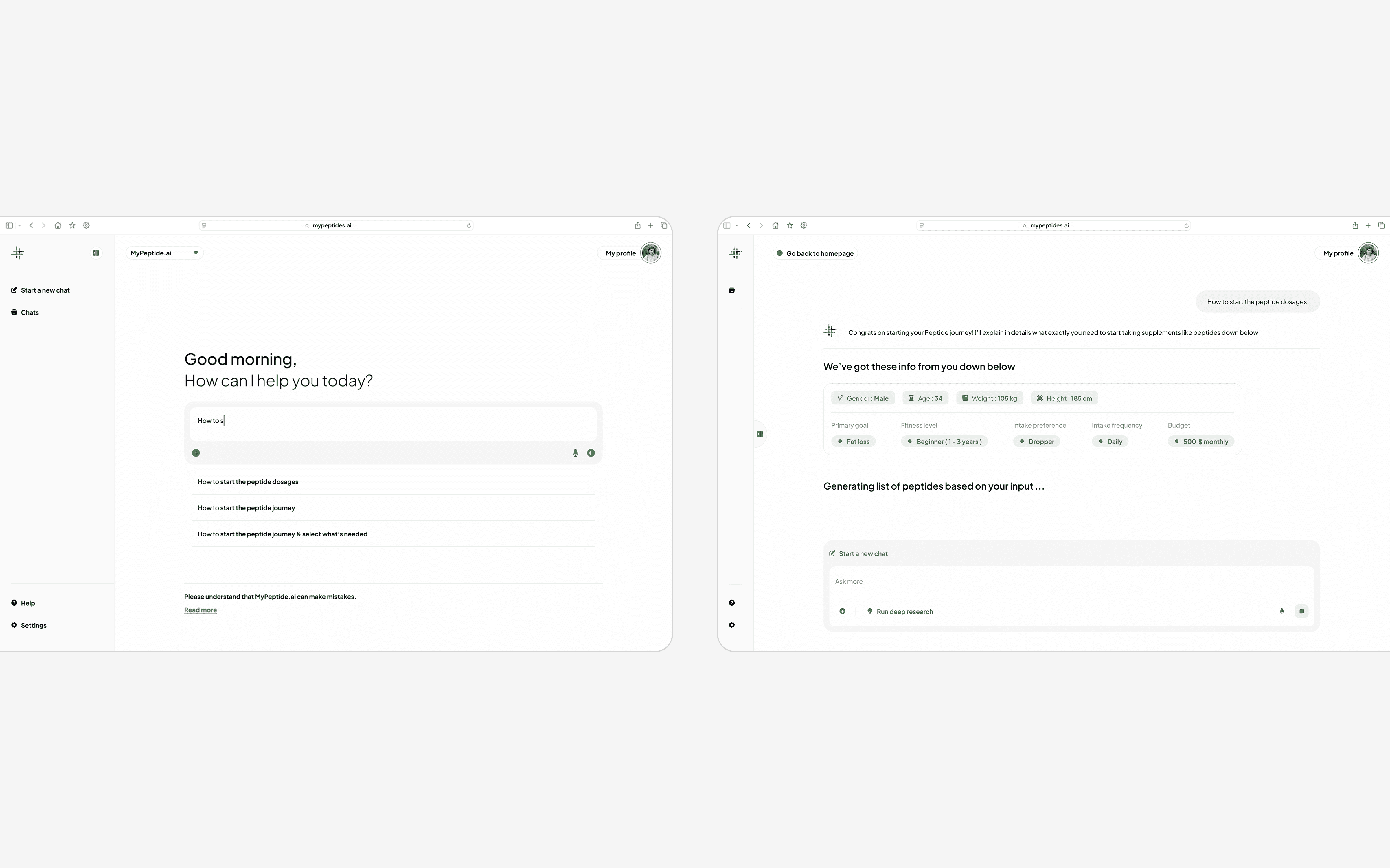
Trust-forward interface language and visual tone
Reasoning
Health-adjacent products require credibility and calm clarity.
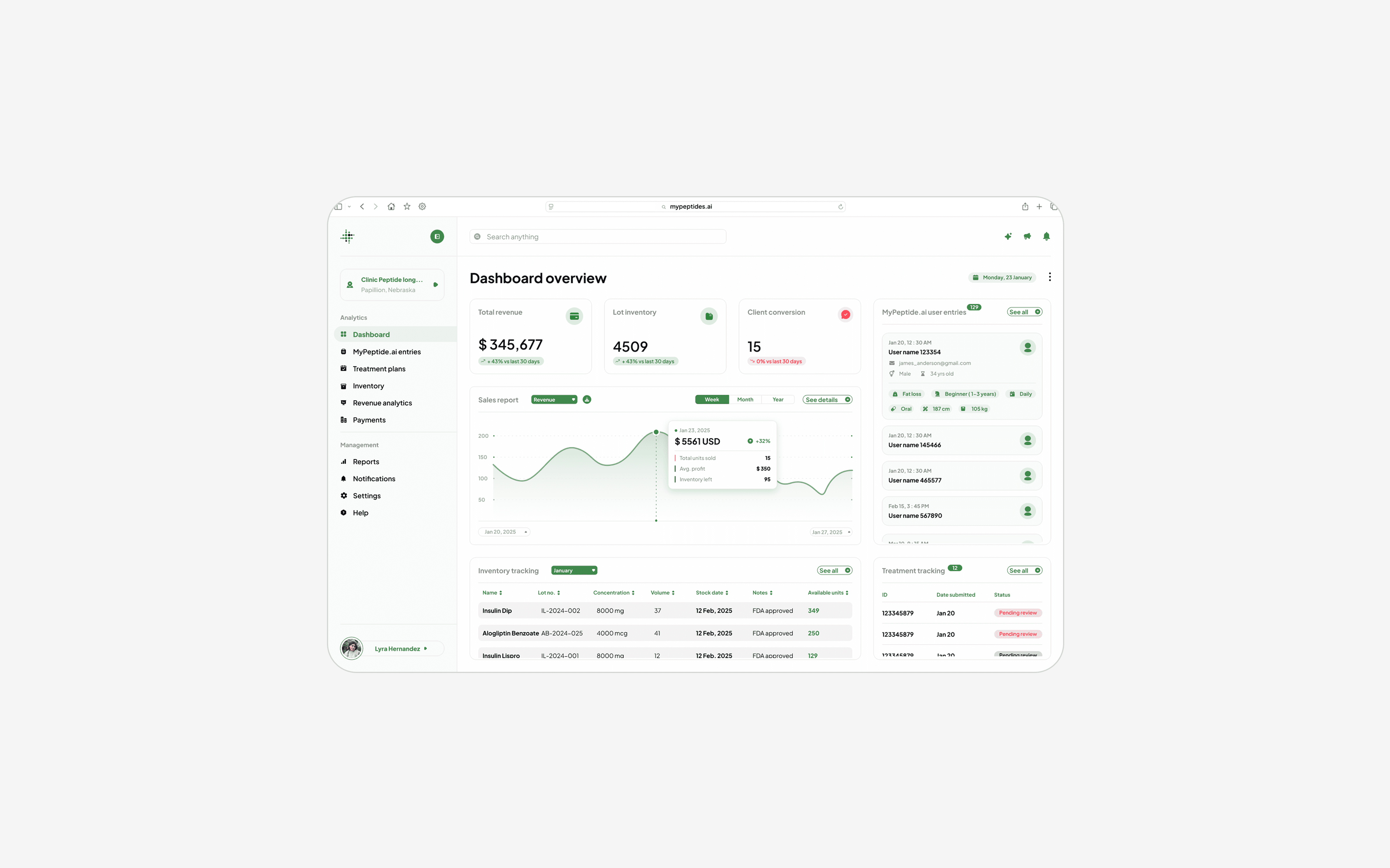
Separate B2B vendor tools from B2C education UX
Prevents mixed mental models and keeps user journeys focused.
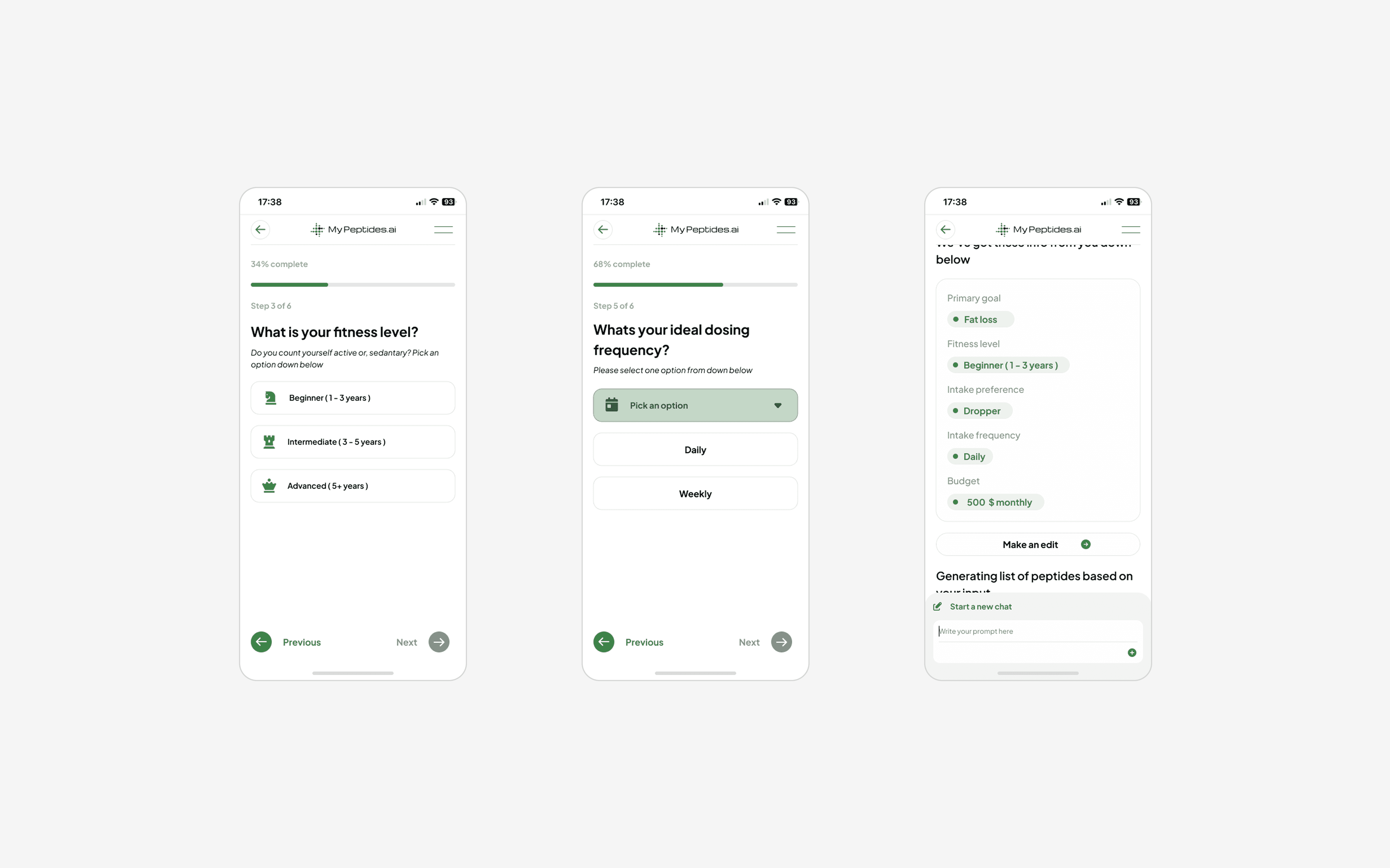
User focused responsive screens of the desktop version
To make sure users have the same simple and trusted experience in mobile screens.
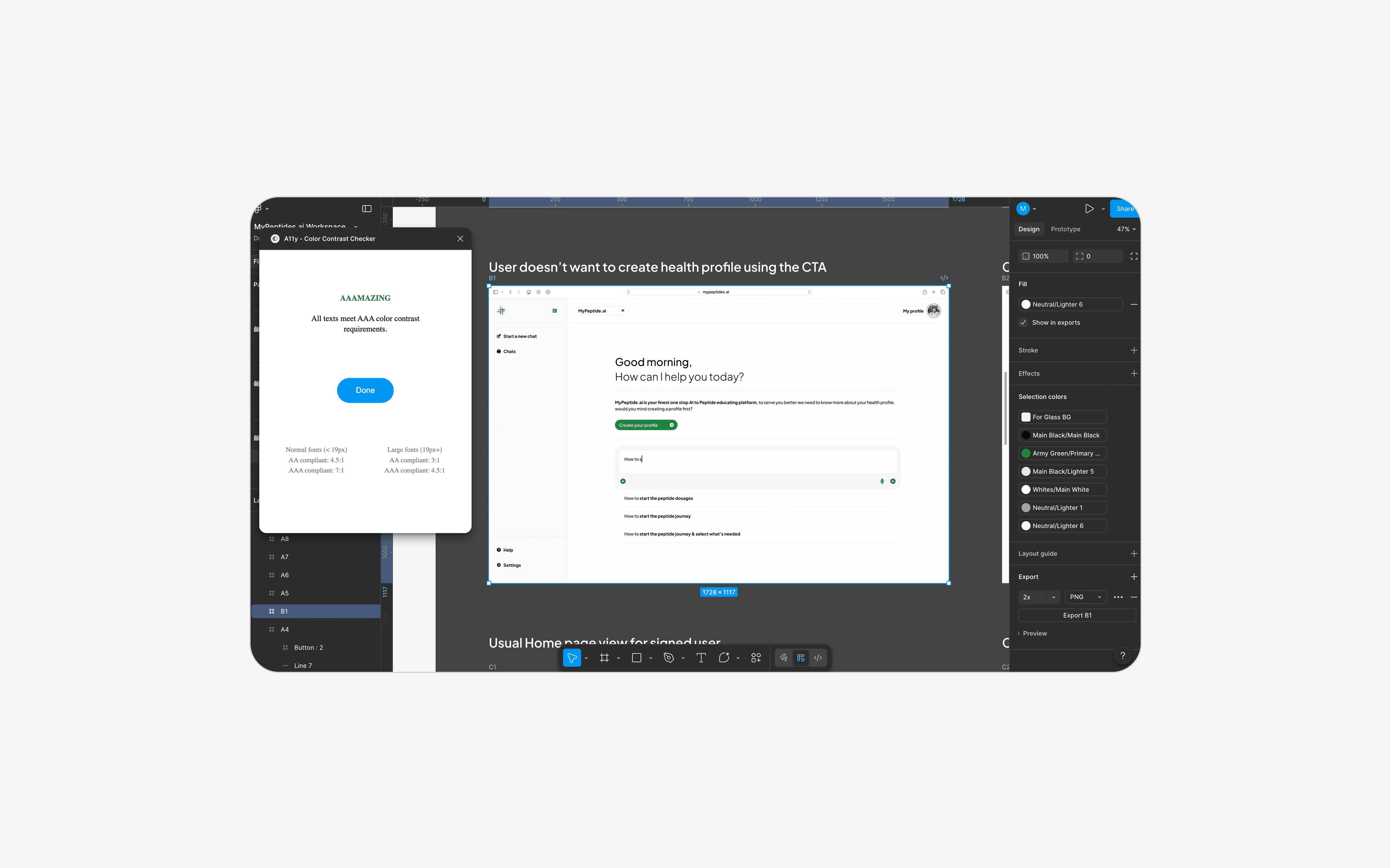
Followed the WCAG standard
To make sure the interface can be used by next billion users.
System thinking
My goal was to design the platform with modular foundations:
AI conversation flow templates
Onboarding question frameworks
Education pathway modules
Vendor dashboard component patterns
Analytics and partner management layout structures
This supports future expansion of both the education system and the vendor SaaS layer without redesigning core interaction models.
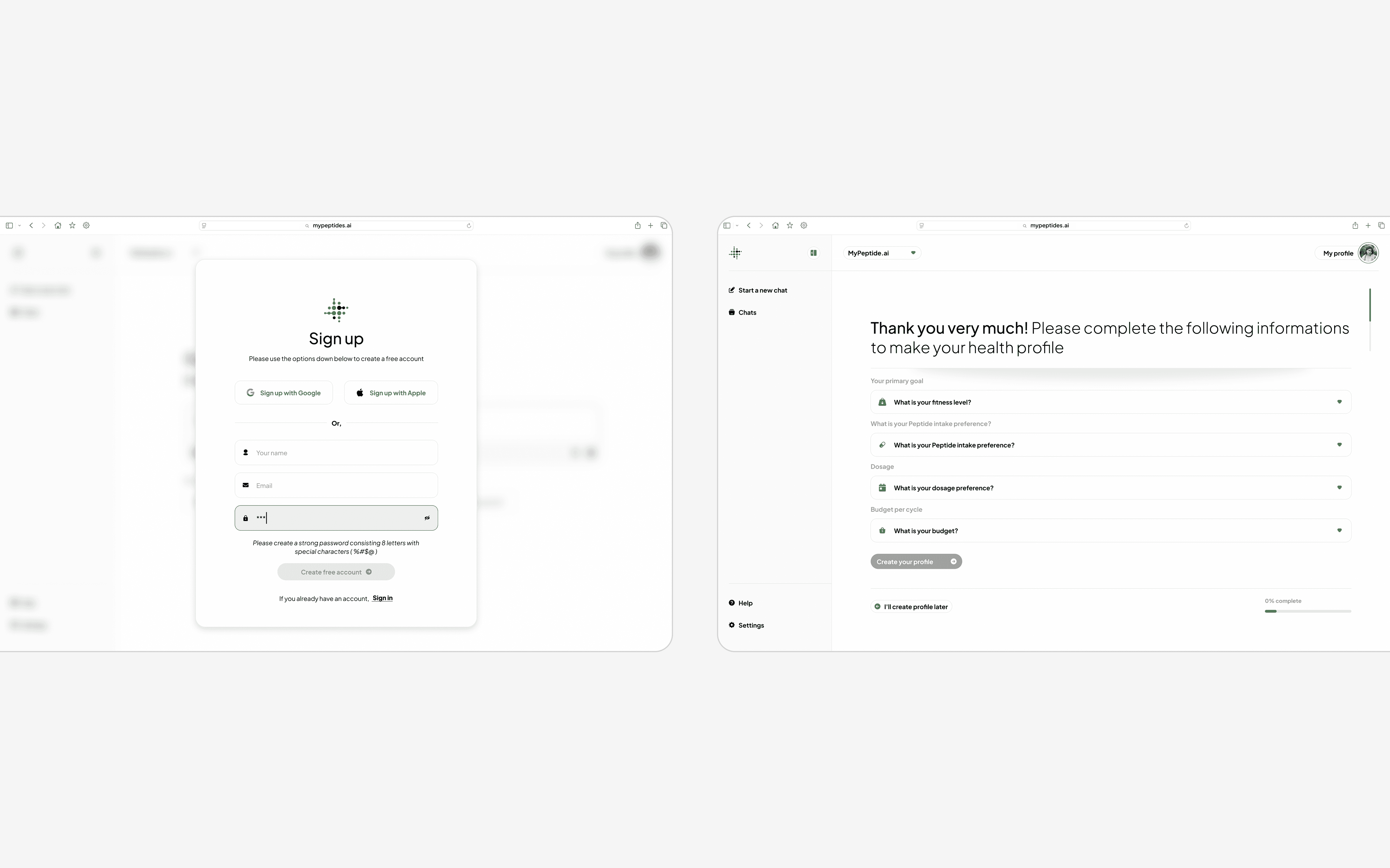
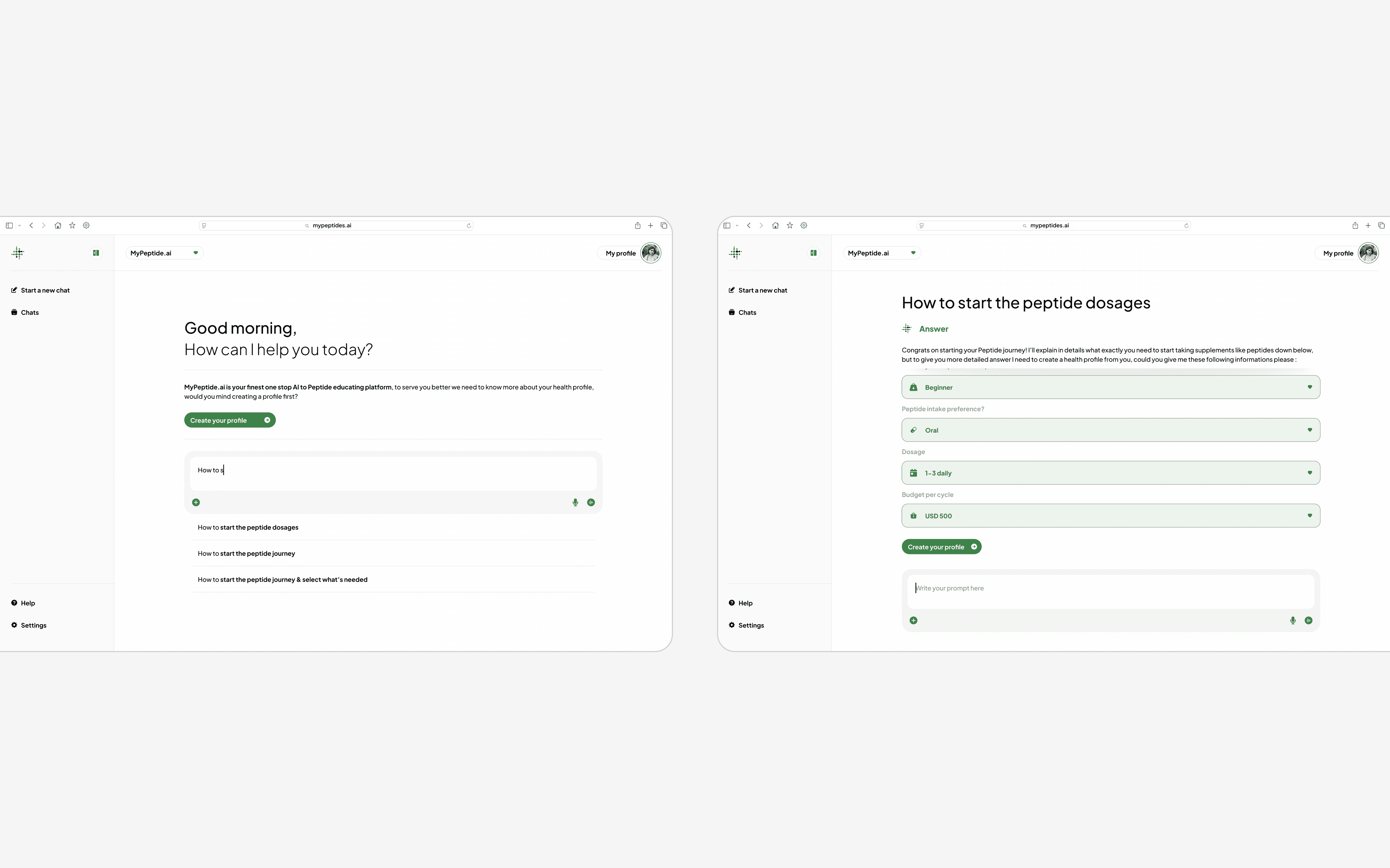
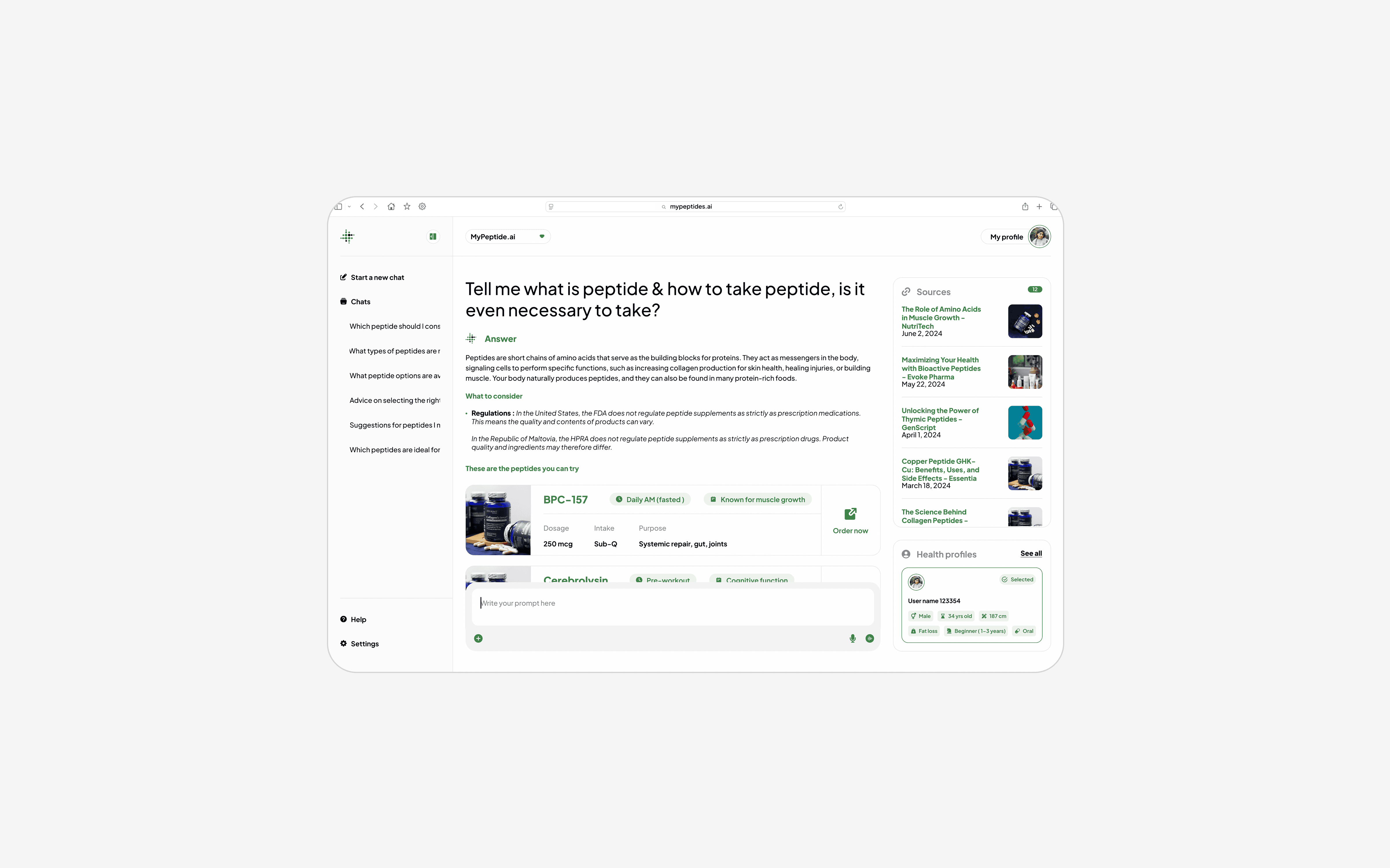
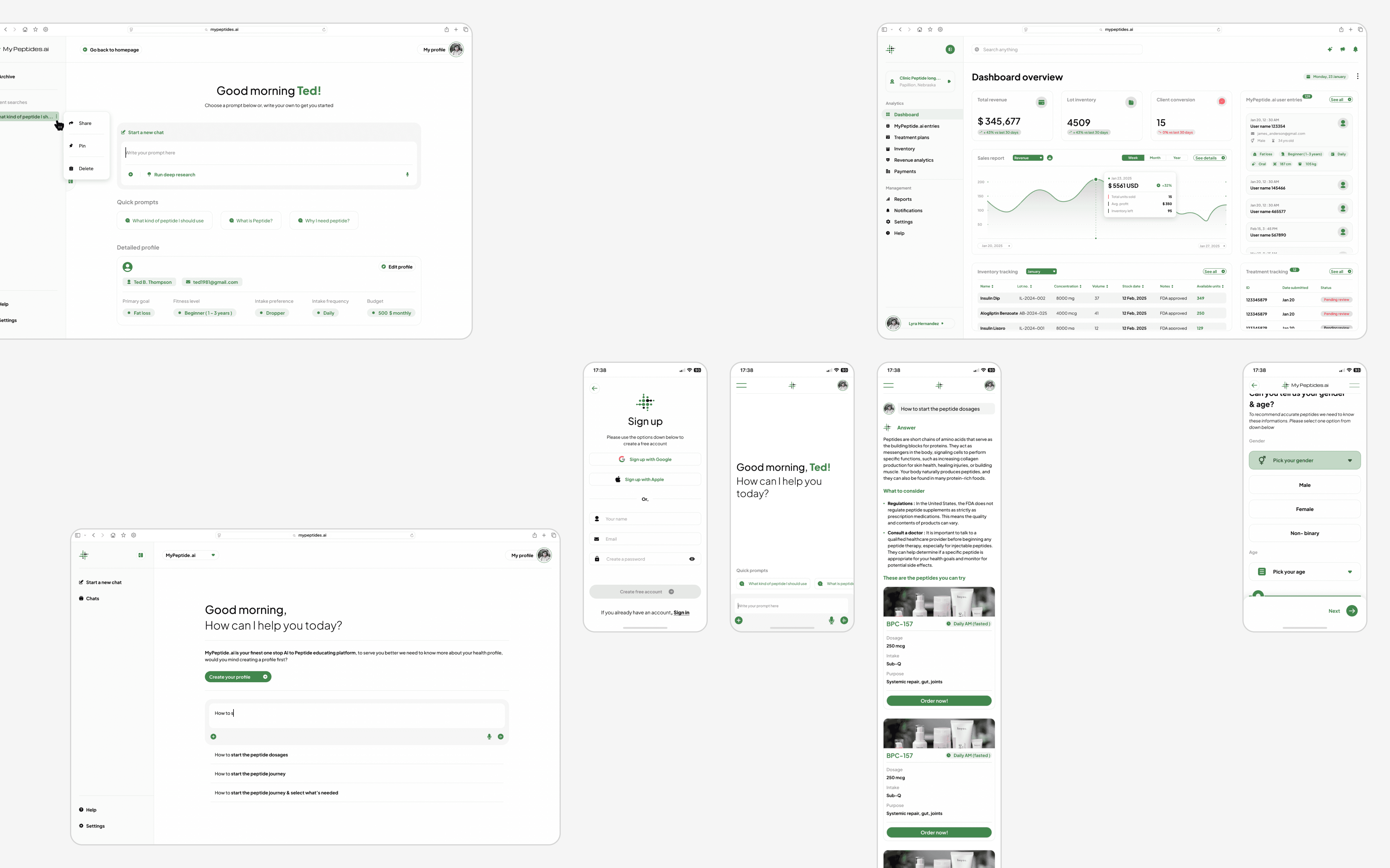
AI Education Interface
Conversational UI structured with safety-aware and topic-guided responses.
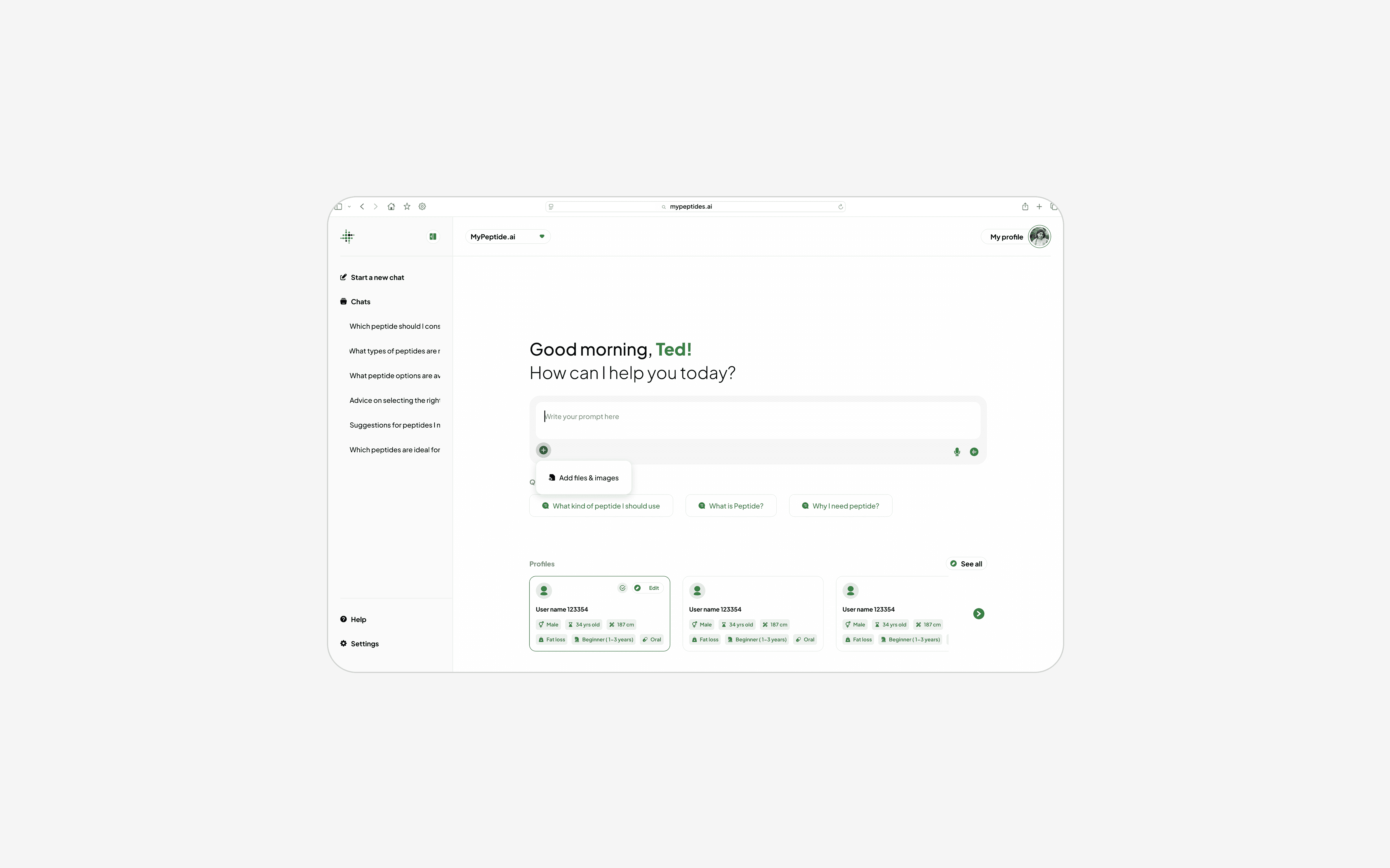
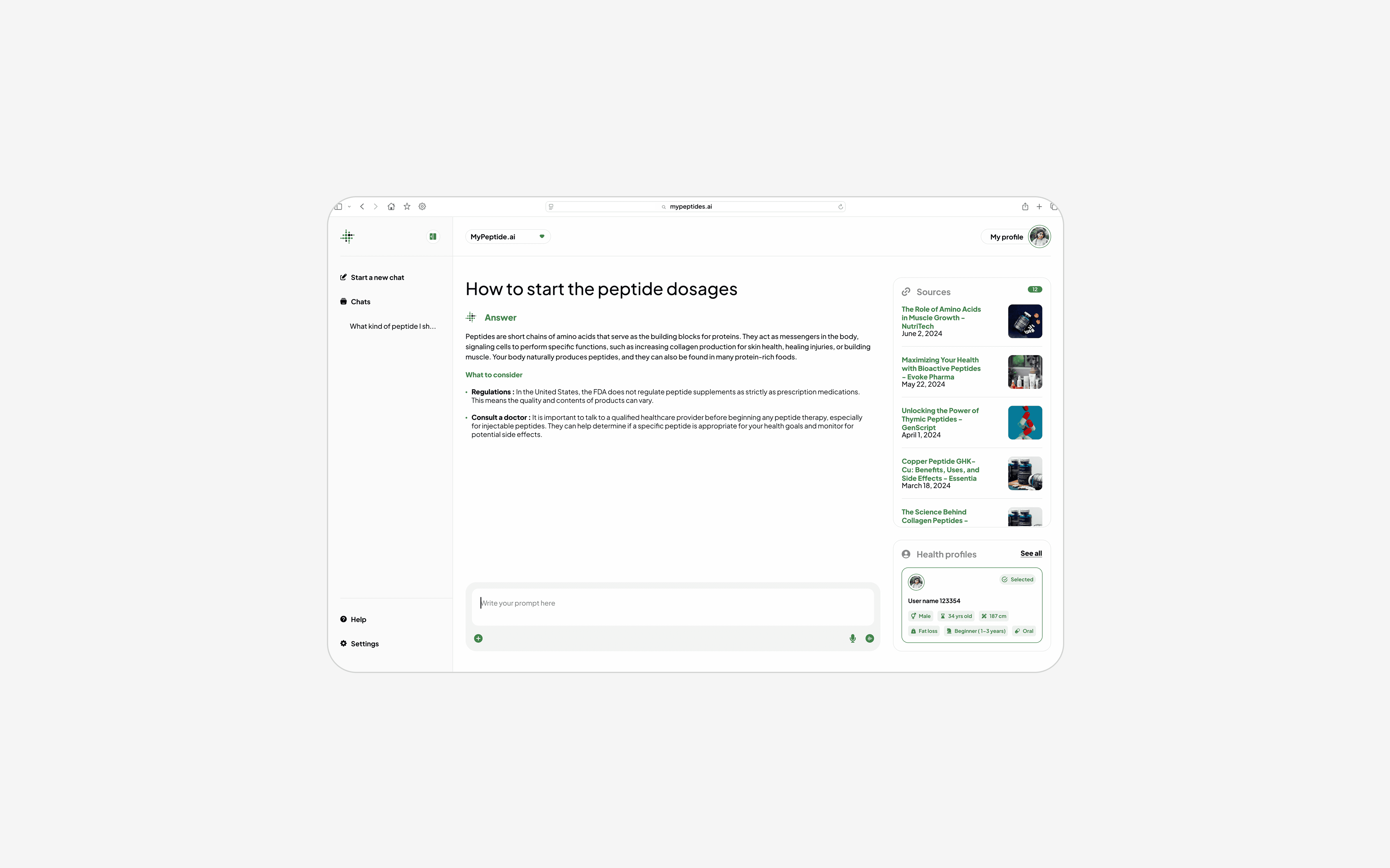
Protocol guidance screens
Step-based educational outputs organized for clarity and readability.
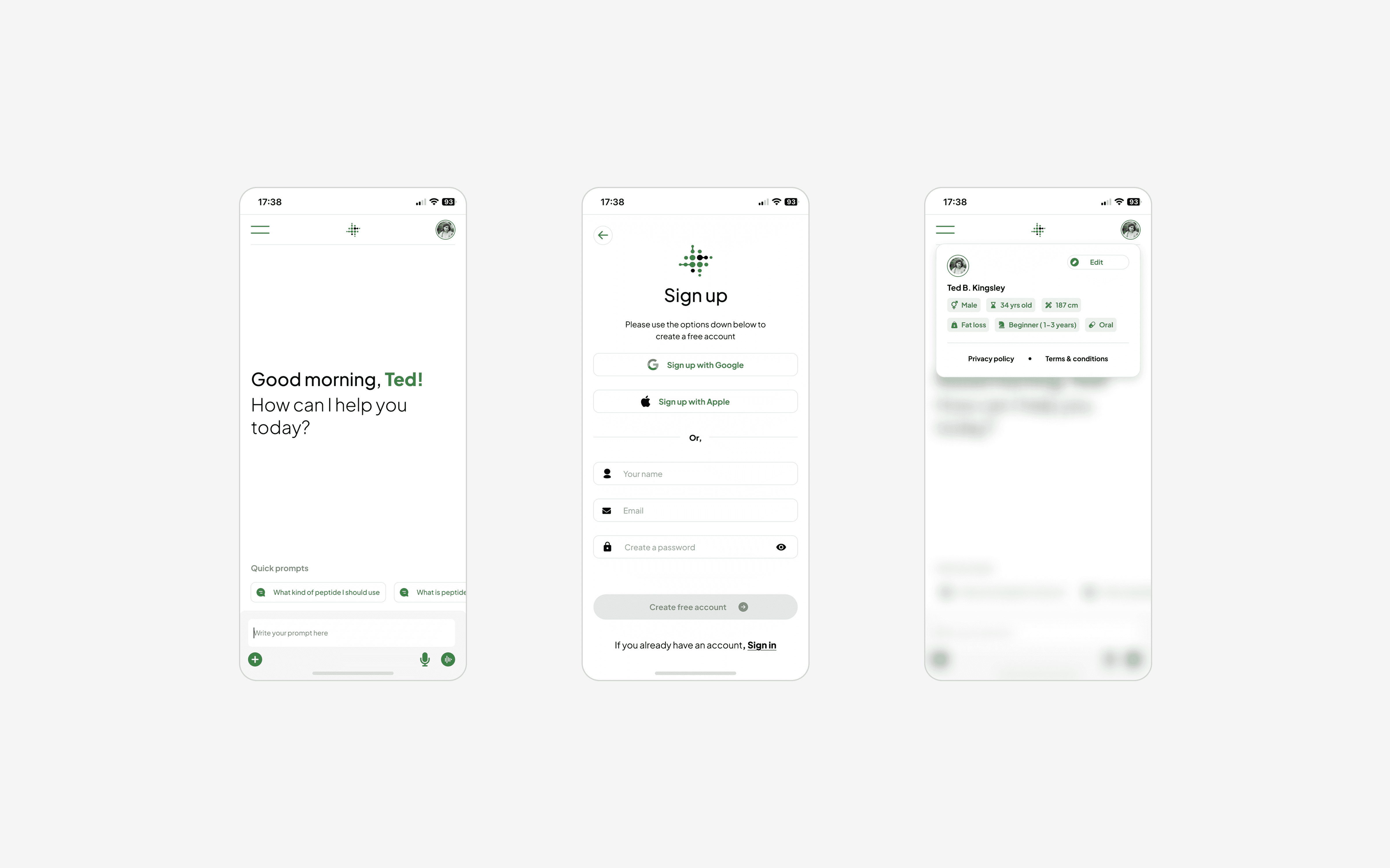
Responsive screens
Screens are crafted to ensure users have a consistent experience across all devices.
Responsive chat screen
Components for a detailed chat interface designed specifically for responsive screens.
Design system
A comprehensive design system to ensure the consistency of the product.
Additional tasks
Alongside the MVP, I also developed the full brand identity to ensure a consistent and credible market presence. This was followed by the design of a dedicated landing page to promote the product and a fully custom pitch deck, both of which played a key role in supporting investor conversations and attracting potential investment opportunities.
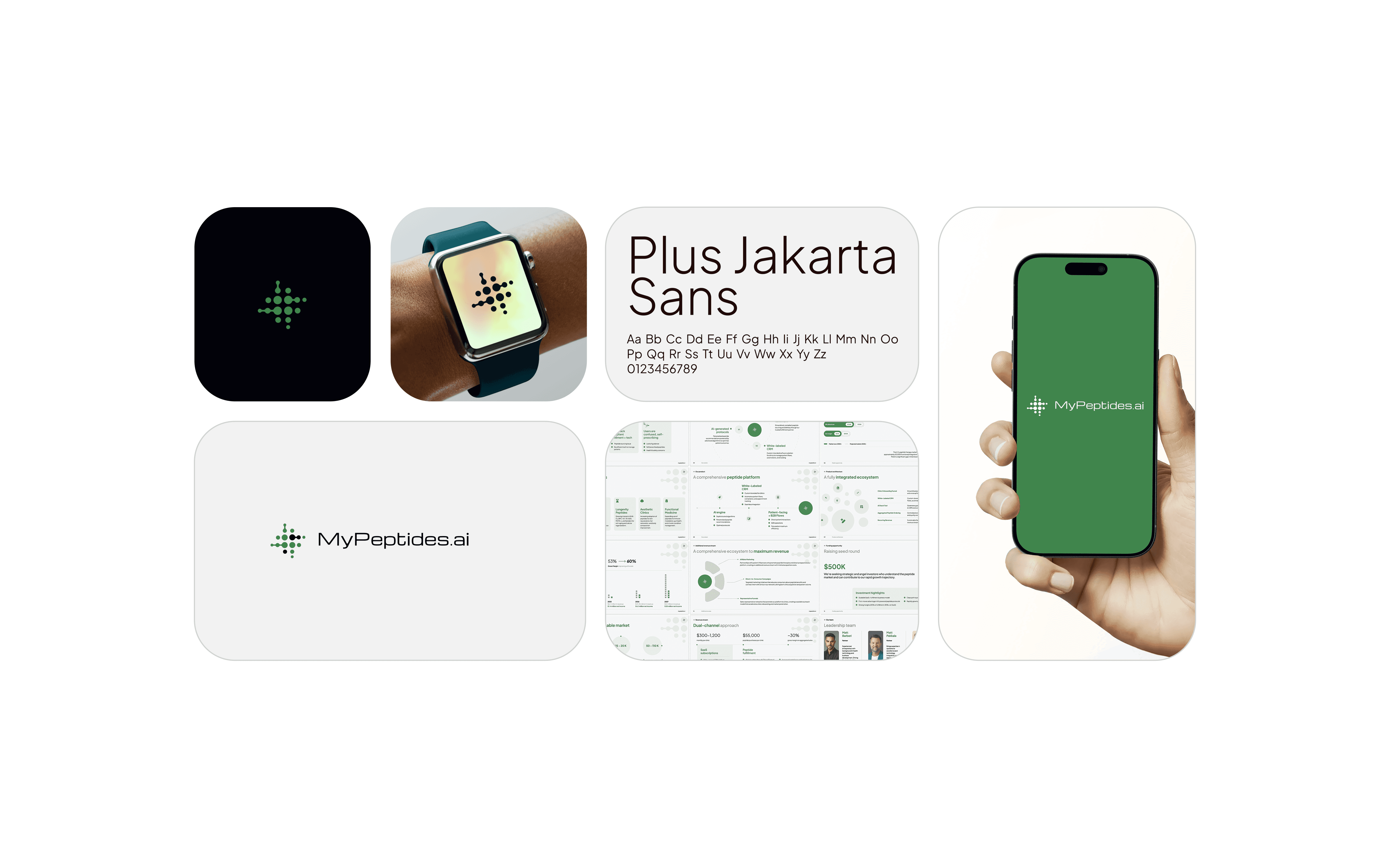
Branding
A cohesive brand identity system ensures consistency across all platforms.
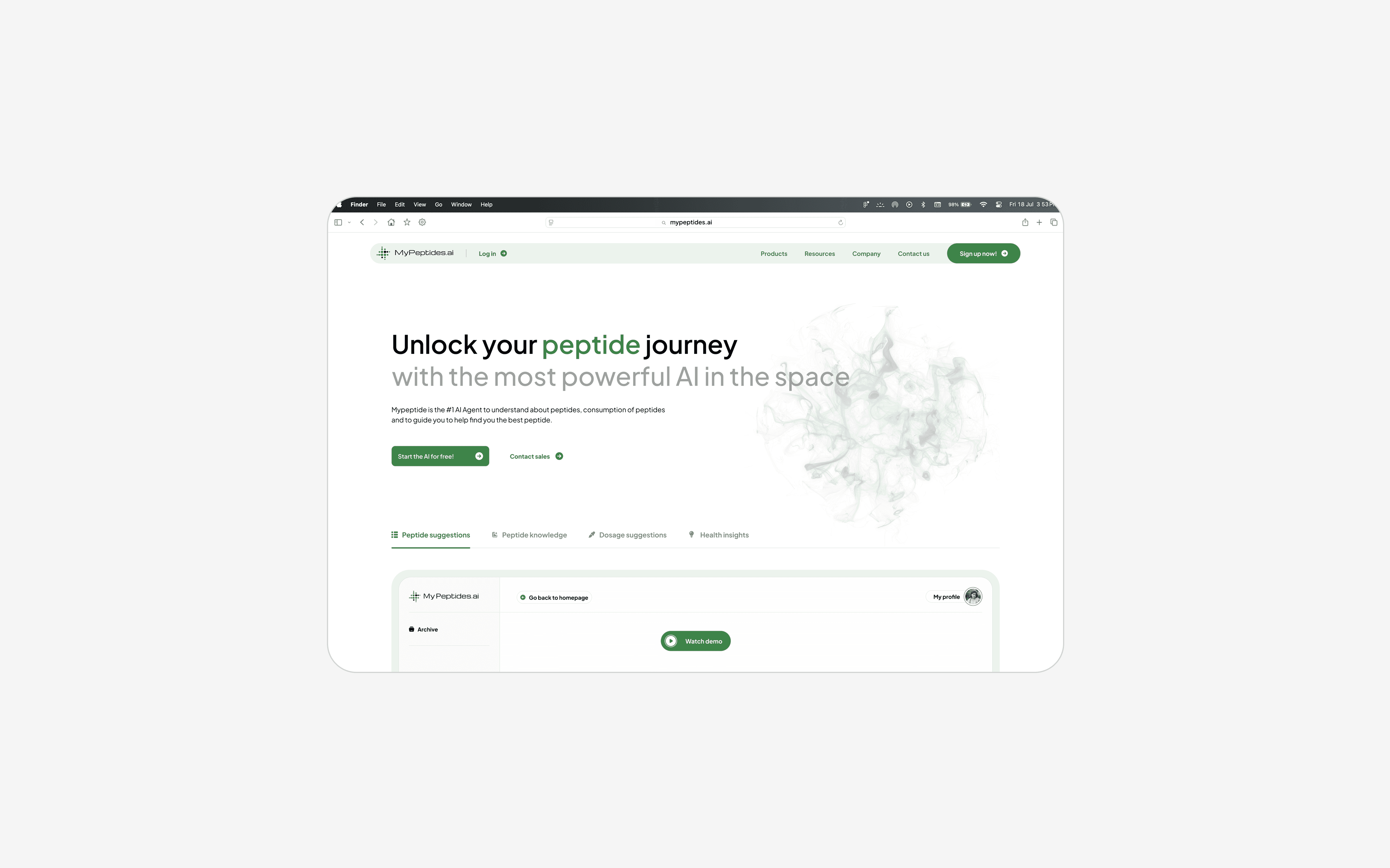
Landing page
A landing page to promote and find product information.
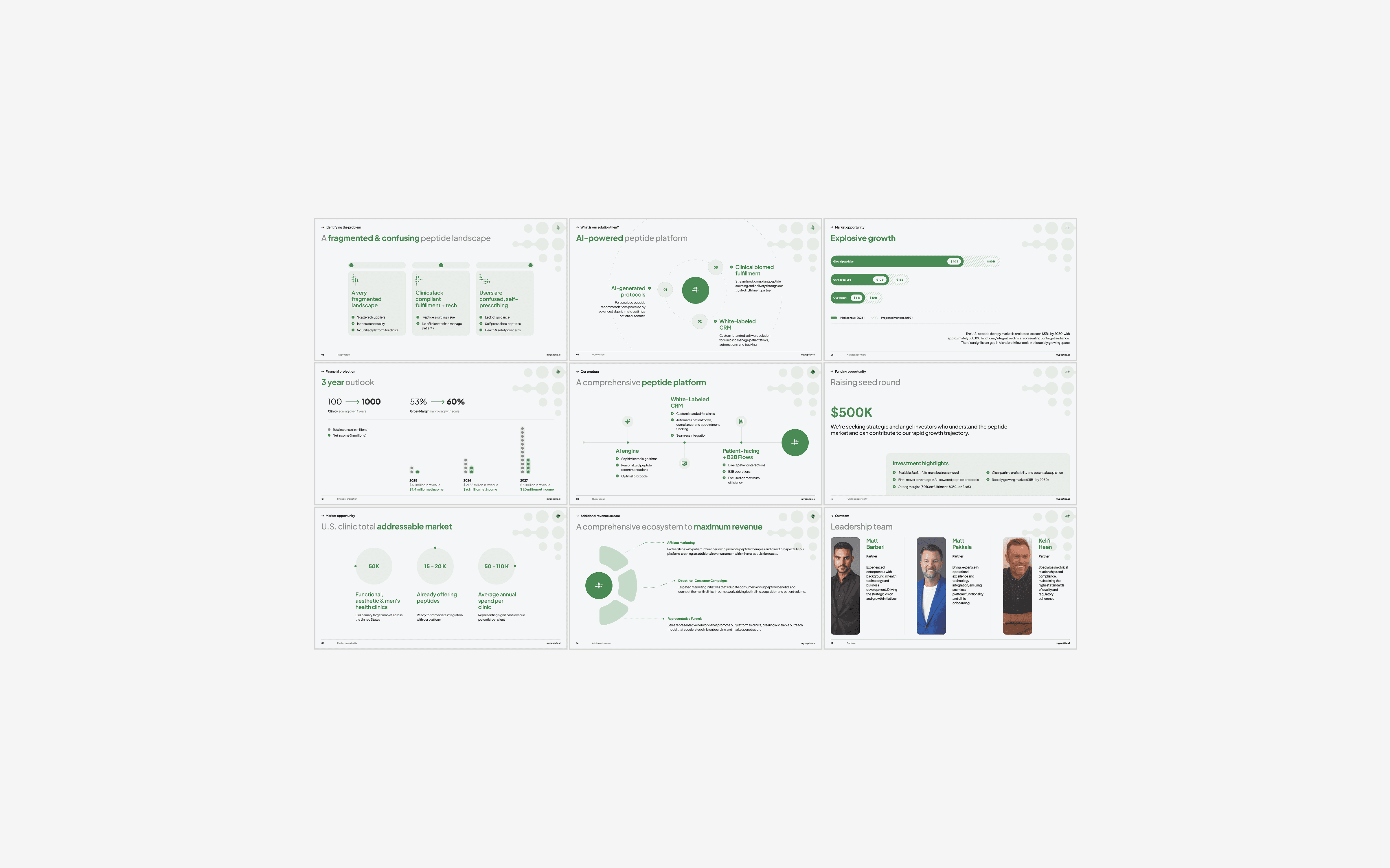
Pitch deck
To get the necessary investments following the brand guidelines.
Outcomes
The MVP was designed and launched within a focused 3-month sprint. During this period there were several notable points:
The platform established early credibility in a niche health education space and validated the guided AI education experience with pilot users.
100k USD investment secured within a matter of a month.
Pilot was tested by 17 Peptide based startups and brands.
5 partners joined on a trial basis after the pilot.
The product also created a structured foundation for future B2B vendor partnerships and monetization models.
Approximately 350% increase in securing leads as potential partners.
" Mahamud did an excellent job shaping our idea into a clear and well-designed product. His vision and design expertise were central to bringing the concept to life. We’re very pleased with the outcome, and now it’s our turn to take the products to the market and make it a success "

Matt Pakkala
CFO, Partner
Noir Peptide, Mypeptide
My learnings
To summarize :
Health-adjacent AI products require stronger onboarding and expectation framing.
Guided AI flows improve clarity compared to open chat in education contexts.
Trust signals in language and layout significantly affect perceived credibility.
Designing dual-sided platforms early benefits from modular UX separation.
Sprint constraints increase the importance of system-first design decisions.