B2C mobile app, Clinical SaaS dashboard
2021 - 2023
The Netherlands
Medvice — Designing a unified healthtech ecosystem
65%
Screen time cut for patients
10+
Clinics adopted the product
50%
Less admin work for doctors
Problem
Clinics in the Netherlands faced severe operational bottlenecks due to manual patient intake processes and fragmented digital systems. Patients have no specific, trusted way to get the treatment they need quickly.
Doctors were overwhelmed with administrative tasks — reviewing paper forms, manually updating records, and managing scheduling inefficiencies. This resulted in:
Long patient wait times
Delayed treatment decisions
Administrative burnout
Disconnected data across systems
The challenge was to design a unified digital ecosystem from the core that reduced administrative workload while improving both patient and clinician experience.
Scope of my work
Patient mobile app UX, User flow, Scalable design system, Product strategize, Clinic dashboard, Full brand identity, Website design.
Product team size
Product manager : 2, Product owner : 2, App dev : 2, Web dev : 1, Copywriter : 1, Marketing : 3, QA analyst : 1, Core design : 1 ( Me ), Design intern : 2
Constraints
The constraints I found:
The health domain requires clarity and trust in UX language.
High-density clinical data needs a strong hierarchy.
Dual-user system with interconnected workflows.
Integration with existing clinic operations.
Long-term scalability across multiple regions.
Product context
I designed Medvice as an interconnected healthtech ecosystem serving two primary user groups:
Patient Side:
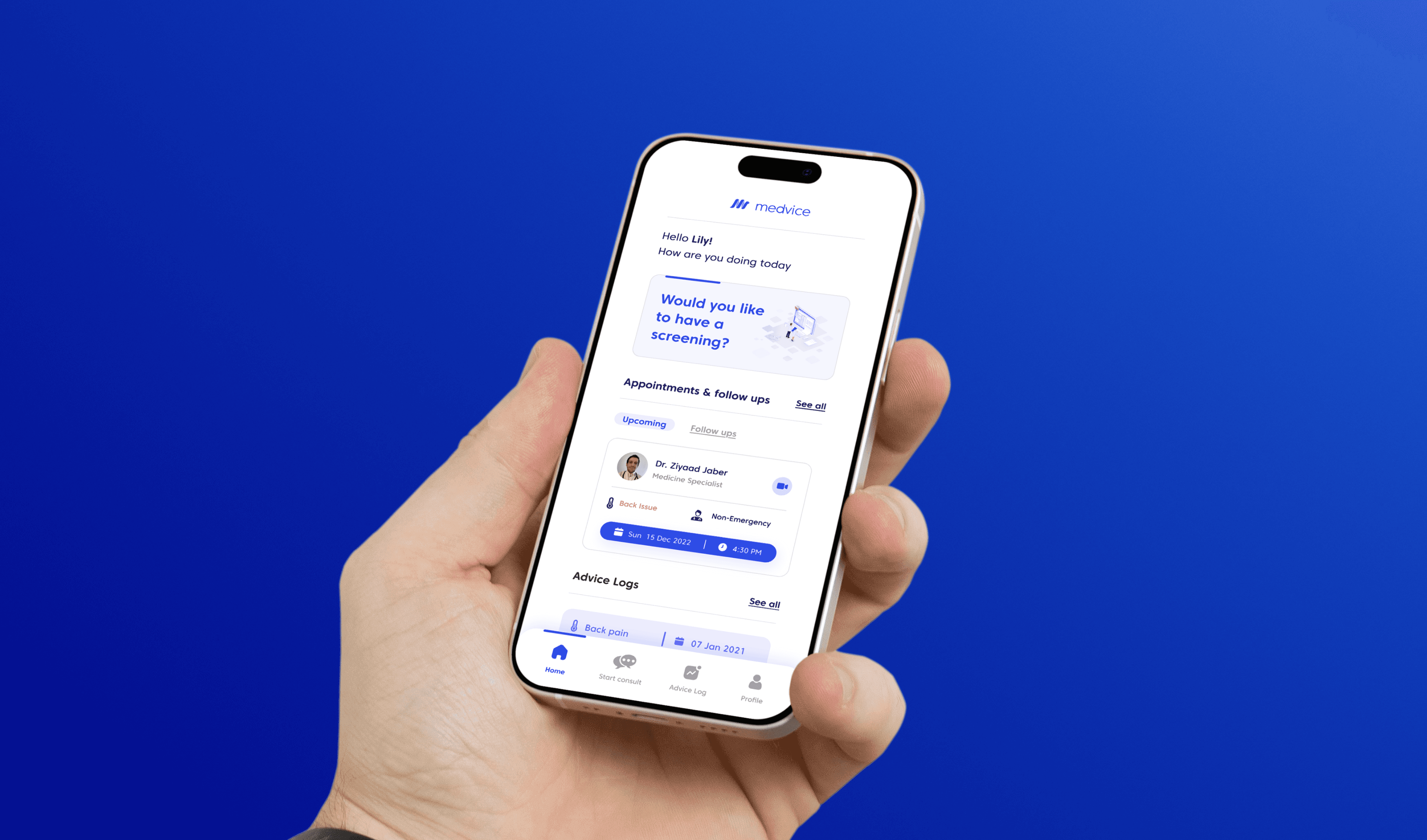
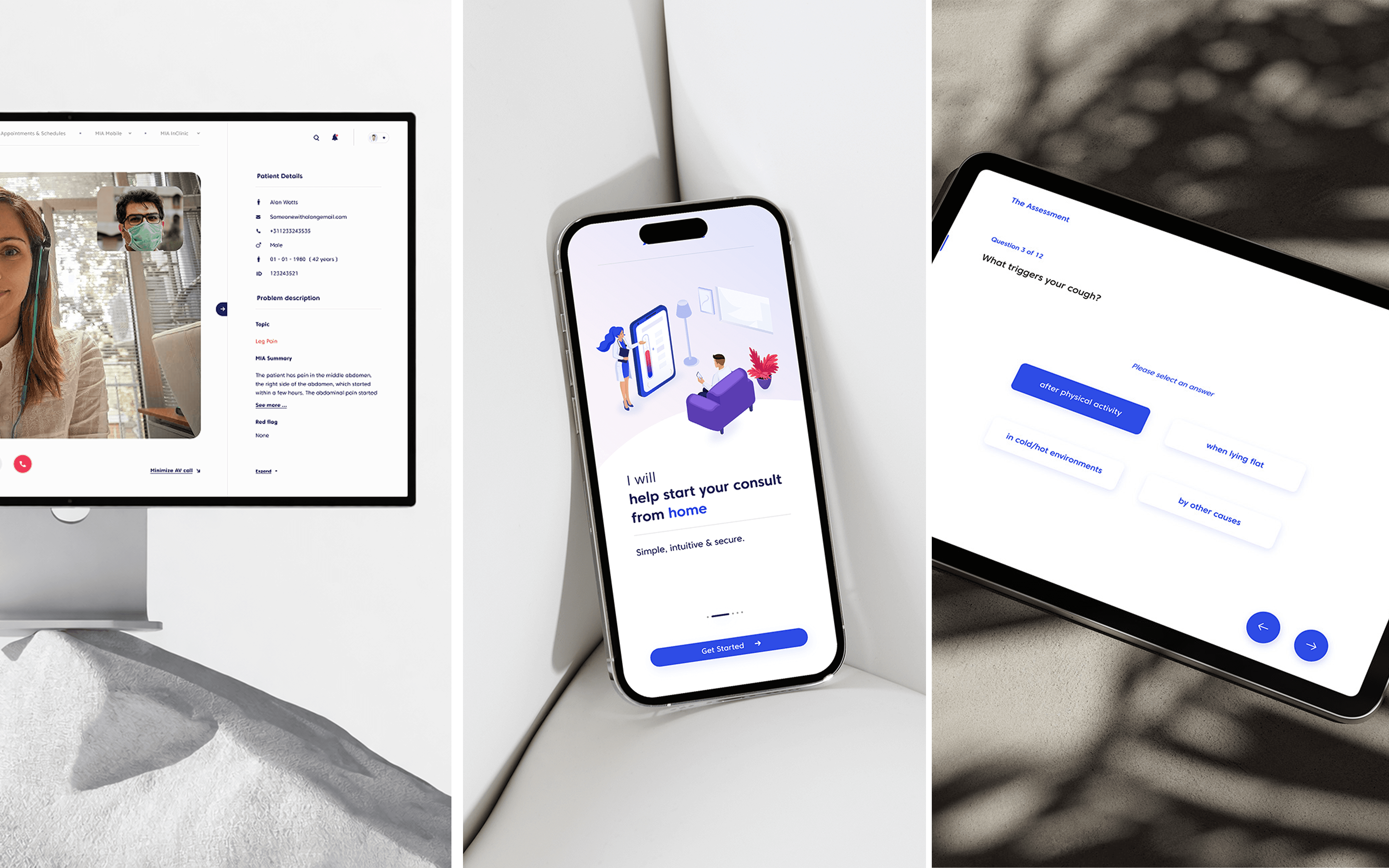
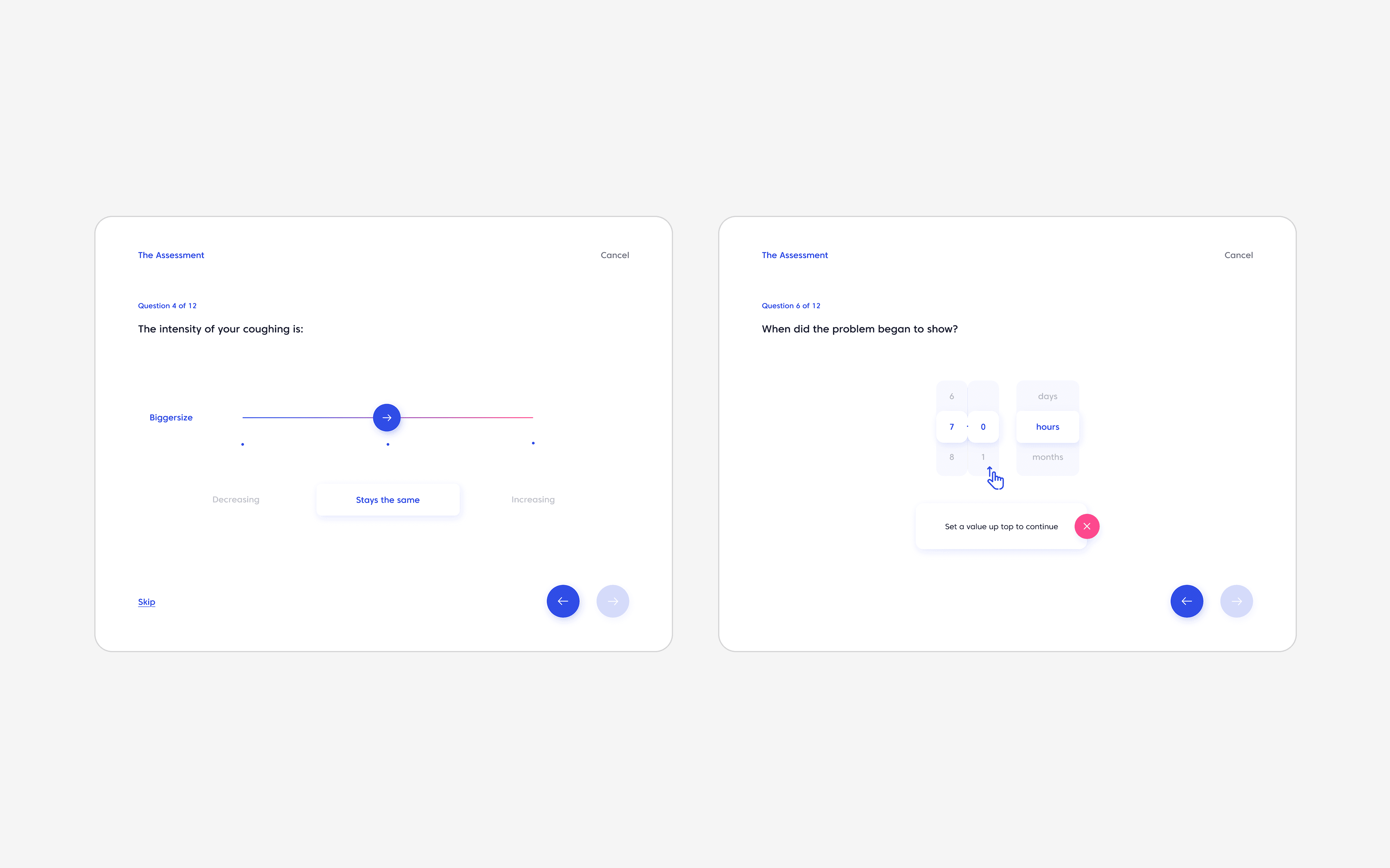
Symptom screening mobile app guiding patients through structured intake before consultation.
Clinician Side:
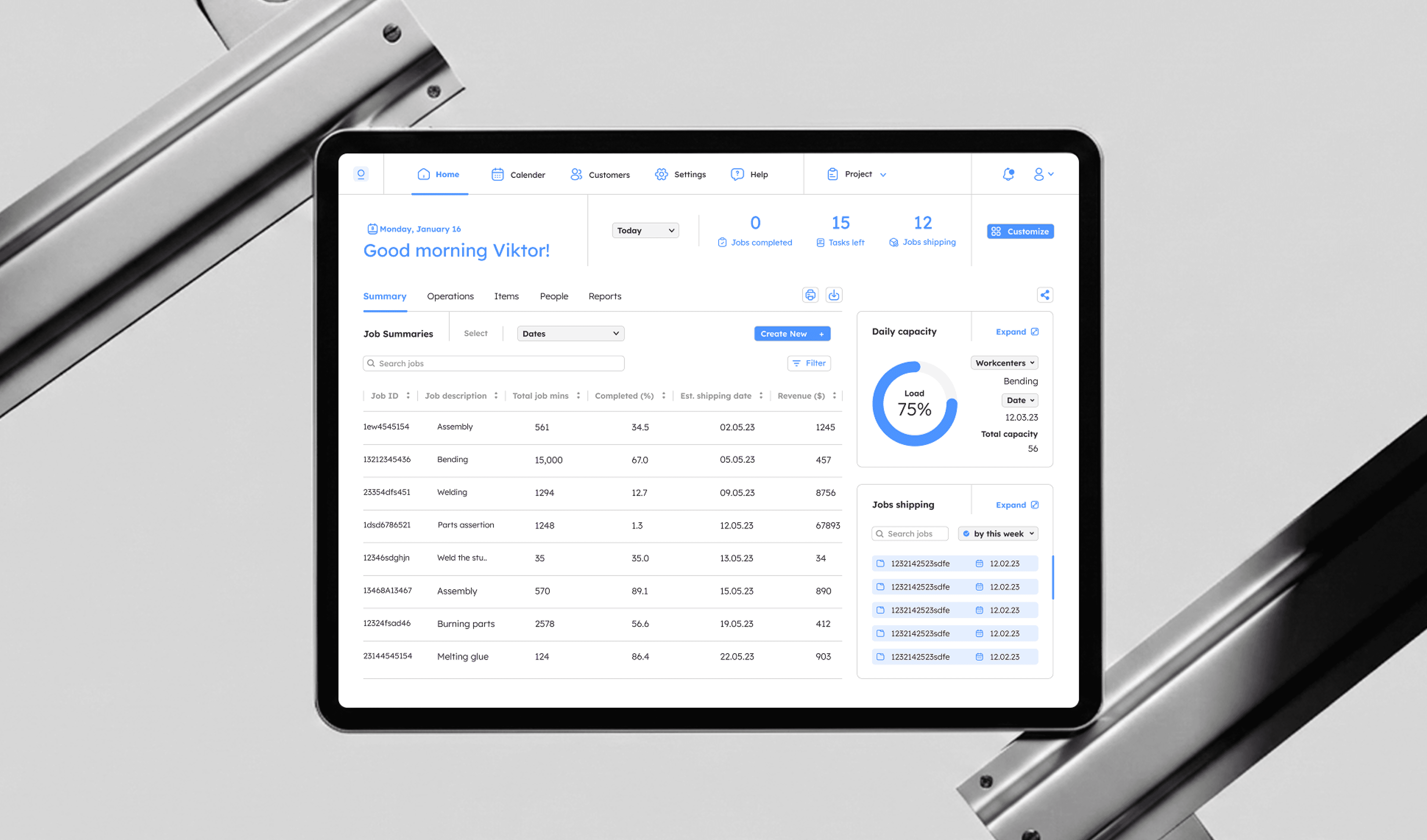
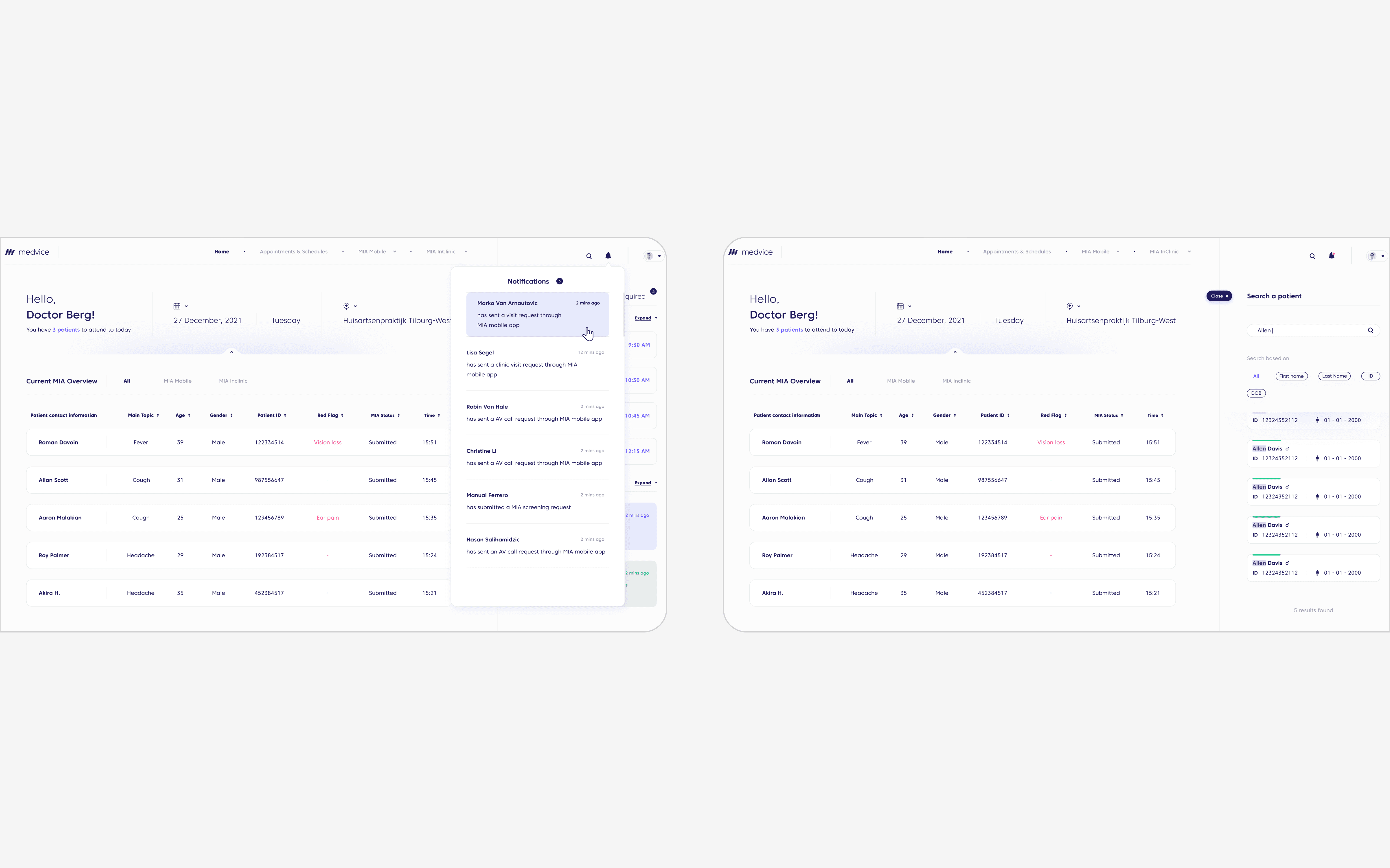
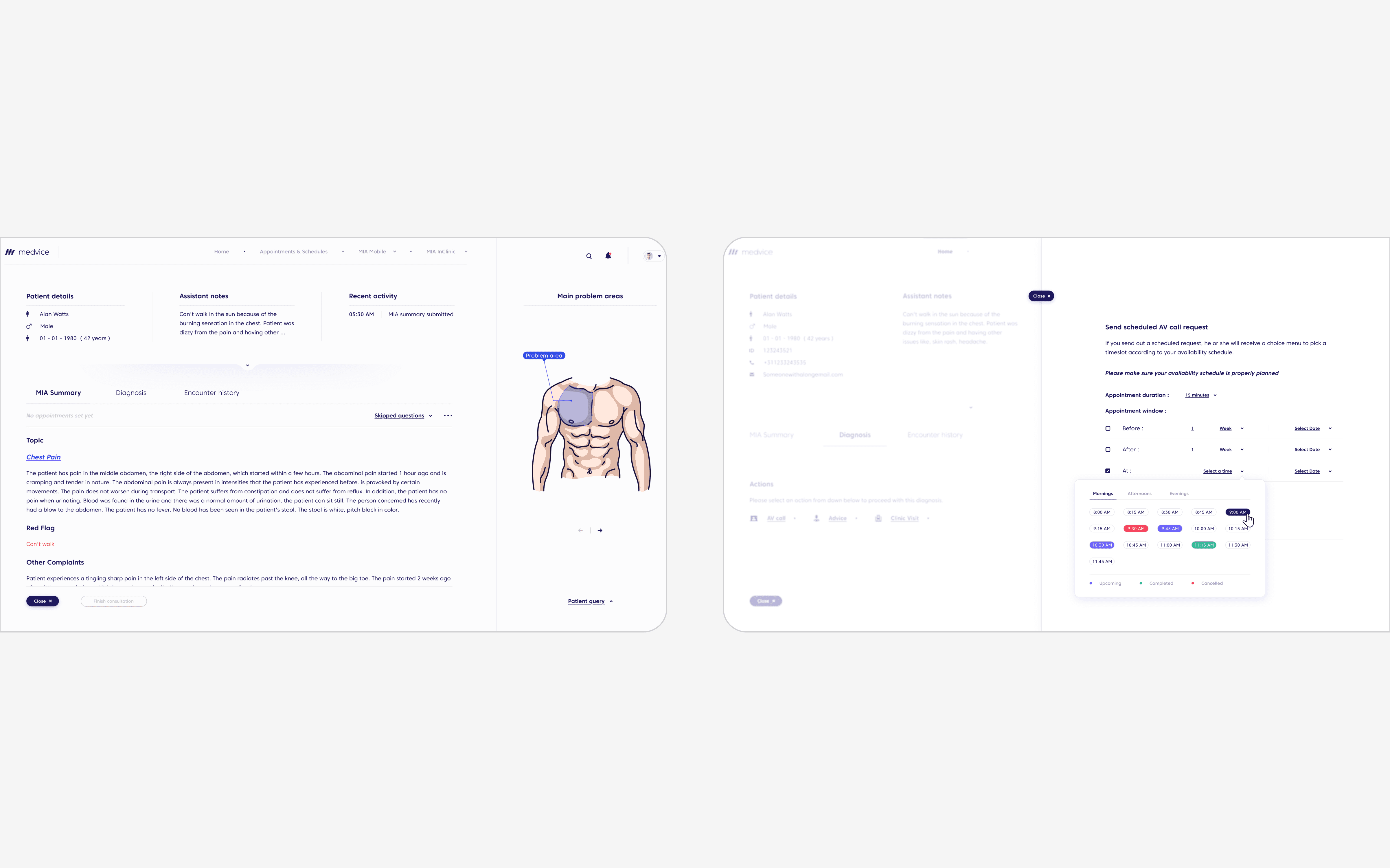
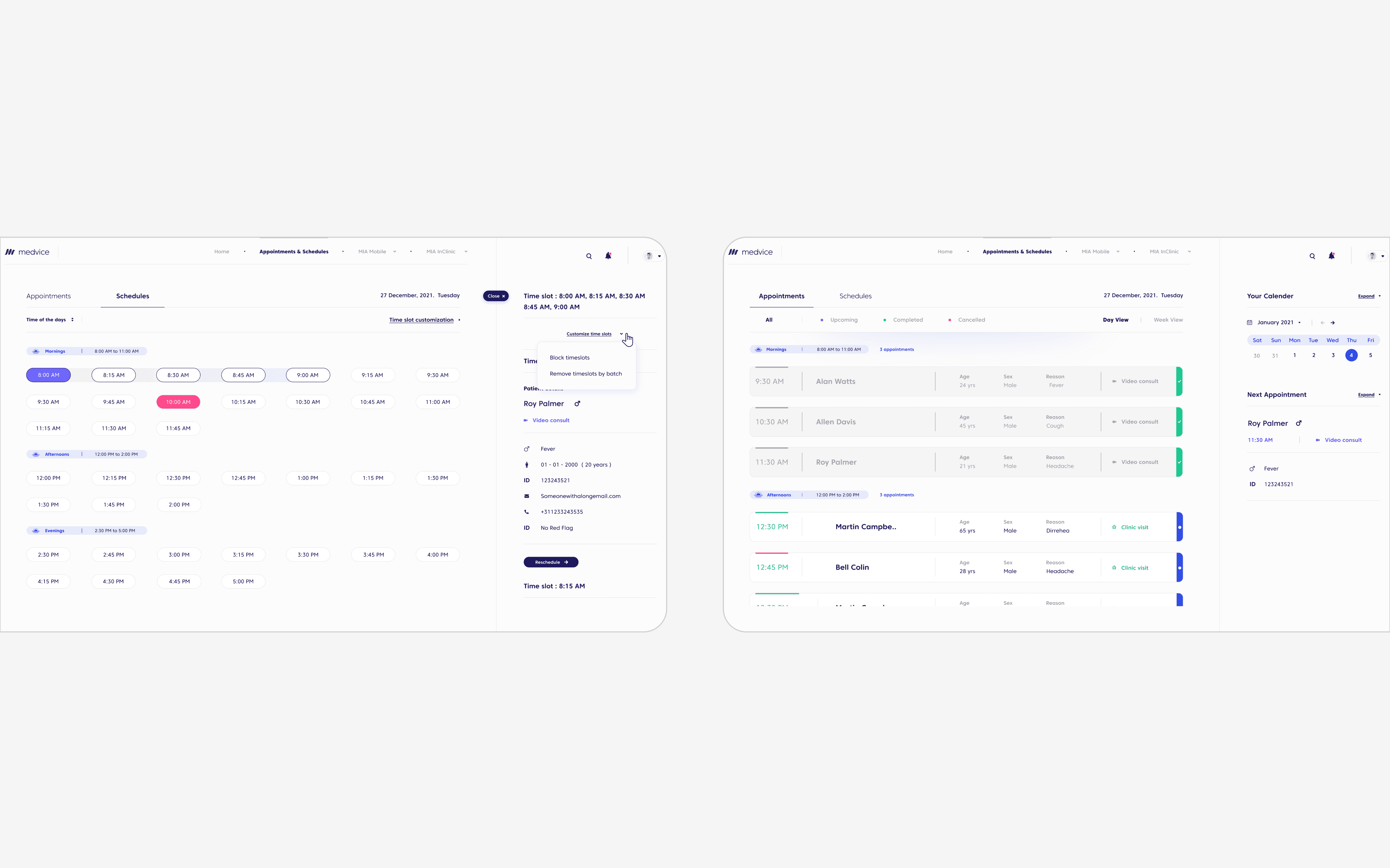
High-density SaaS dashboard centralizing patient data, scheduling, and record automation.
And a reduced tablet version of the patient side app in the clinics for the walk-in patients.
The platform needed to balance:
Operational efficiency
Data clarity
Reduced cognitive load for clinicians
Accessible guidance for patients
Scalability across clinics and regions
The product goal was:
Reduce administrative workload in clinics.
Streamline patient intake and screening.
Shorten patient wait times.
Centralize fragmented systems into one platform.
Adaptable design for the Middle Eastern market.
Design a scalable system foundation for multi-clinic expansion.
Project overview
Strategy
My UX strategy focused on simplifying complexity on both sides of the ecosystem.
Key strategic directions:
Structured intake instead of manual forms in a questionnaire.
Guided patient flows to reduce ambiguity.
Provide clear instructions on the user screen to guide users, particularly for older patients.
Users will receive notification alerts to ensure they don't miss important screening updates..
High-density but scannable dashboard layouts.
Task-based interface organization for clinicians.
Automation of repetitive record-keeping.
Clear separation of patient and clinician experiences.
The core objective was to remove friction without oversimplifying clinical workflows.
Process
The process I followed was:
Interviews with potential users to understand the pain points.
Operational workflow mapping with clinic stakeholders.
User journey mapping for patients and clinicians.
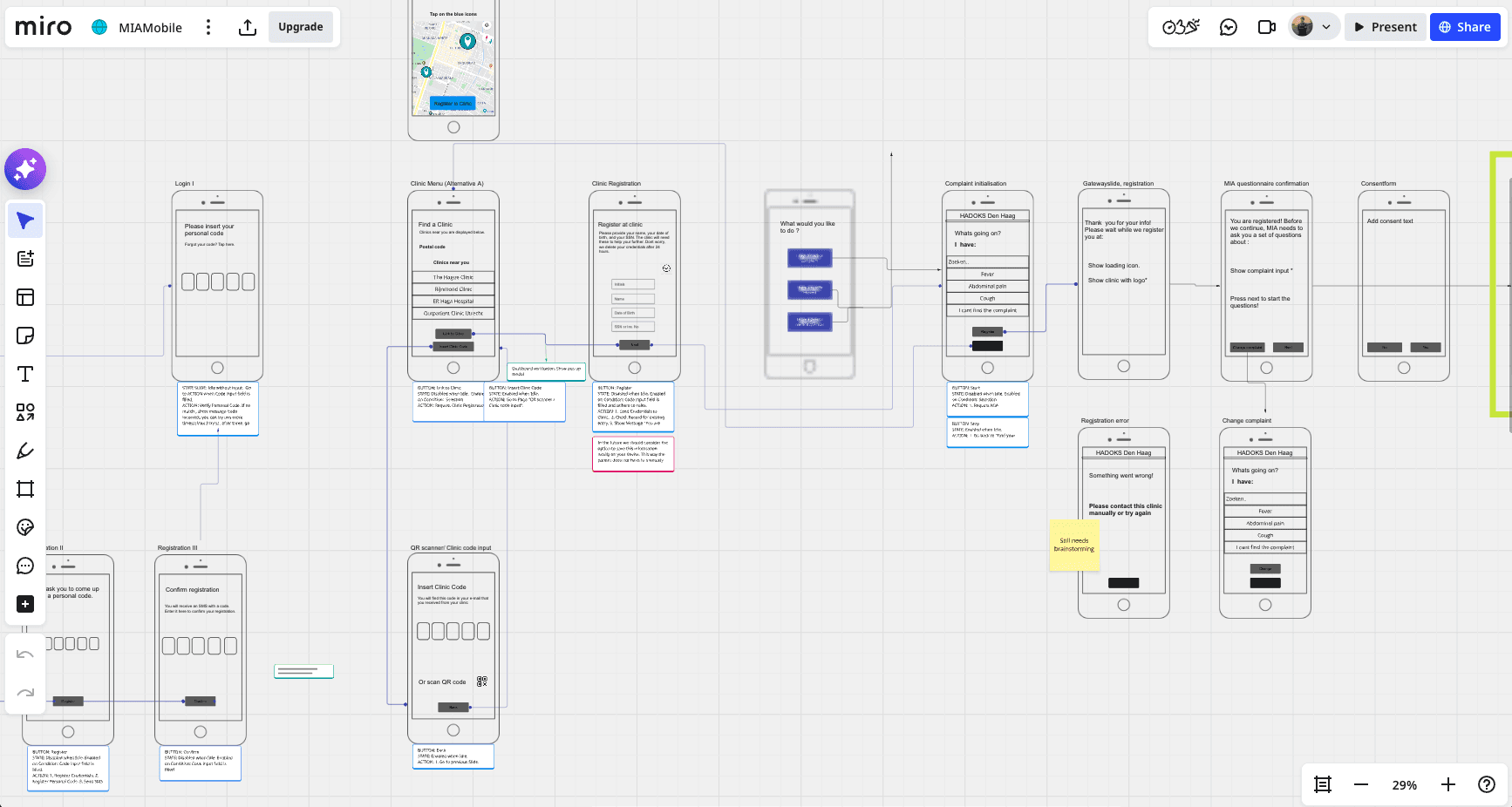
Assisted symptom screening flow design.
Building the proof of concept and gathering user feedback.
Dashboard architecture and data hierarchy modeling consulting with clinicians.
Wireframes and workflow validation.
High-fidelity UI design for mobile and SaaS.
User feedback and retrospect.
Pilot starting & changes based on the pilot performance.
Component-based design system creation.
Brand identity and visual language development.
Product design based on market needs for the business side.
Marketing website and ecosystem positioning.
Tech stack I used
Figma
XD
Illustrator
Miro
Typeform
Key design decisions
The choices that shaped the product turned out to be the turning point for the project. Check out the highlighted decisions below.
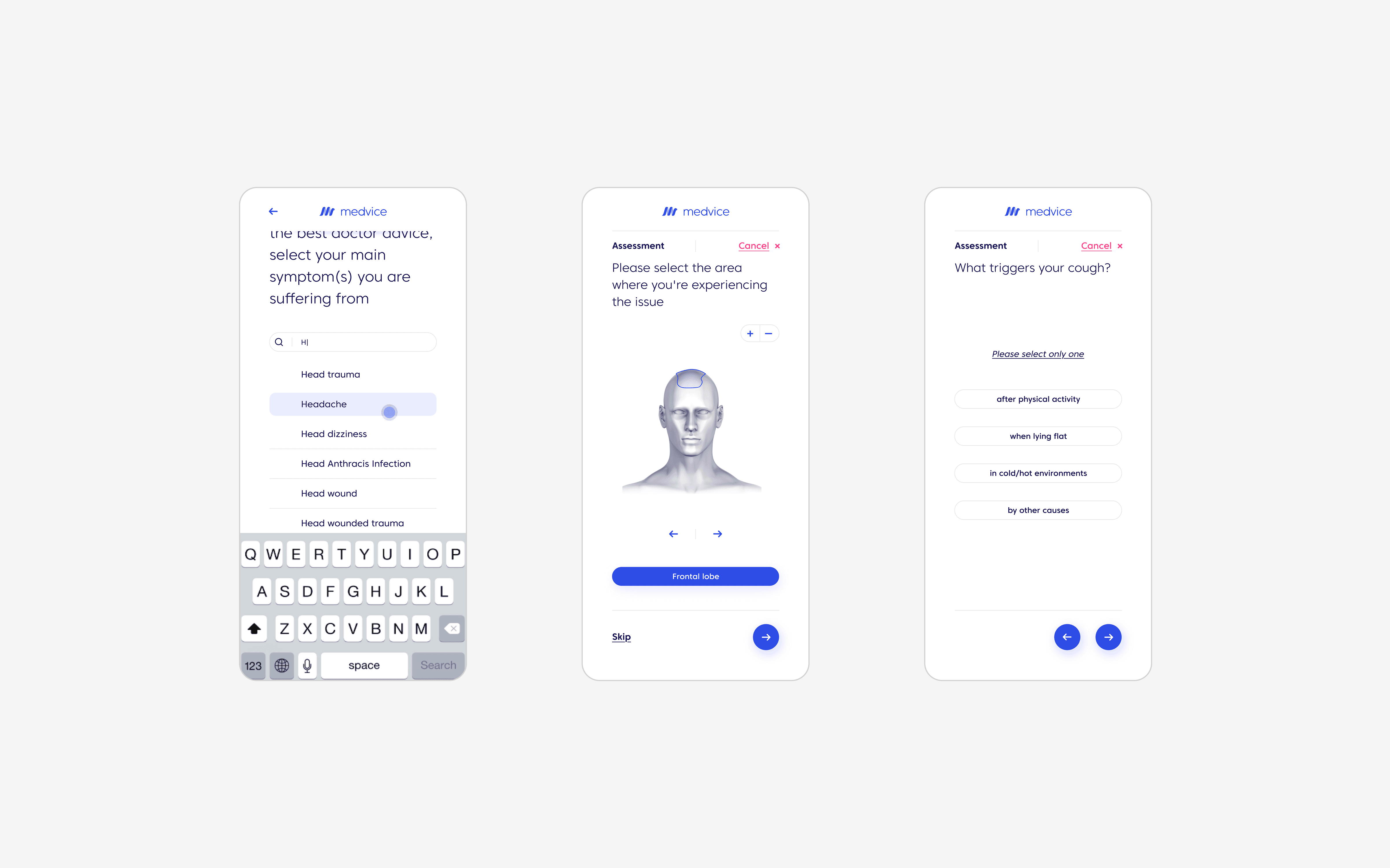
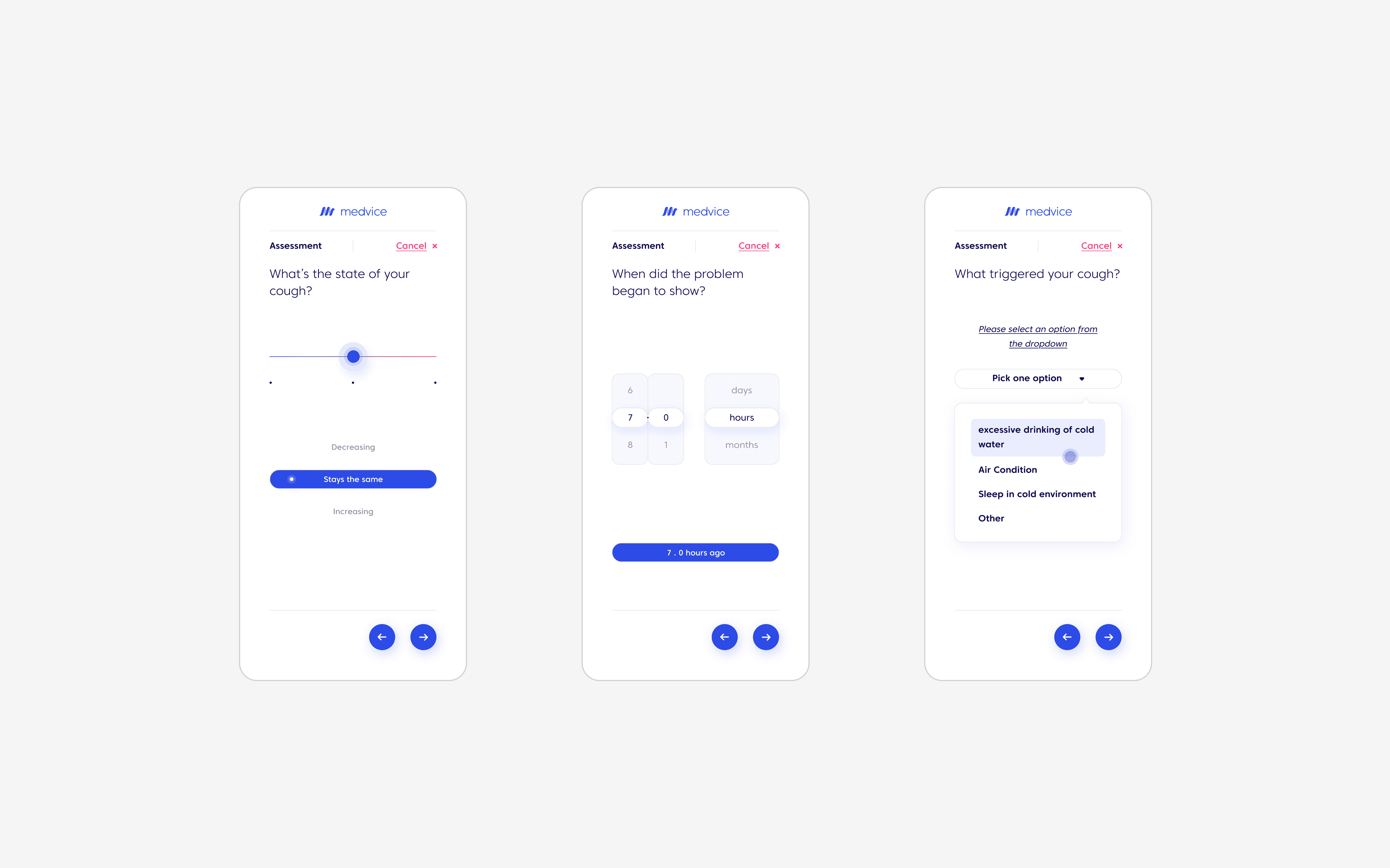
Structured QA style symptom screening instead of static intake forms
Reasoning
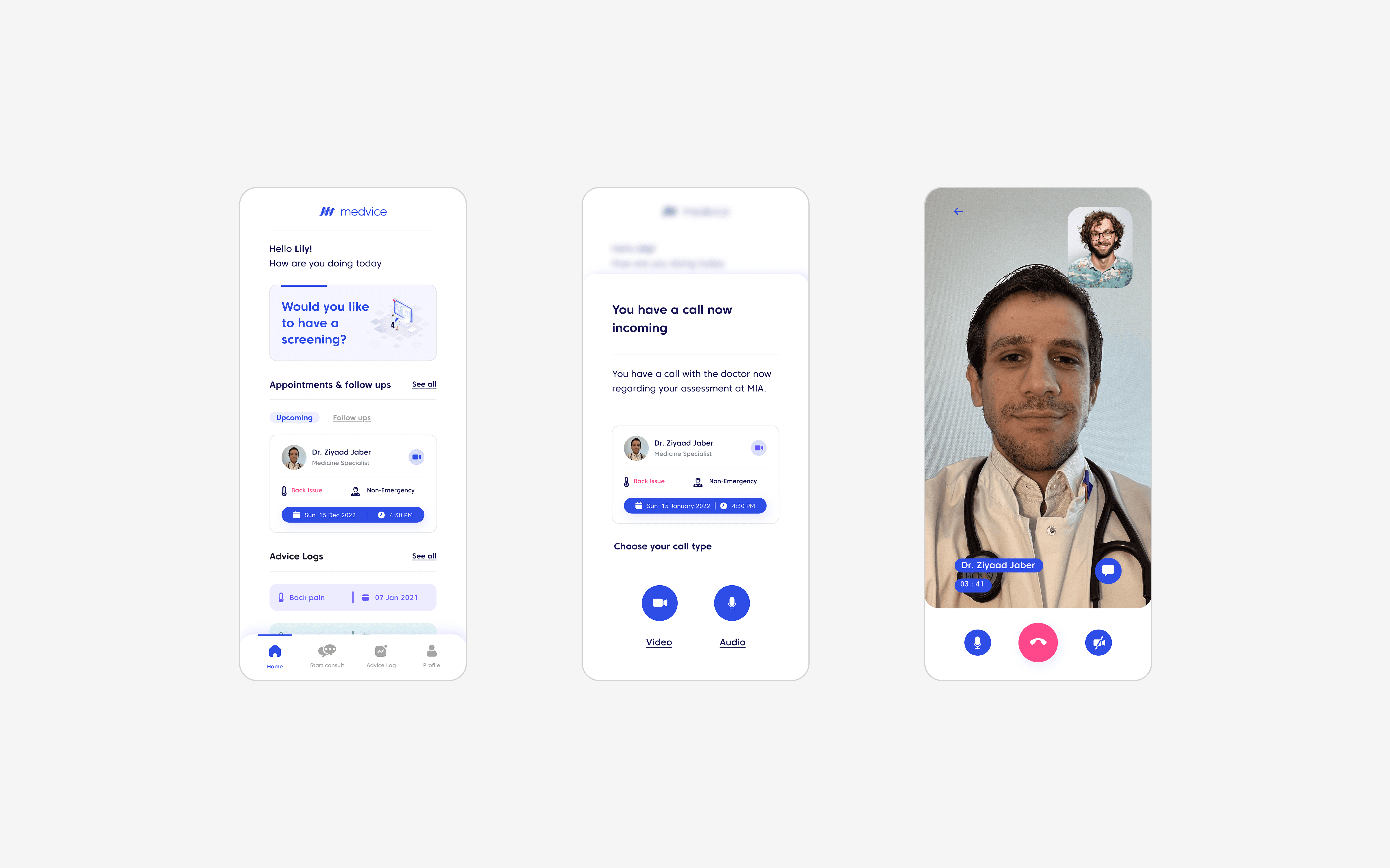
Screening provided are from a real doctor
Reasoning
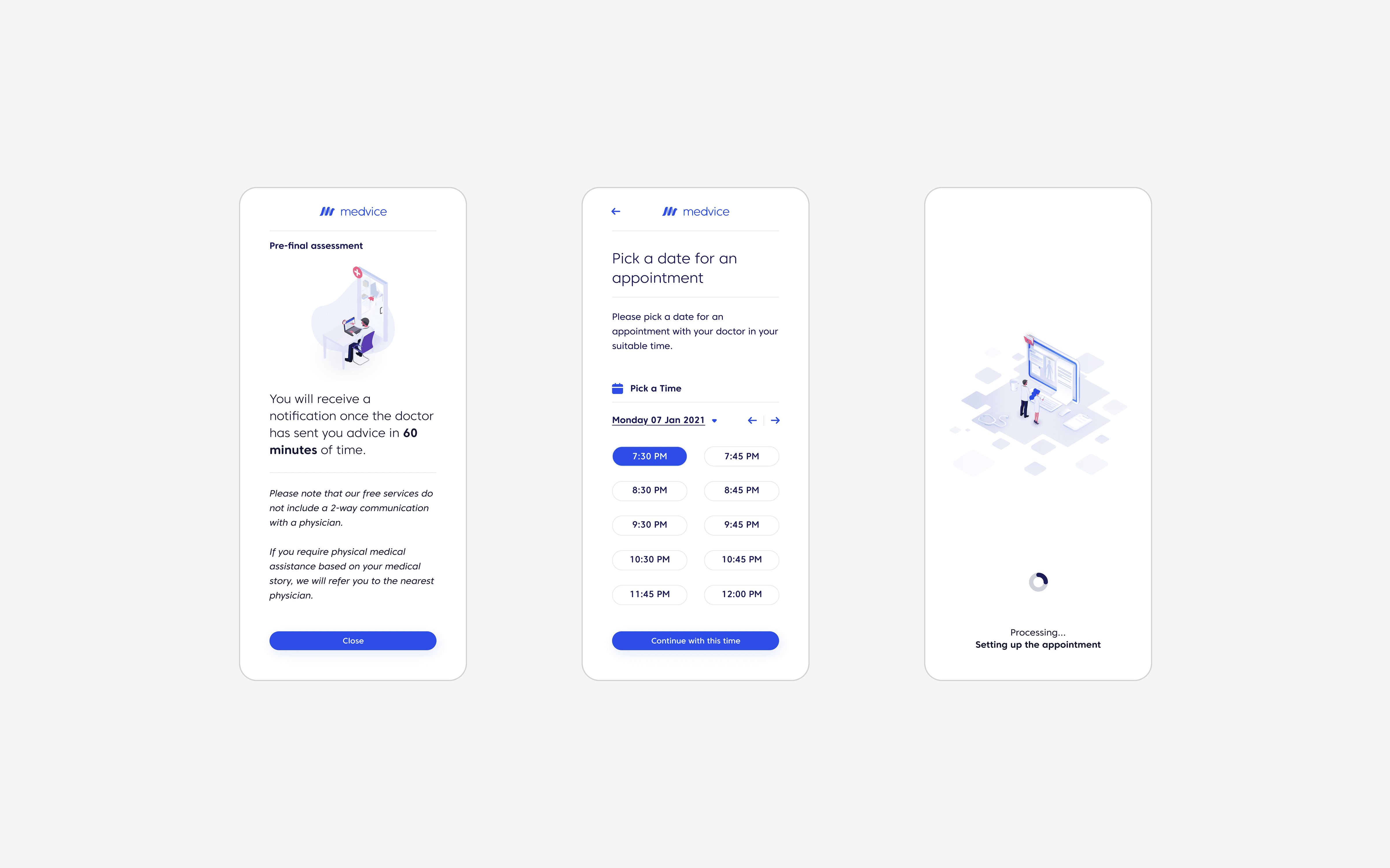
Intelligent system for screening reception
Reasoning
Short timespan and intuitive doctor patient interaction creates simpler user accessibility.
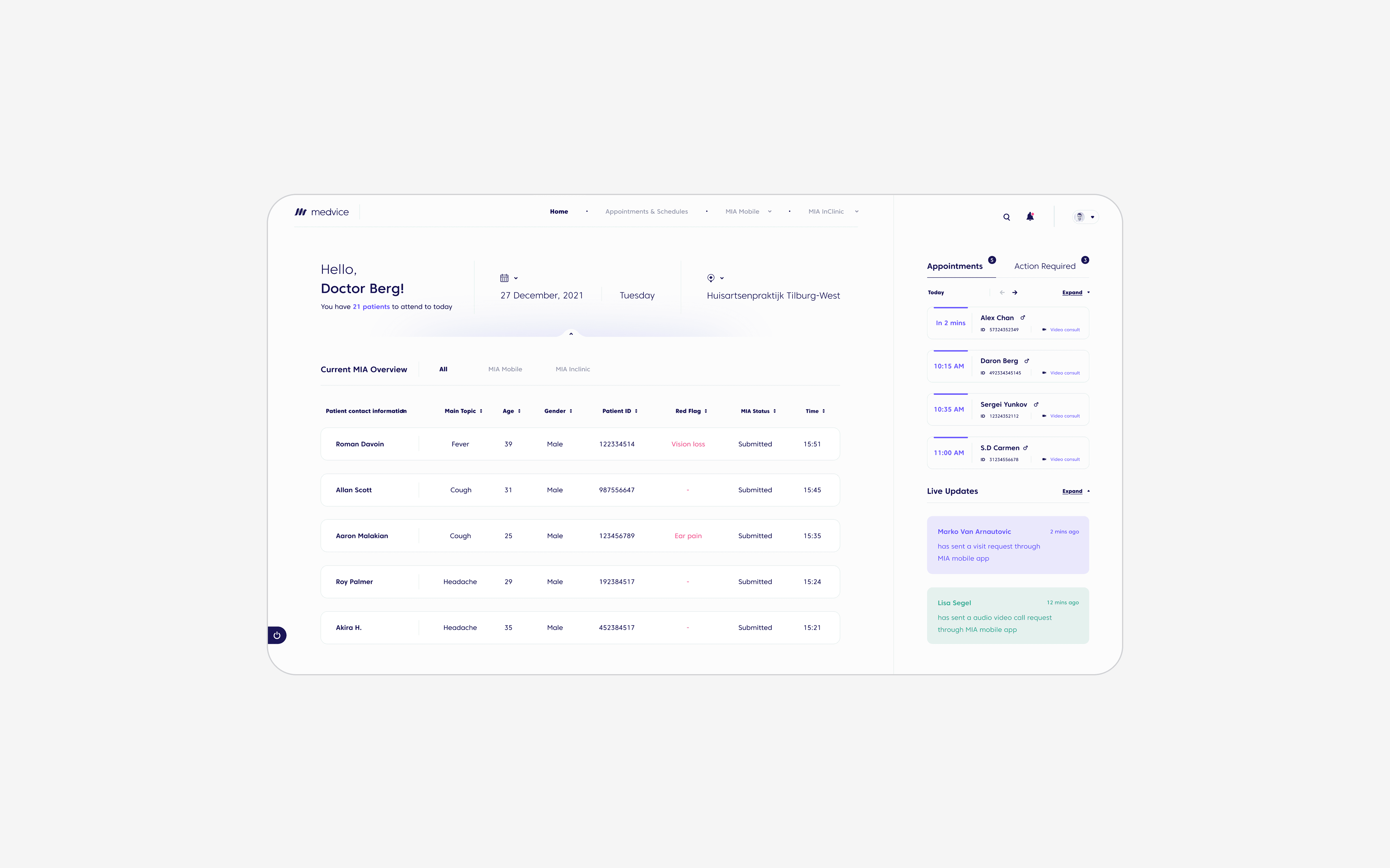
Task-prioritized dashboard hierarchy
Clinicians think in actions and decisions, not data categories.
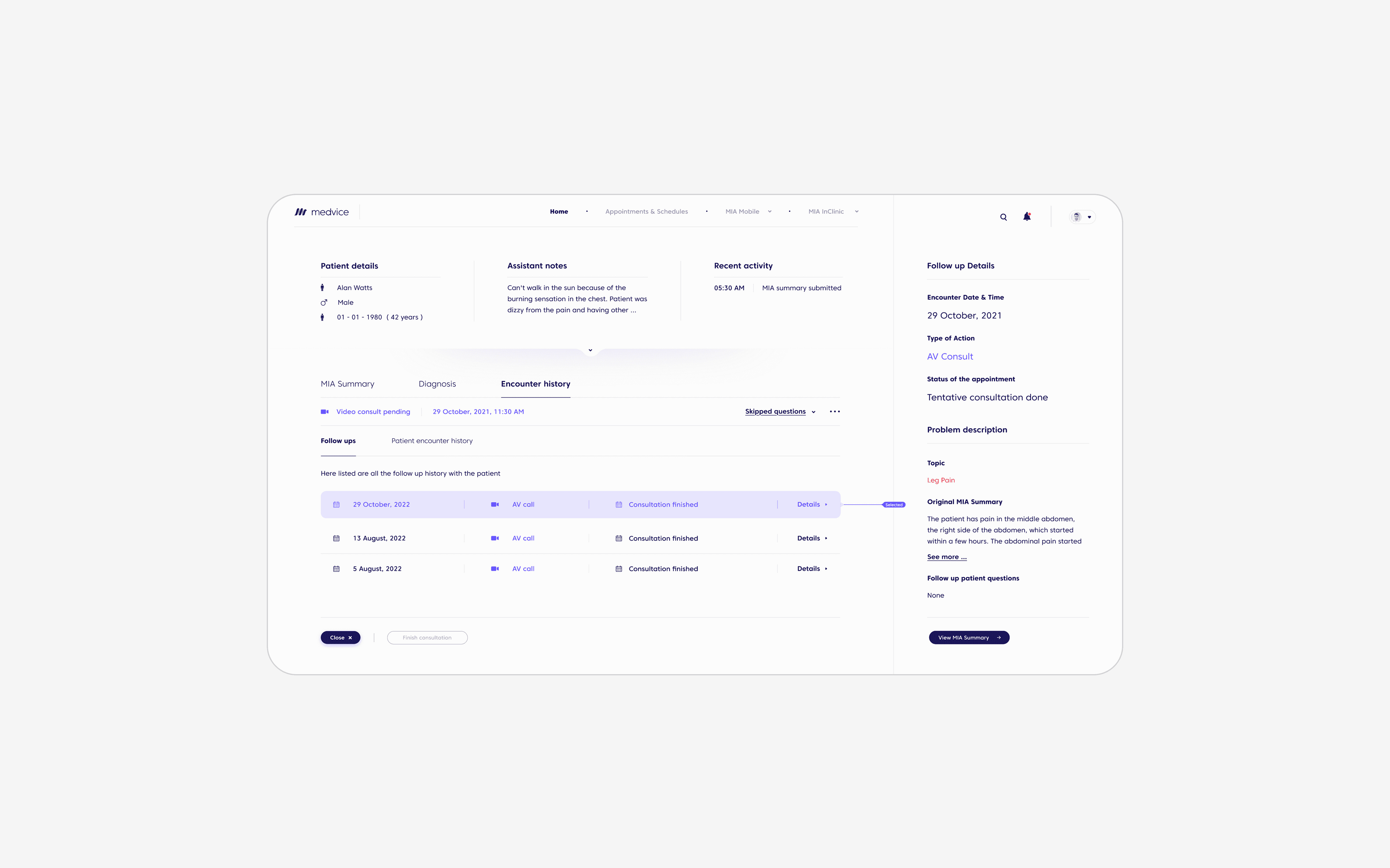
High-density layout with controlled visual hierarchy
Clinical environments require information depth without overwhelming usability.
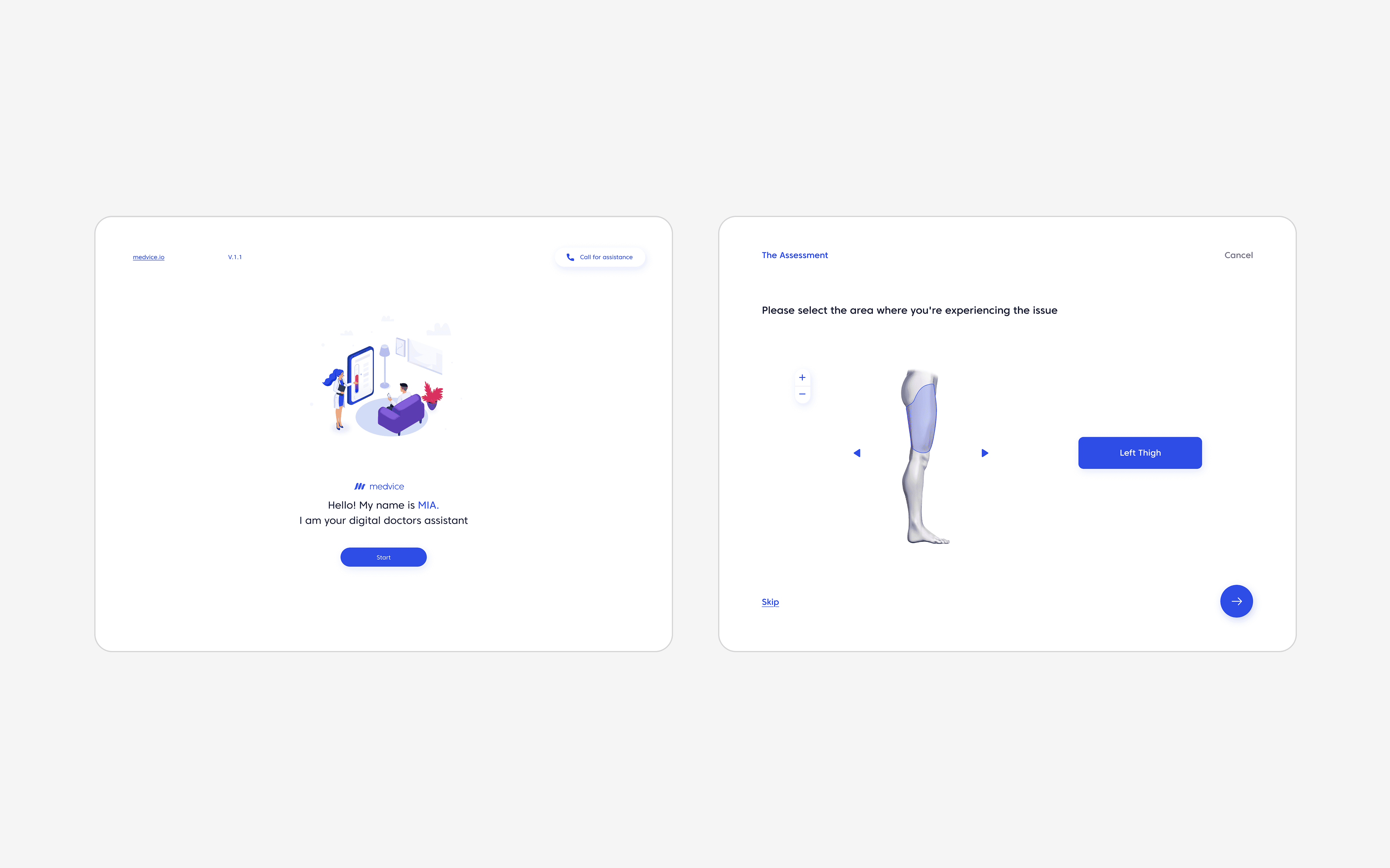
Tablet version
Unified design system across mobile and SaaS
Ensures consistency, scalability, and long-term maintainability.
System thinking
The ecosystem was built with modular foundations:
Questionnaire-based AI-assisted symptom flow templates.
Patient intake question frameworks.
Clinical dashboard component library.
Automation and record-keeping modules.
Shared design system across web and mobile.
Brand system supporting multi-region rollout.
This allowed the platform to scale across 10+ clinics without redesigning core interaction patterns.
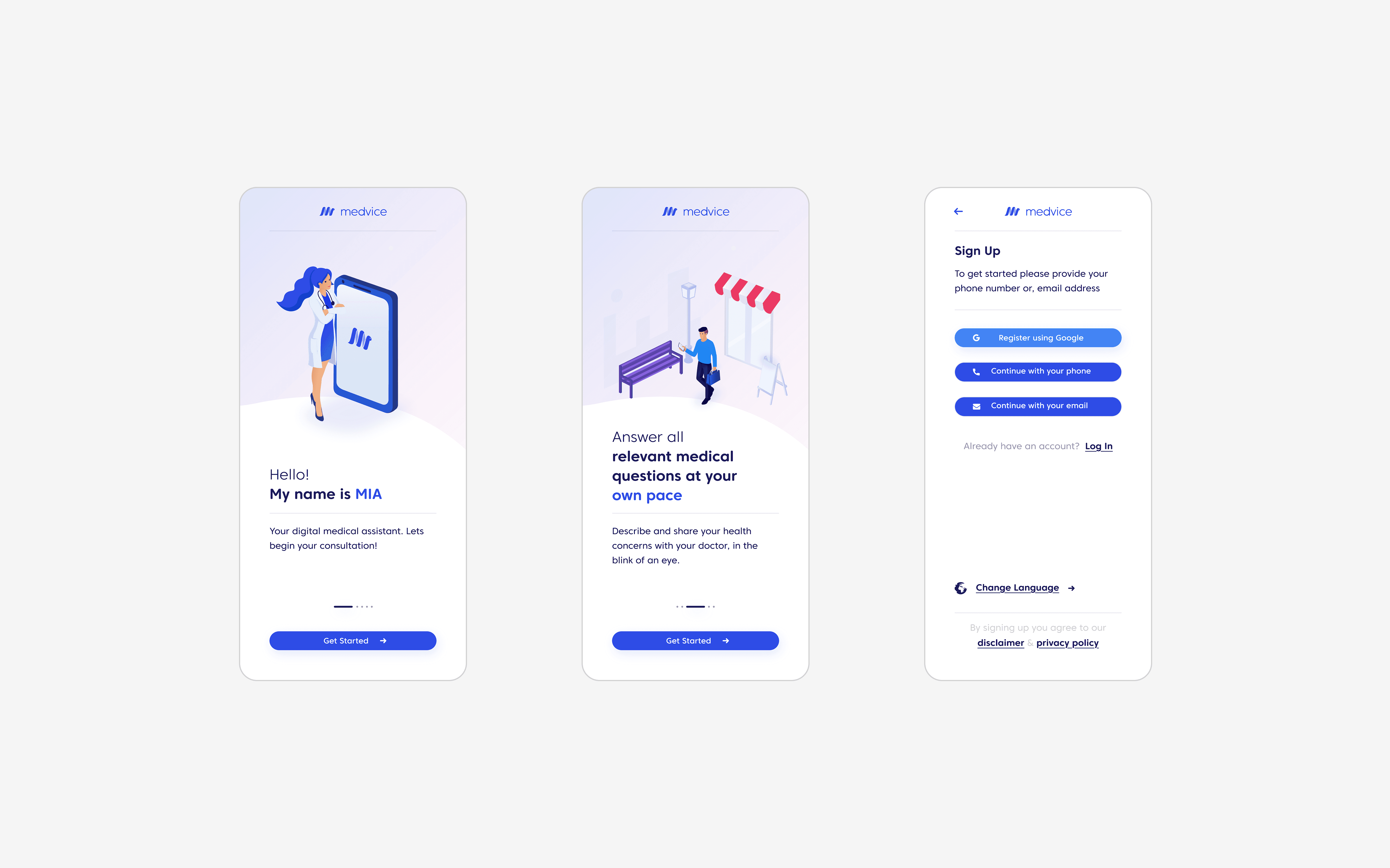
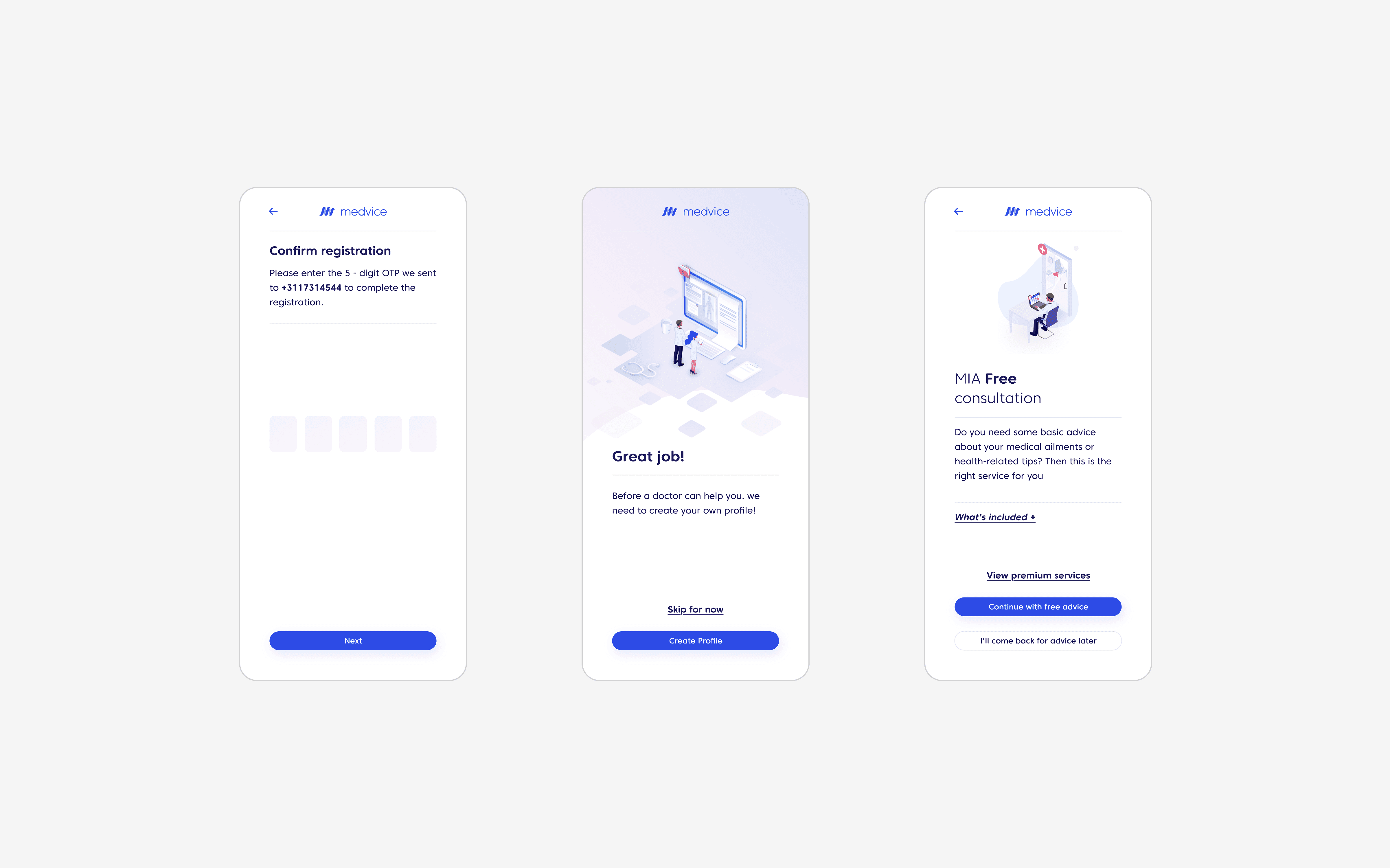
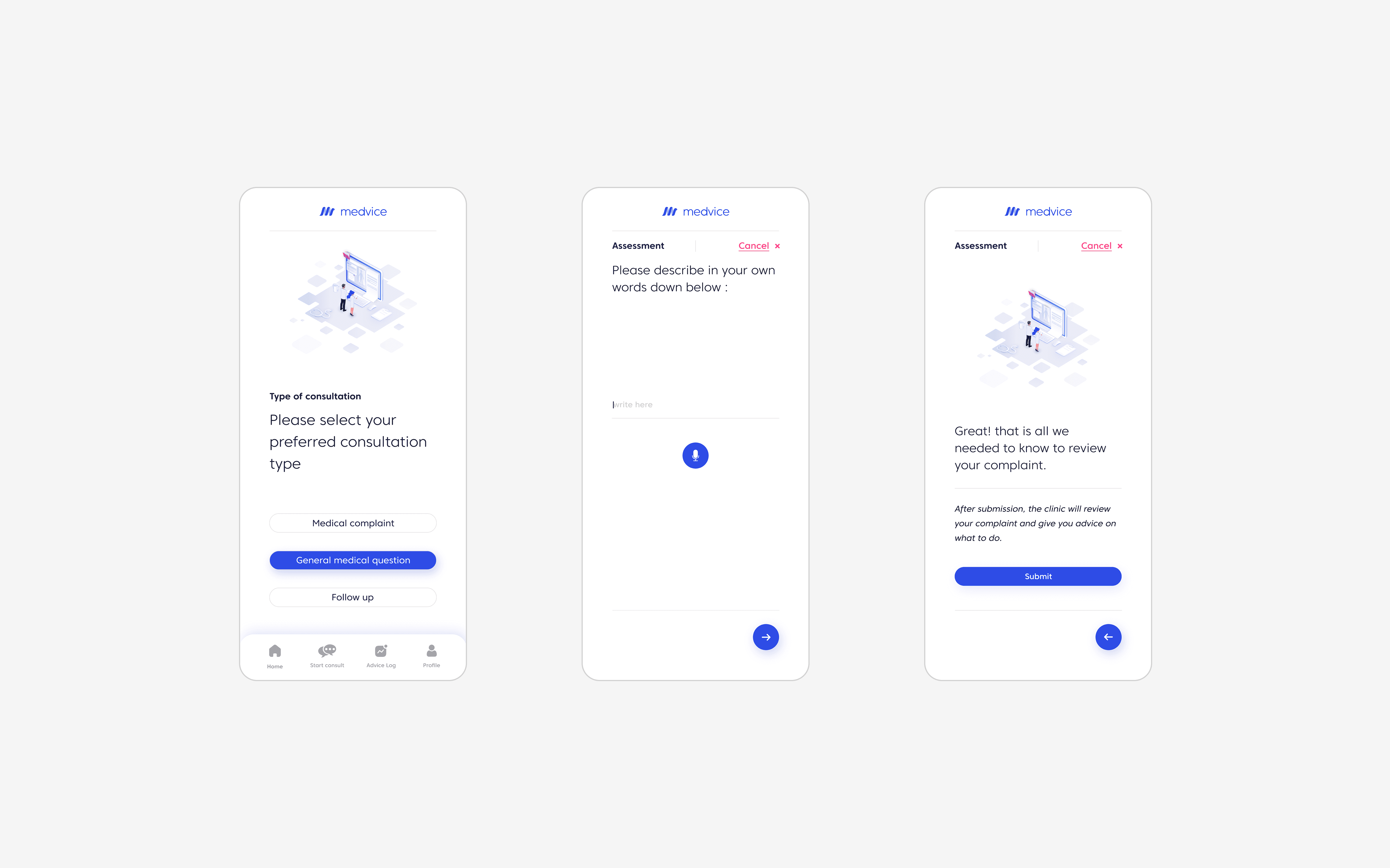
Simple review screens
Clear presentation of screening process and recommended next steps.
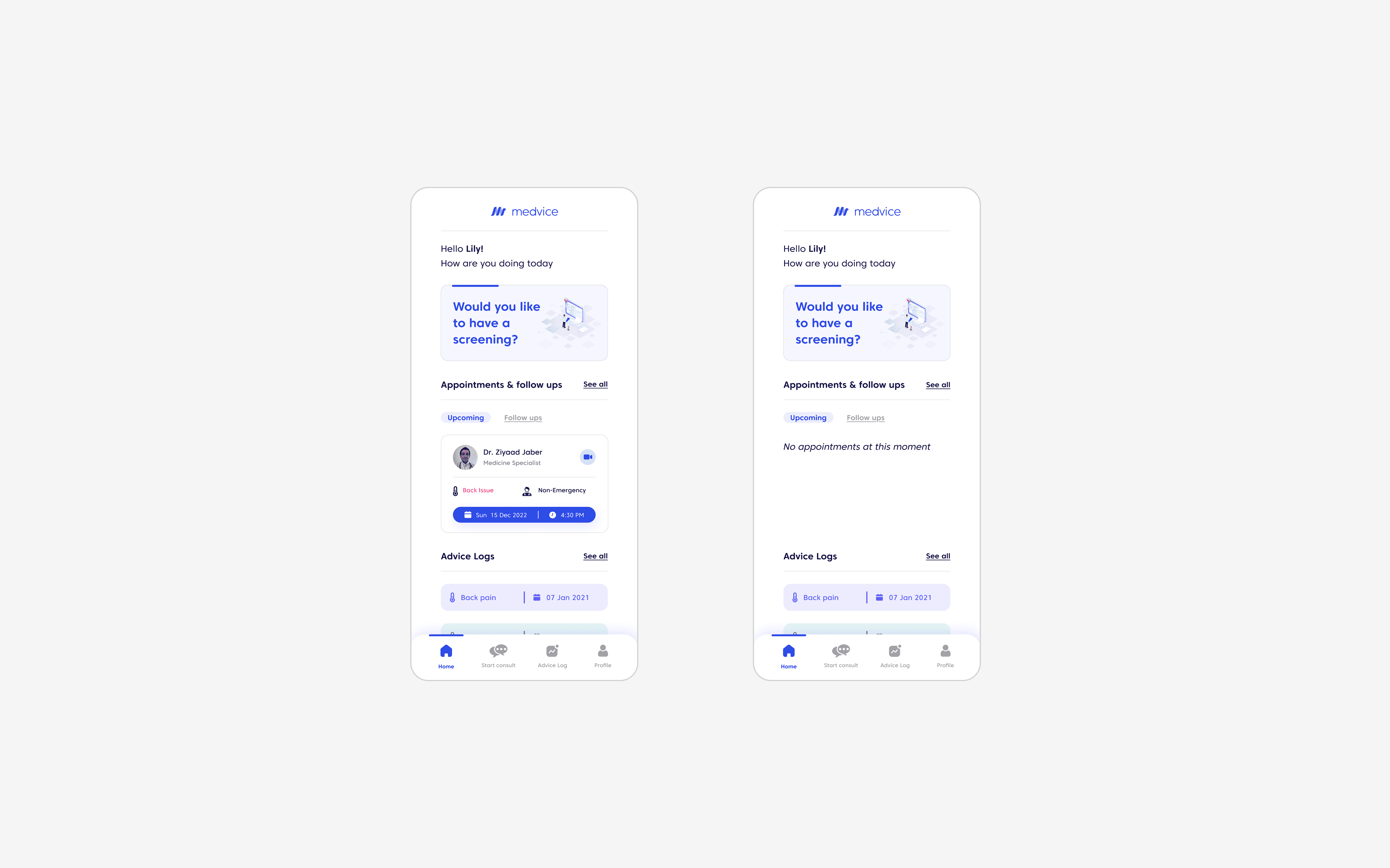
Personalized home experience
Adaptive home screen dynamically updates based on patient activity and care progress.
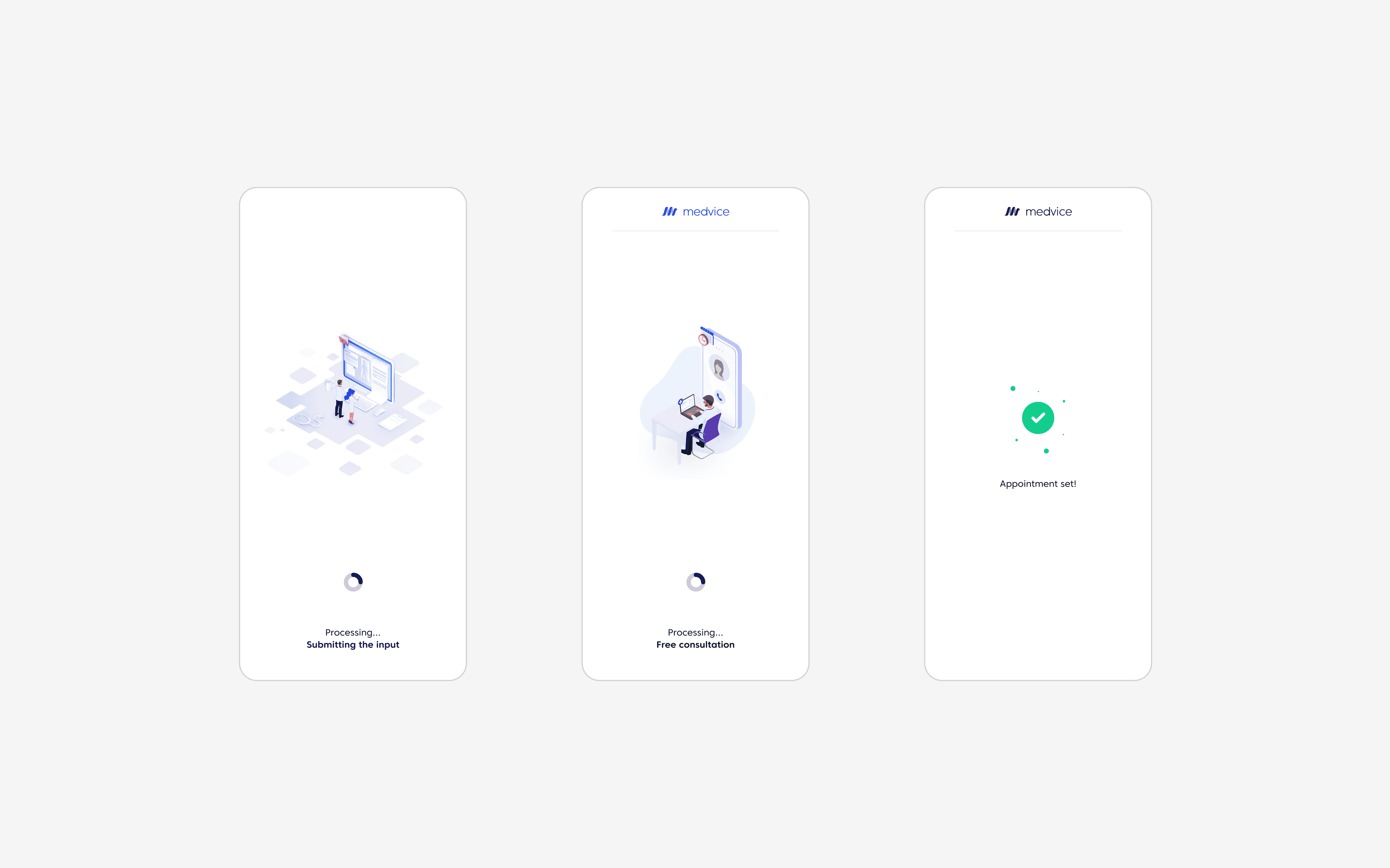
Context-aware empty states
Supportive empty states that prompt next actions instead of leaving users uncertain.
Additional tasks
In addition to the MVP, I developed a comprehensive branding system, a website to market the products, and marketing collaterals in liaison with the marketing team. I worked with several design interns on the branding side of the project; they were a big help in finding the right balance. But in the end, every final decision was made by me.
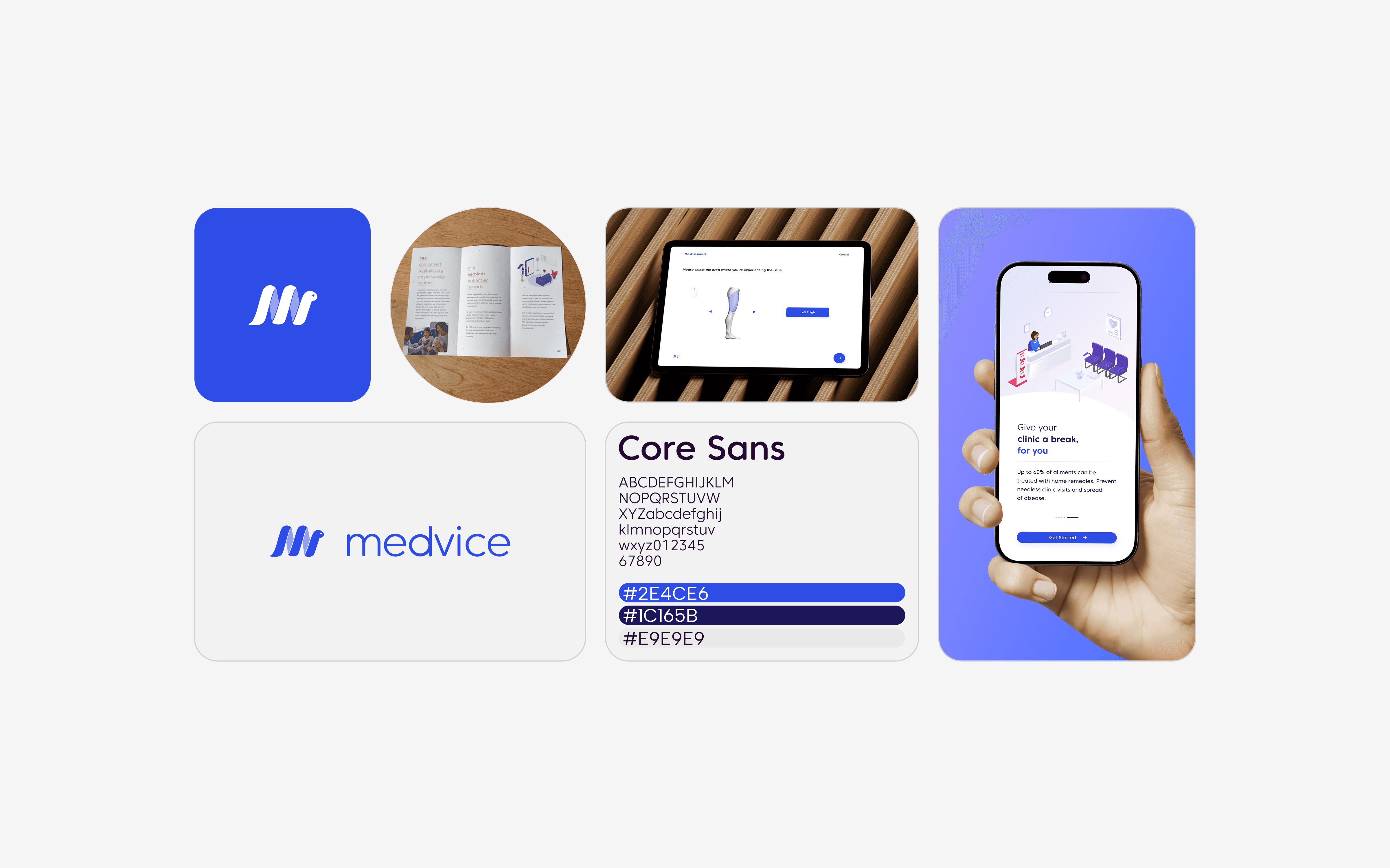
Cohesive brand identity system
Ensures consistency across all platforms.
A modern website
To showcase the products in details.
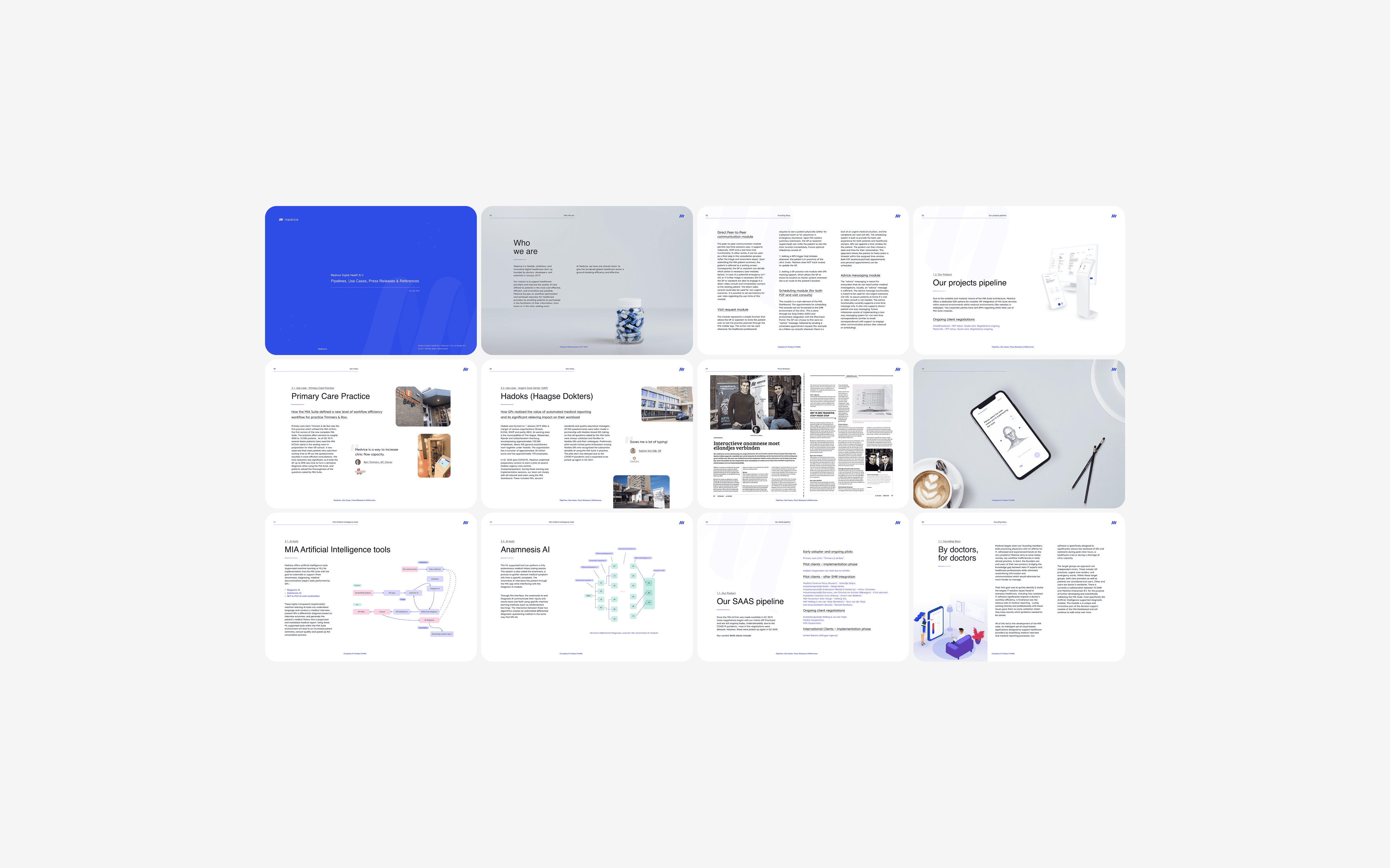
Product pitch
A booklet for the investors in the unified brand system.
Outcomes
Medvice launched across the Netherlands and the Middle East and was adopted by 10+ clinics in the first month of release.
Impact included:
Reduction in administrative workload.
Significantly shortened patient screening times.
Improved operational efficiency.
More clinicians focus on direct patient care.
The platform established a scalable operational foundation for continued expansion across regions.
The level of detail and care Mahamud brought to the project helped us establish a strong and credible presence in the medical sector in the Netherlands. We worked together for over two years, and we look forward to collaborating again on future projects as he is nothing but outstanding.

Tareq Jaber
CEO, Resident Doctor
Medvice B.V, TU Delft
My learnings
To summarize :
High-density clinical interfaces require disciplined hierarchy design.
AI-assisted intake significantly reduces manual administrative burden.
Use of AI before it became mainstream recently helped product positioning.
Dual-sided health systems benefit from the strict separation of user journeys.
Long-term engagements allow stronger system foundations over surface-level fixes.
Operational products require deep workflow understanding before visual design.