Internal manufacturing ERP, Enterprise SaaS
2025
USA
American Security Cabinets — Designing a centralized manufacturing ERP for industrial operations
86%
Onboarding time cut
100%
Real-time production visibility
43%
Lost order rate reduction
Problem
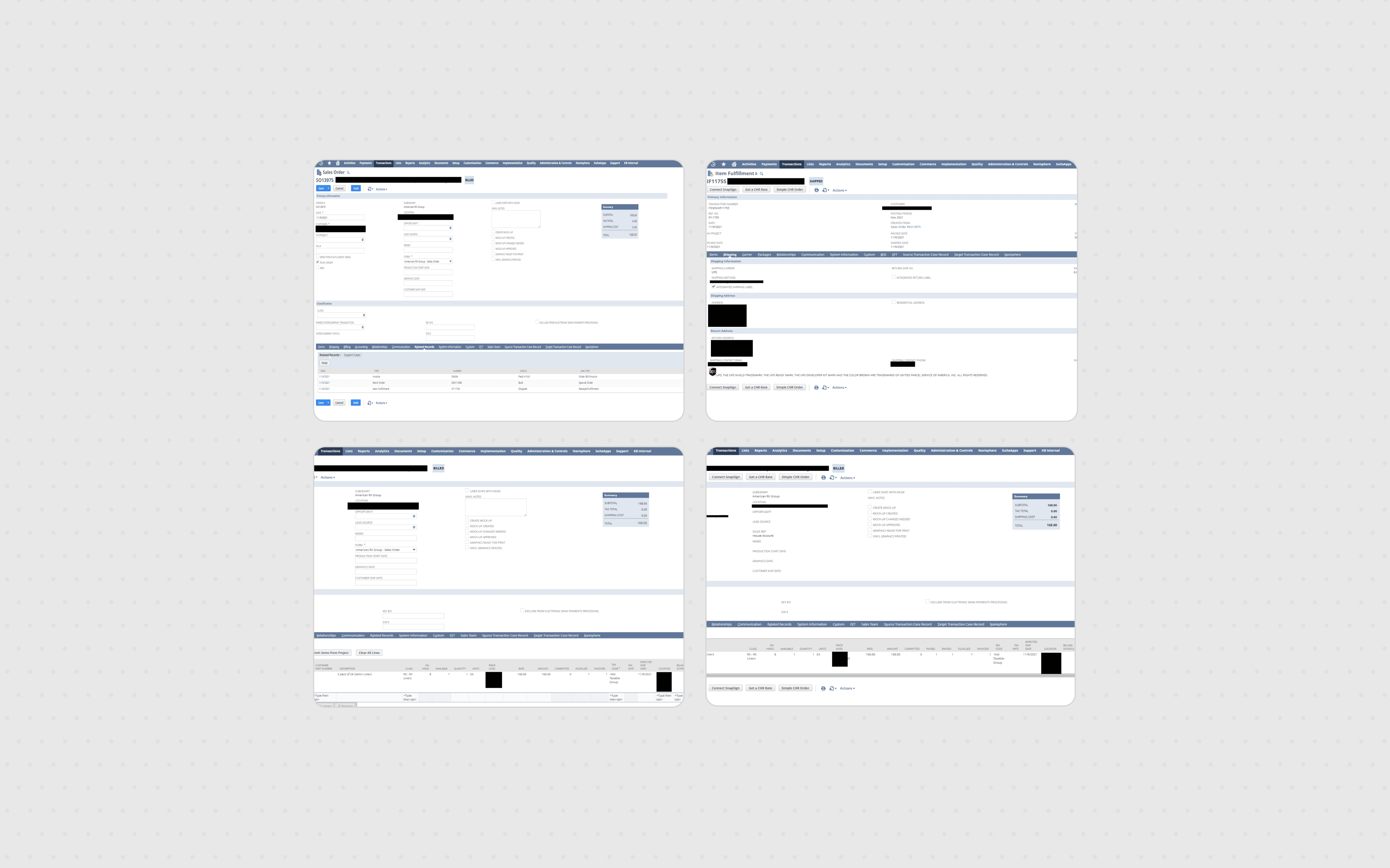
American Security Cabinets; a subsidiary of Walmart group operated complex manufacturing workflows through fragmented legacy tools.
Order intake, scheduling, factory coordination, and tracking existed across disconnected systems and manual processes. This created operational blind spots and increased administrative overhead.
Teams managing hundreds of concurrent production orders lacked a single source of truth. Information lived in silos, resulting in:
Reduced visibility across assembly stages.
Inconsistent order tracking.
Operational friction between the administrative and factory teams.
Time lost reconciling data across systems.
The challenge was not simplification — it was structured clarity at scale.
Scope of my work
End-to-end ERP design and operational workflow consolidation
Product team size
Product manager : 2, Product owner : 3, Software dev : 2, Core design : 1 ( Me ), Design intern : 1
Constraints
Product constraints I found:
Extremely dense data environments.
Factory-floor visibility requirements.
Deeply embedded legacy workflows.
Need for real-time production accuracy.
Operational dependence on process continuity.
Product context
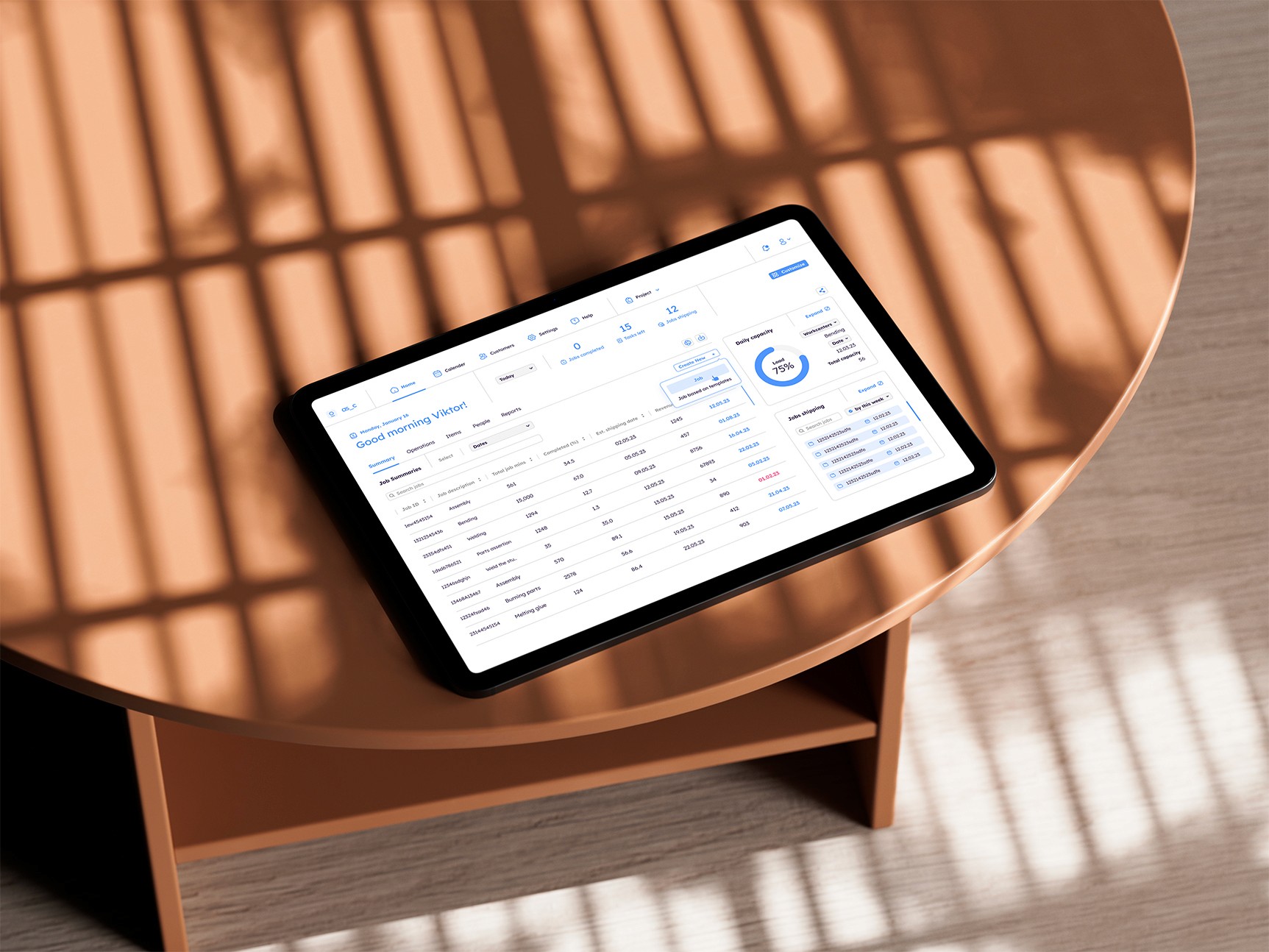
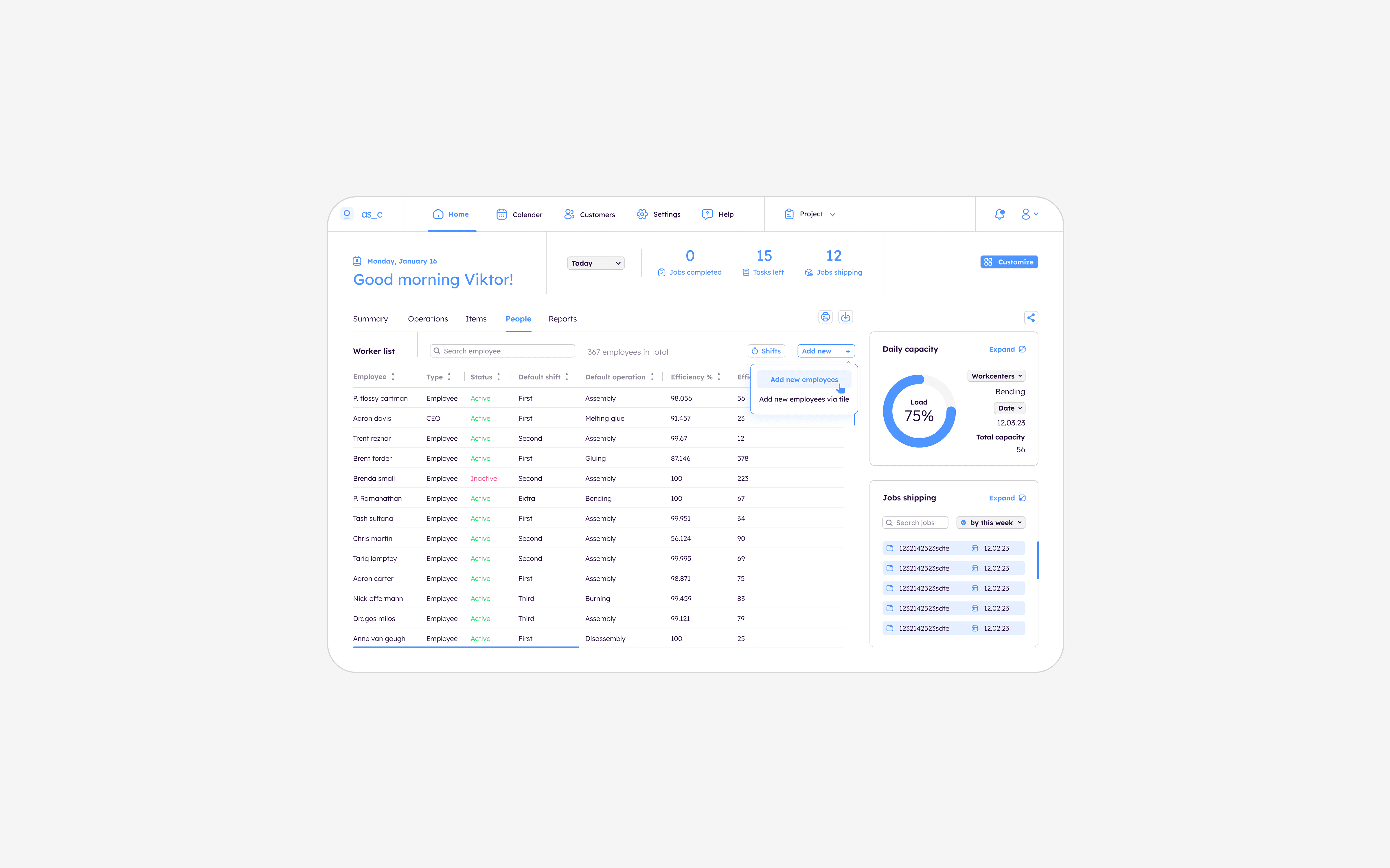
I designed the ERP as a centralized operational backbone serving administrative coordinators and production teams.
The system needed to support:
High-volume concurrent orders
Multi-stage production workflows
Real-time factory status updates
Cross-team operational visibility
The interface had to prioritize:
Speed of scanning
Information hierarchy under heavy data load
Clear status communication
Industrial-grade usability
This was a performance tool — not a marketing interface.
The product goal was:
Consolidate all disconnected workflows into a unified system.
Improve real-time visibility into production stages.
Reduce dependency on manual tracking tools.
Shorten the onboarding time for new administrative staff.
Create a scalable operational foundation for growth.
Project overview
Strategy
As usual, my UX strategy centered on enabling operational speed without sacrificing clarity.
Strategic principles:
Tabular-first architecture for bulk order management.
Strong hierarchy and spatial consistency.
Status-based visual signalling for immediate recognition.
Linear production-stage mapping for transparency.
Task-oriented navigation aligned with real workflows.
The objective was to support fast decision-making in high-pressure environments.
Process
The process I followed:
Stakeholder interviews across administrative and factory teams.
Workflow decomposition and system consolidation mapping.
Order lifecycle modelling.
High-density table architecture exploration.
Visual status logic system development.
Production timeline framework design.
Wireframe validation with operational scenarios.
High-fidelity UI optimized for industrial environments.
A/B testing using Optimizely.
Reusable internal component system creation.
Tech stack I used
Figma
Optimizely
Key design decisions
Key design decisions that influenced the product were driven by a systematic approach to UX design as what I always take:
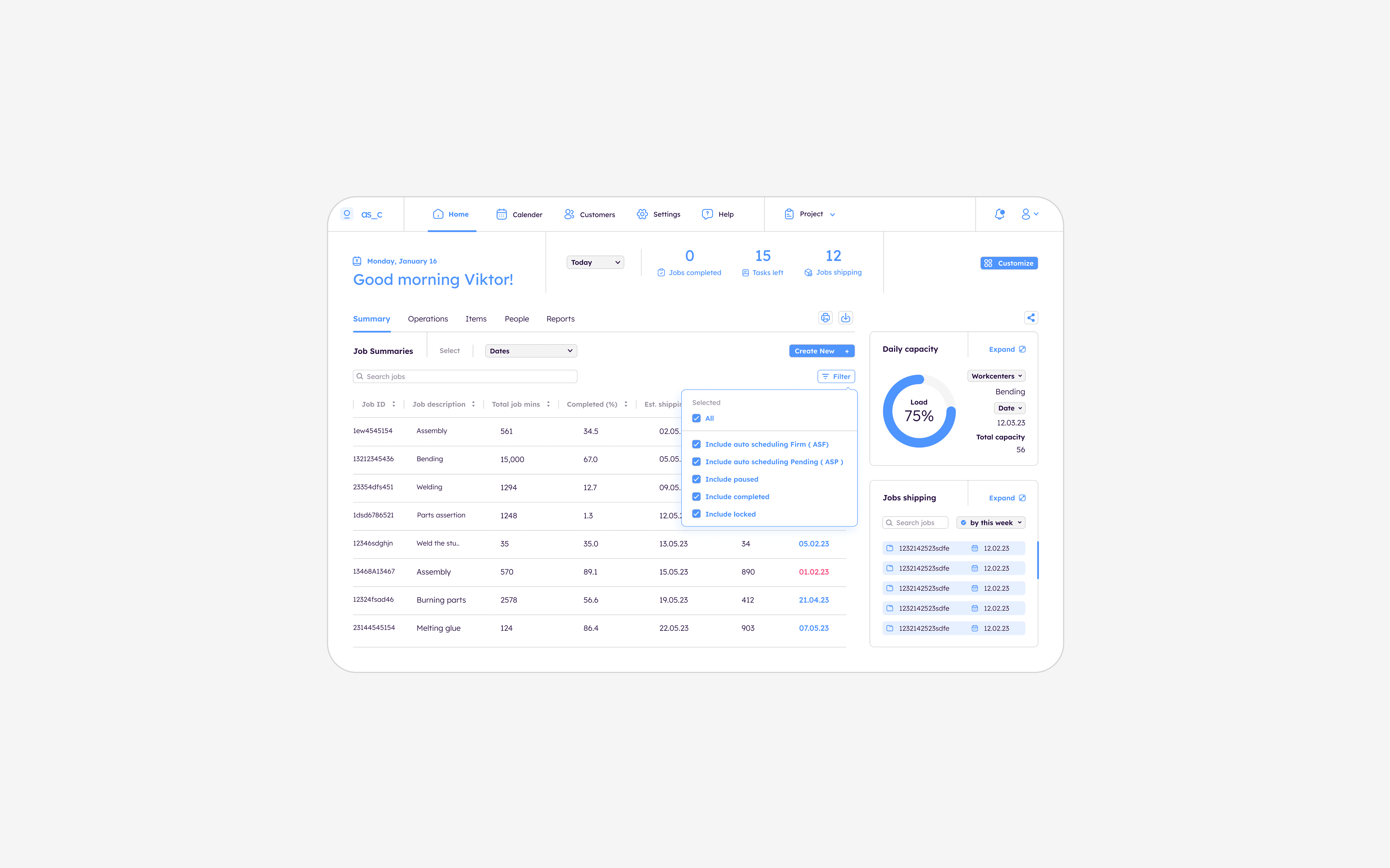
High-density tabular core layout
Reasoning
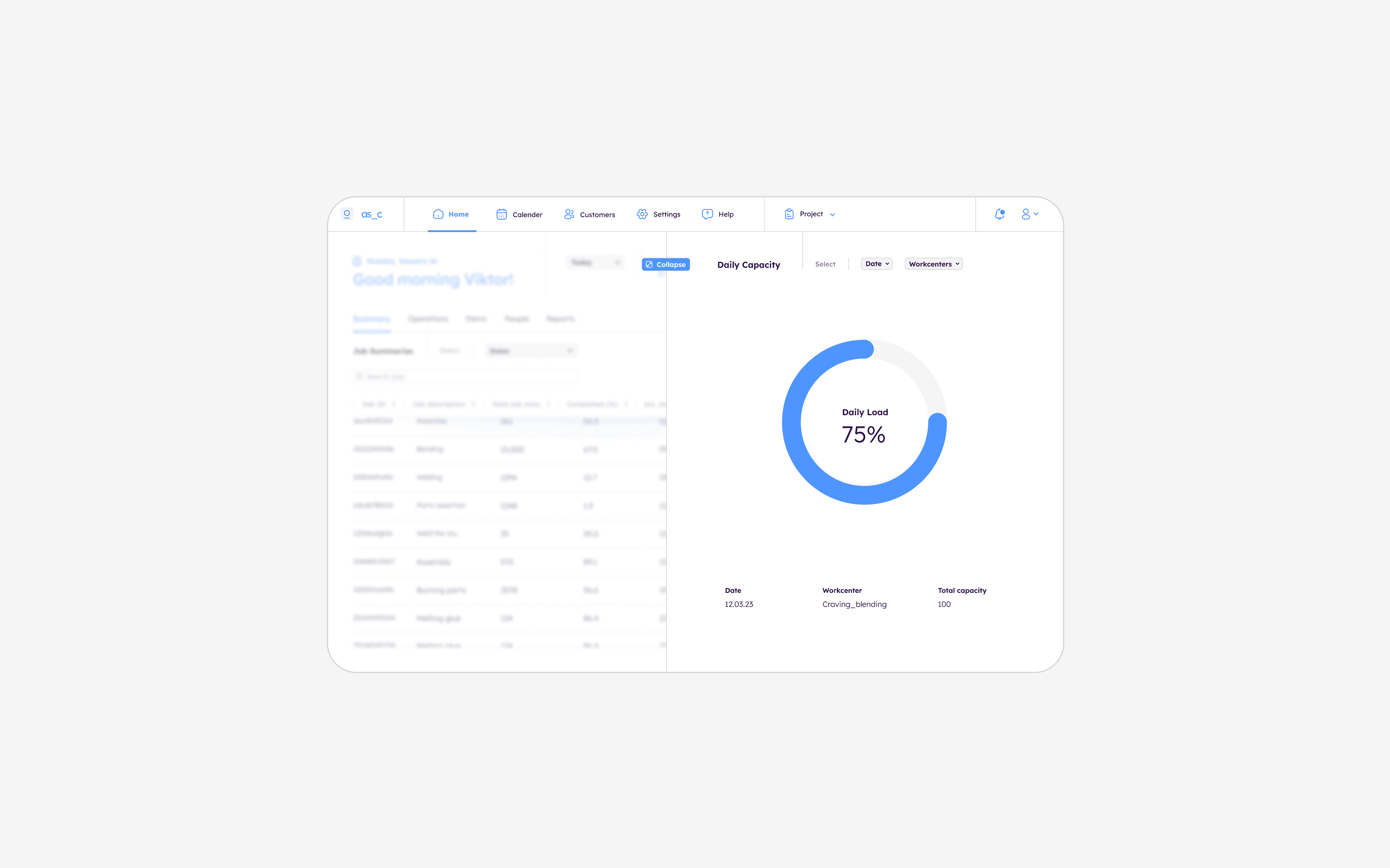
Stage-based production timeline
Reasoning
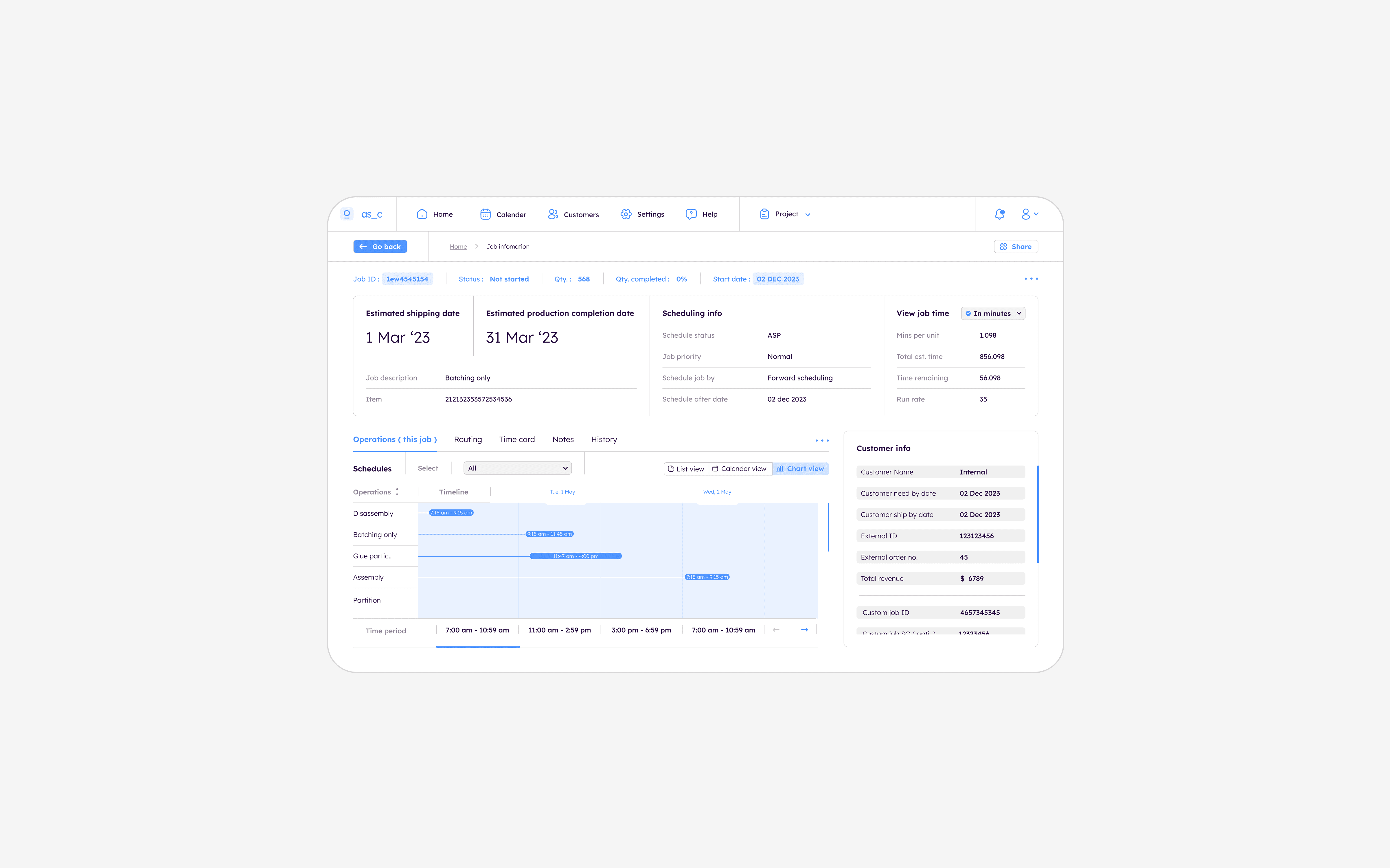
Bold status signaling system
Reasoning
Production teams require instant state recognition under time constraints.
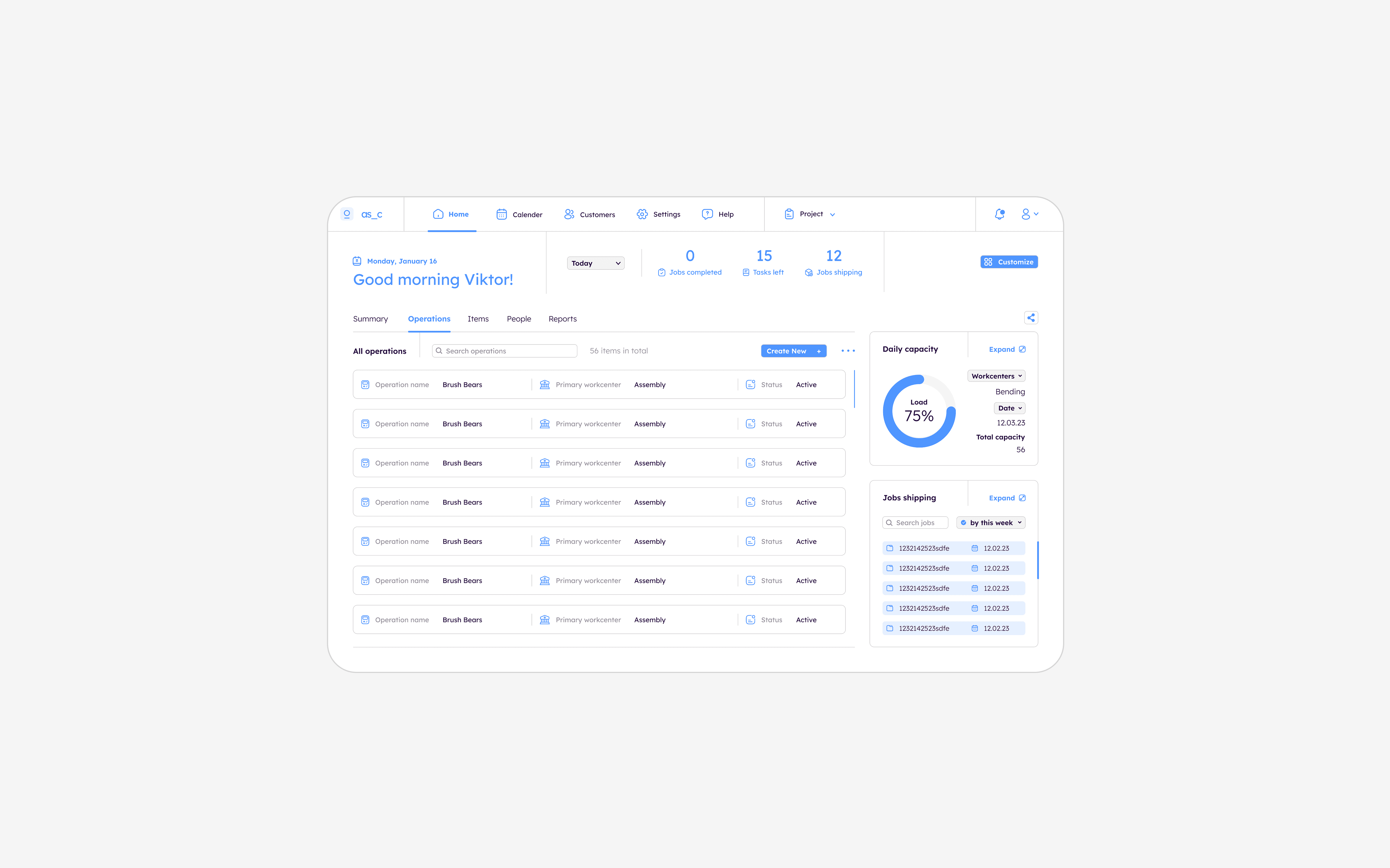
Unified operational architecture
Eliminates reconciliation between systems and reduces workflow friction
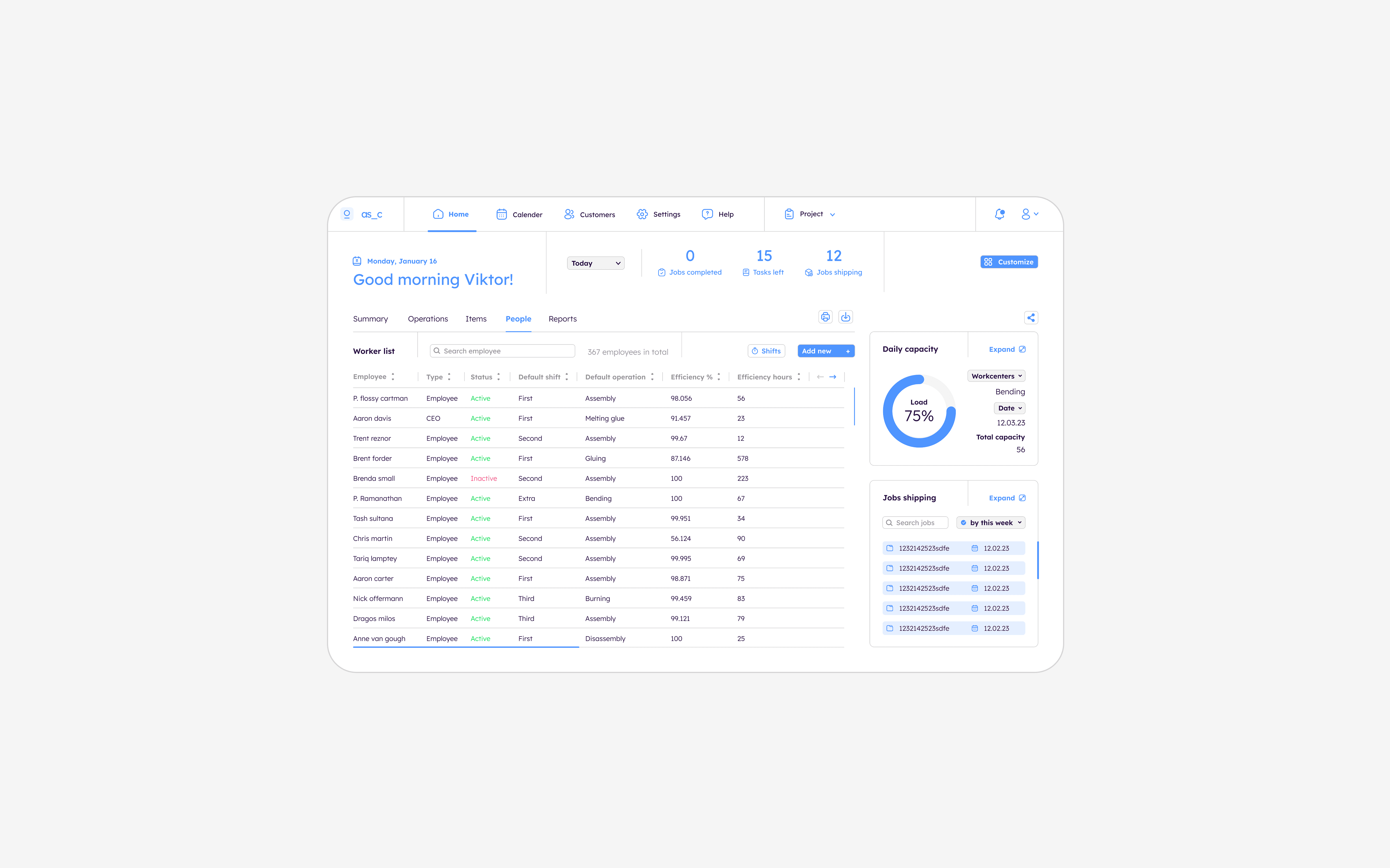
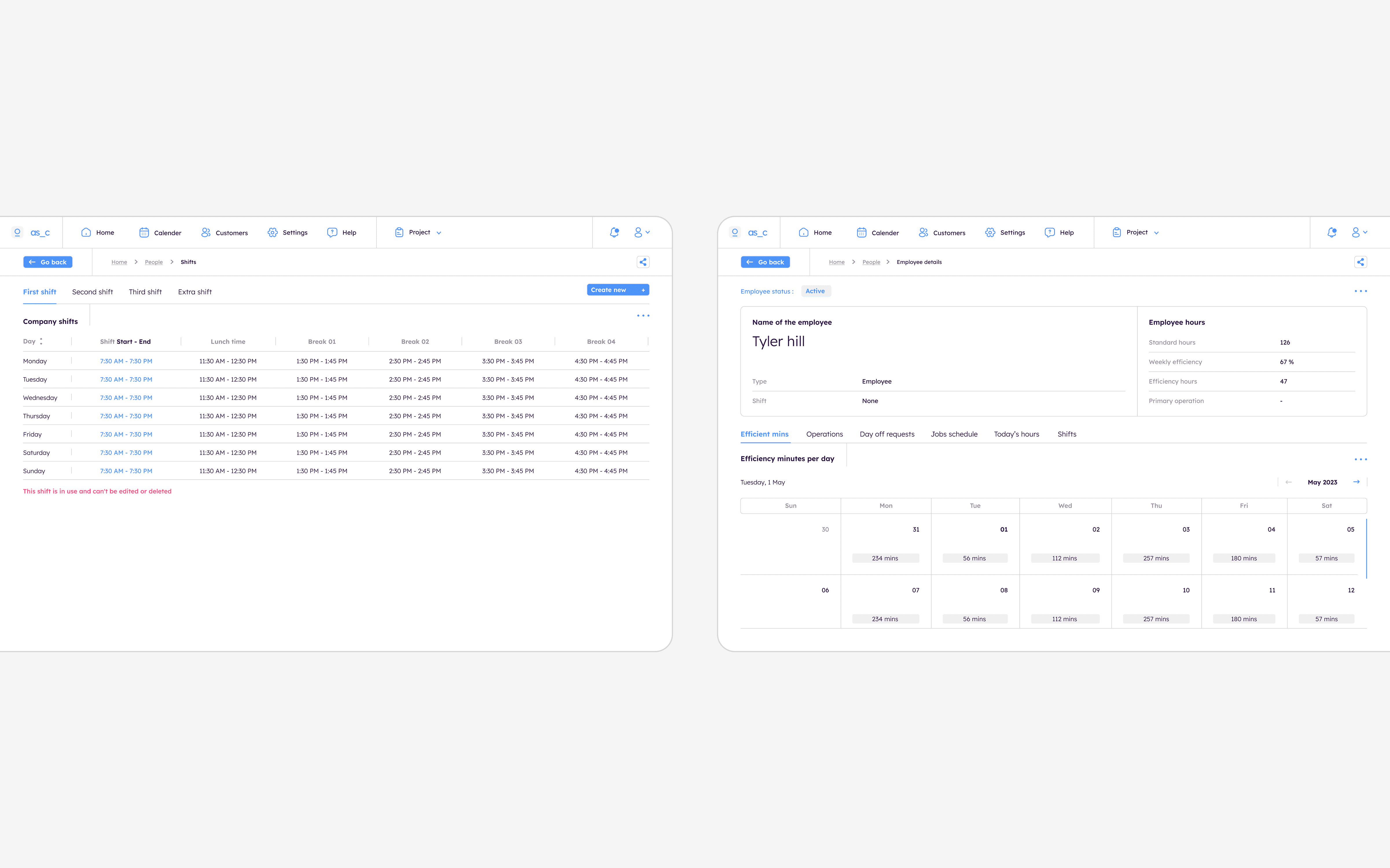
Production roles tracking
To stay up to date with the core production stages.
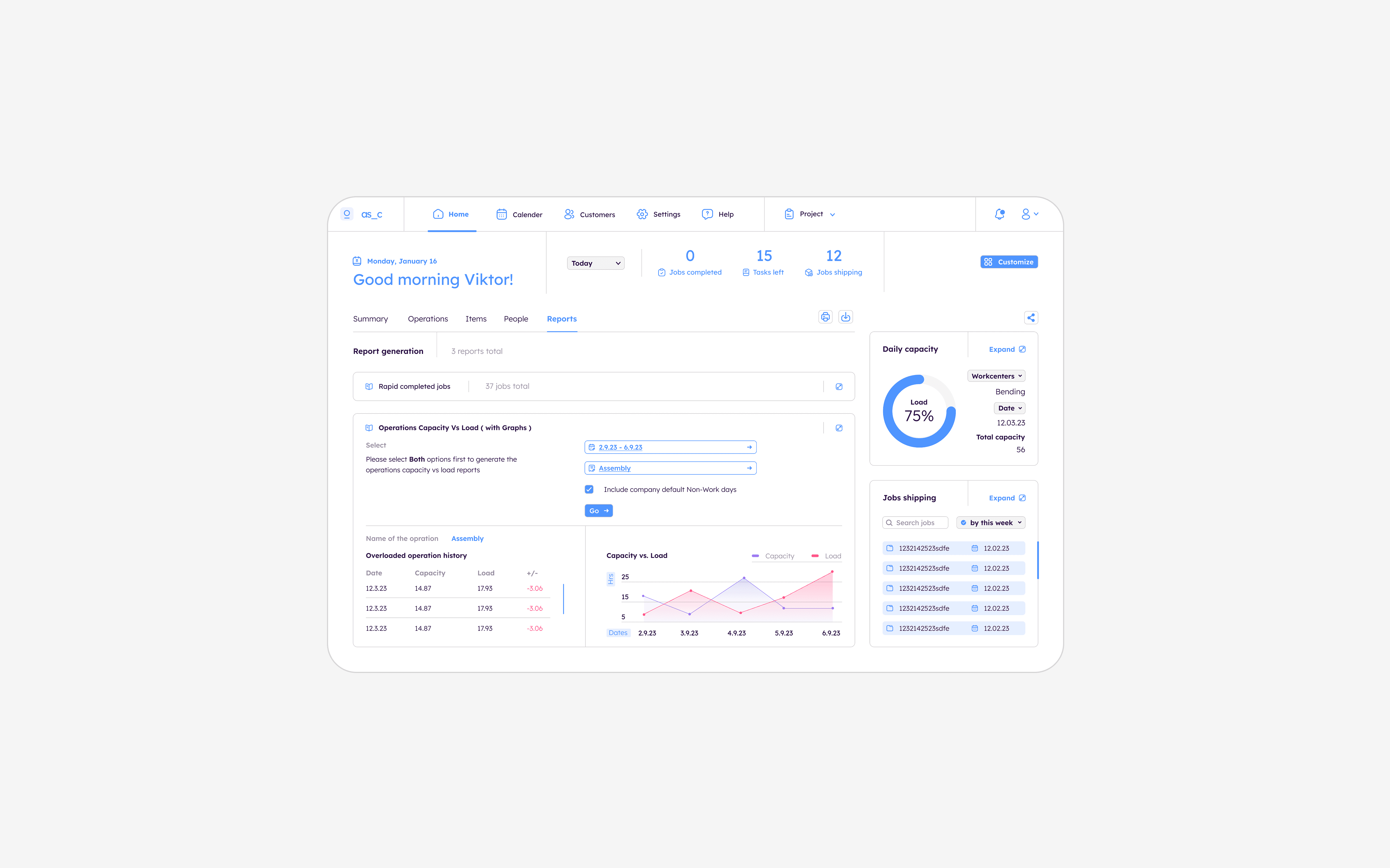
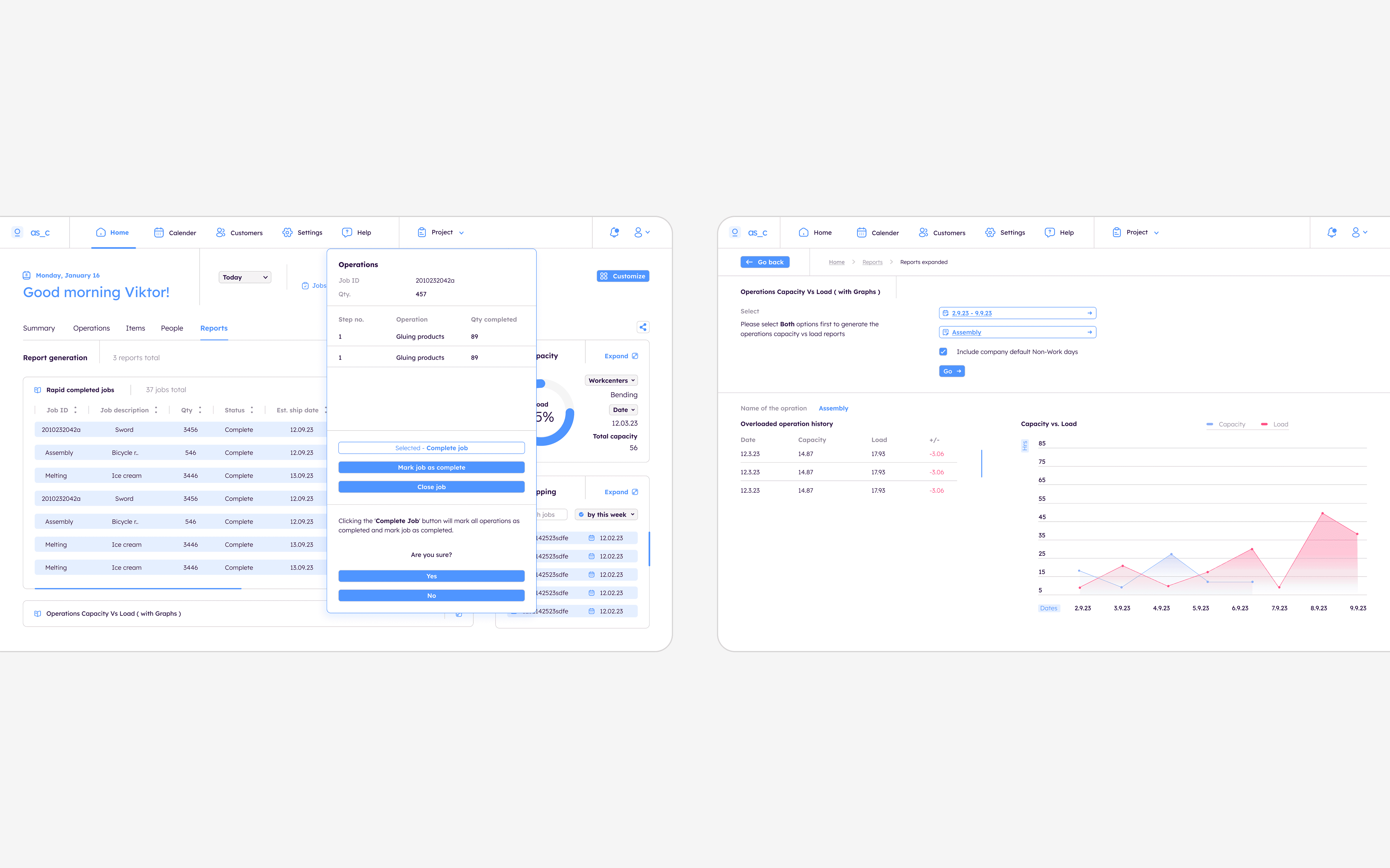
Detailed production report
Eliminates any time friction within the production.
System thinking
Whenever I design a product, my goal is always to maximize the outcome and make the designs modular as possible. The ERP was no different, it was designed as a modular operational infrastructure:
Order lifecycle framework
Production-stage logic engine
Status signalling system
Reusable table and data components
Permission-based role structure
Scalable internal design system.
The foundation supports long-term manufacturing growth without restructuring core processes.
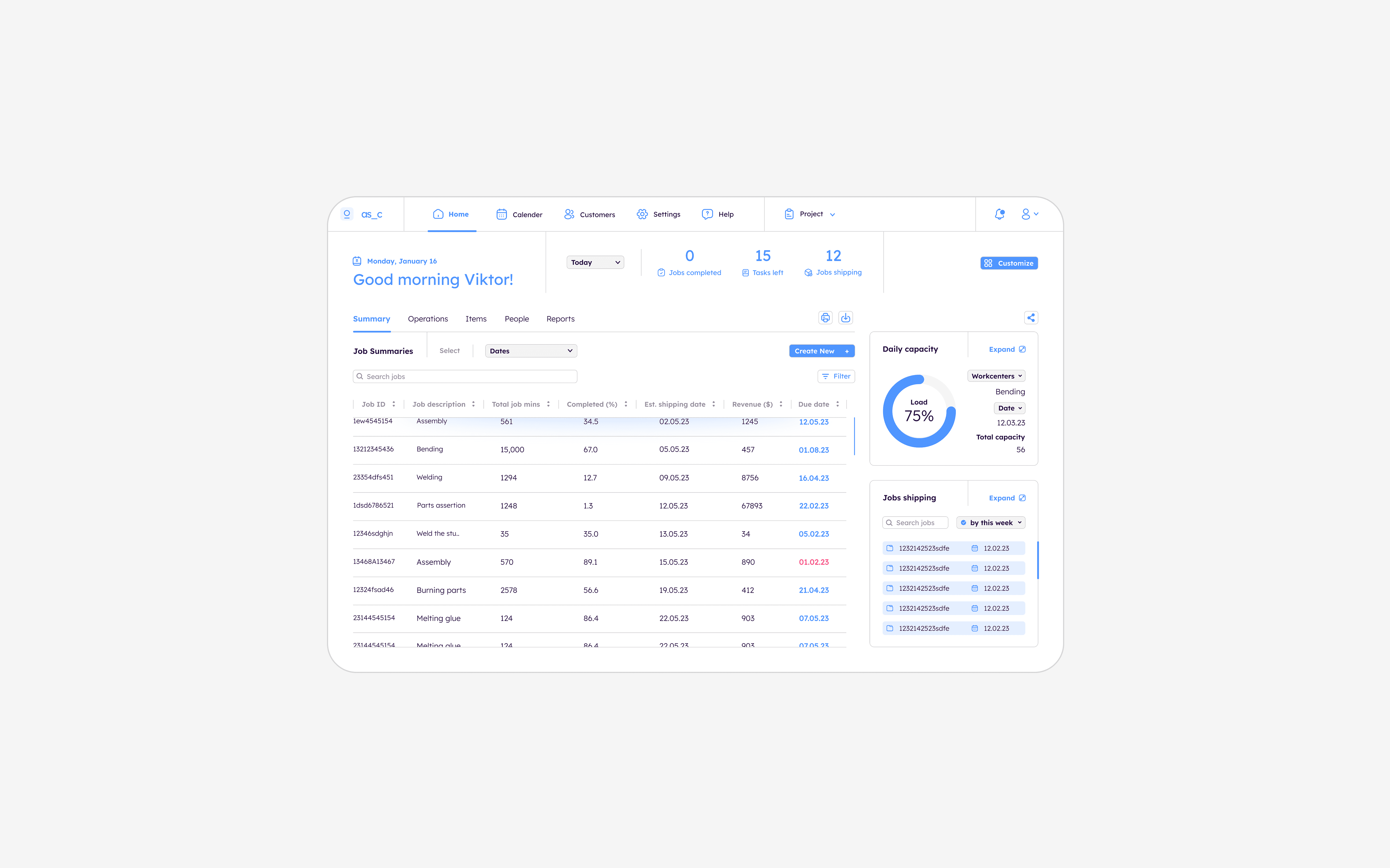
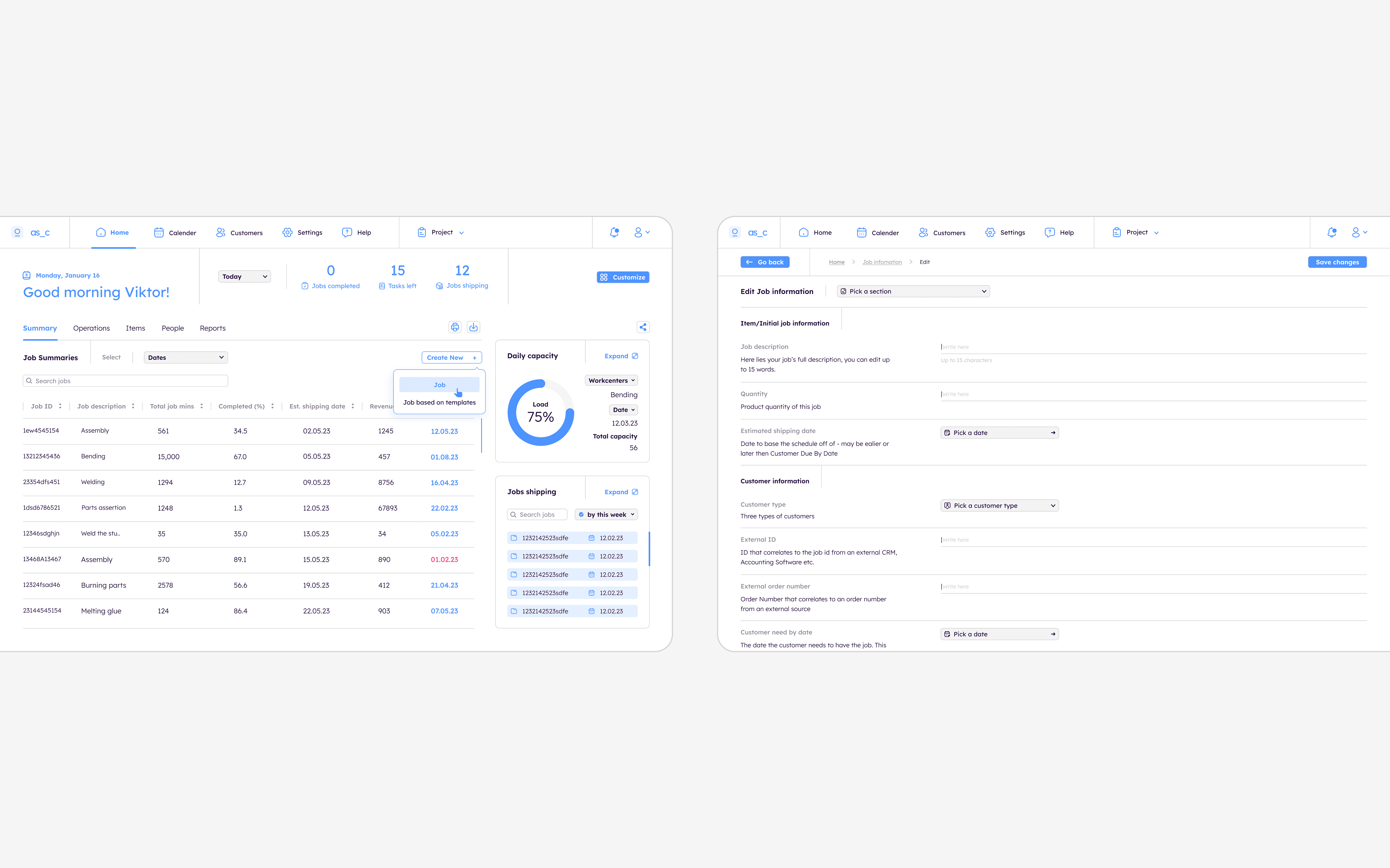
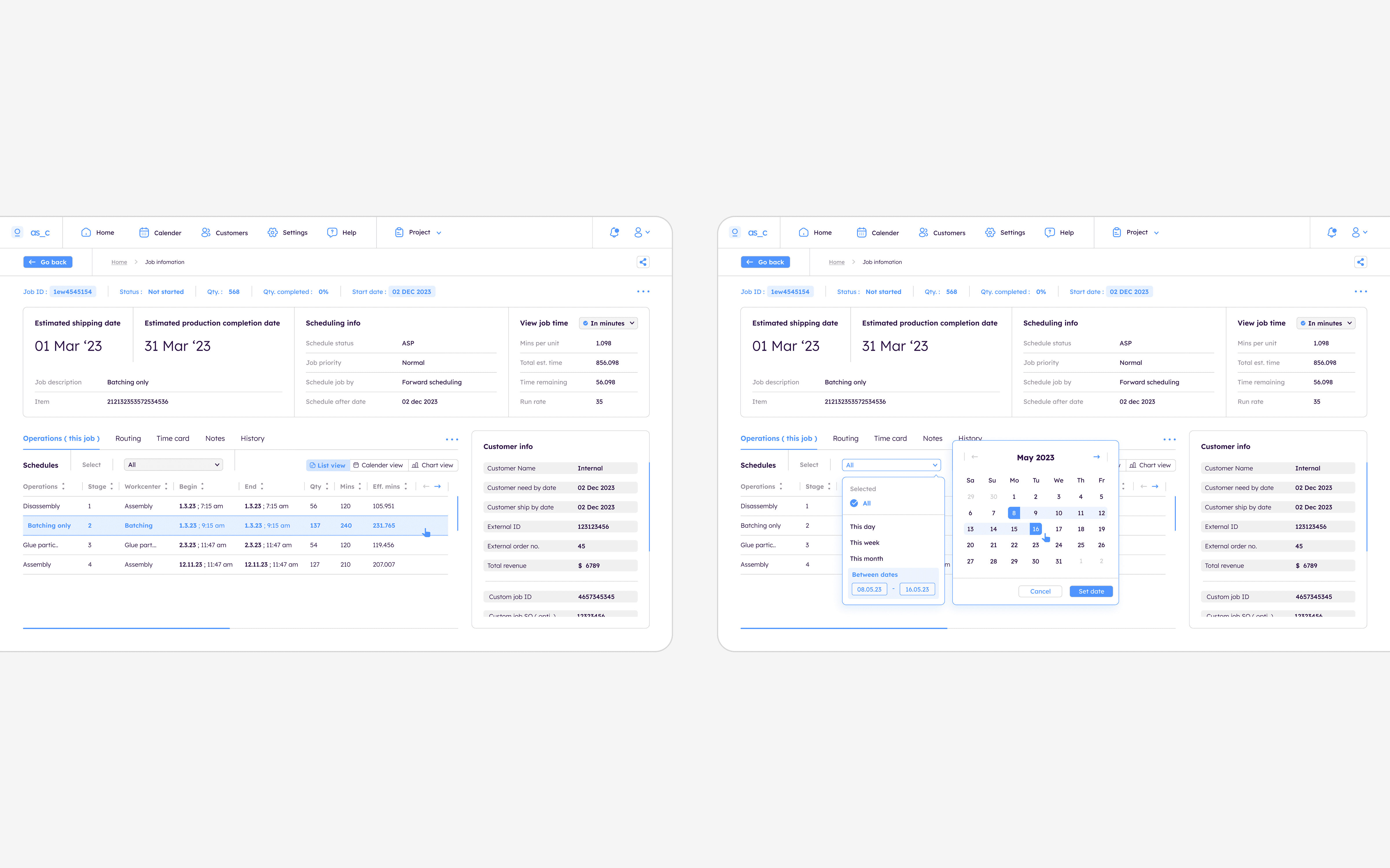
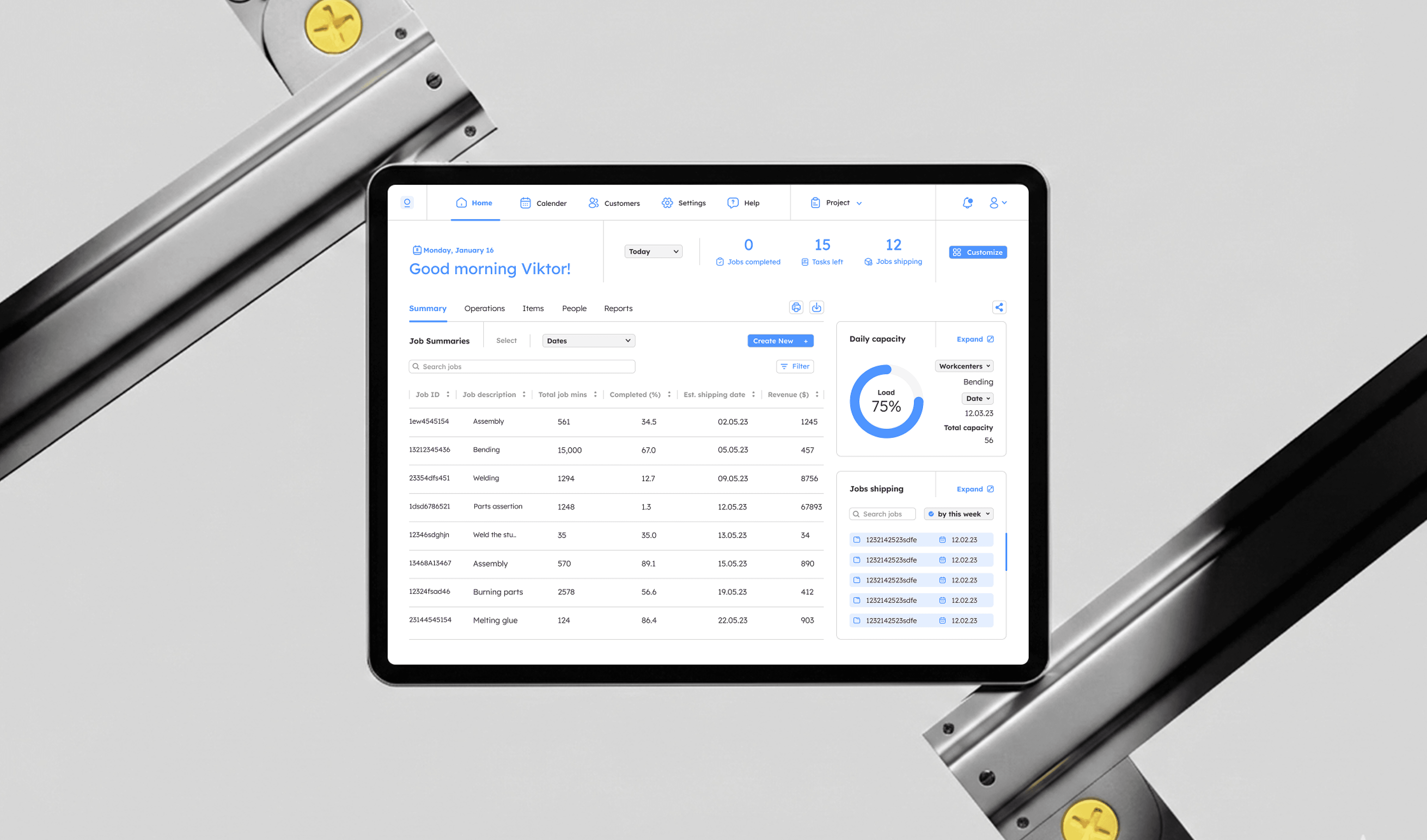
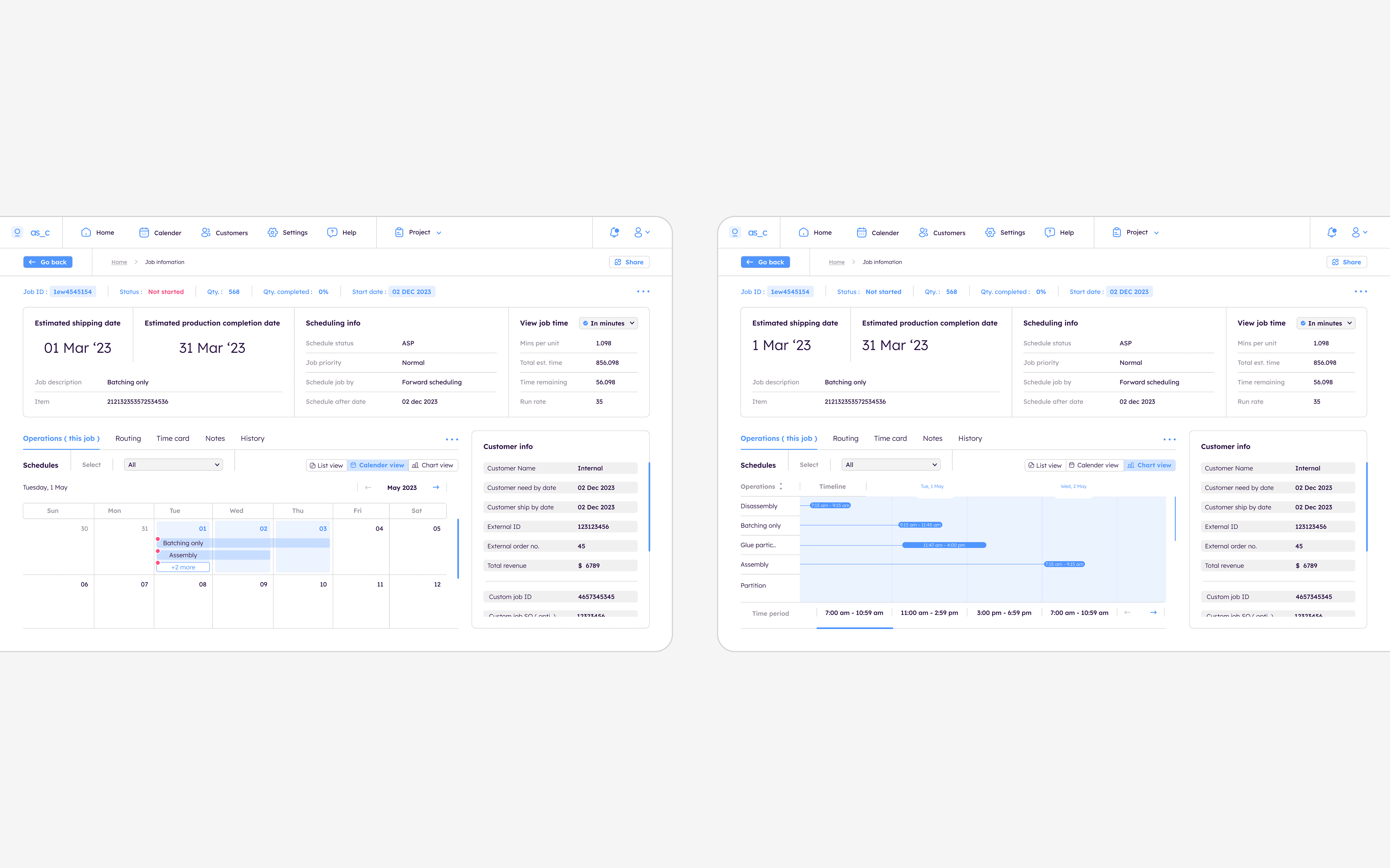
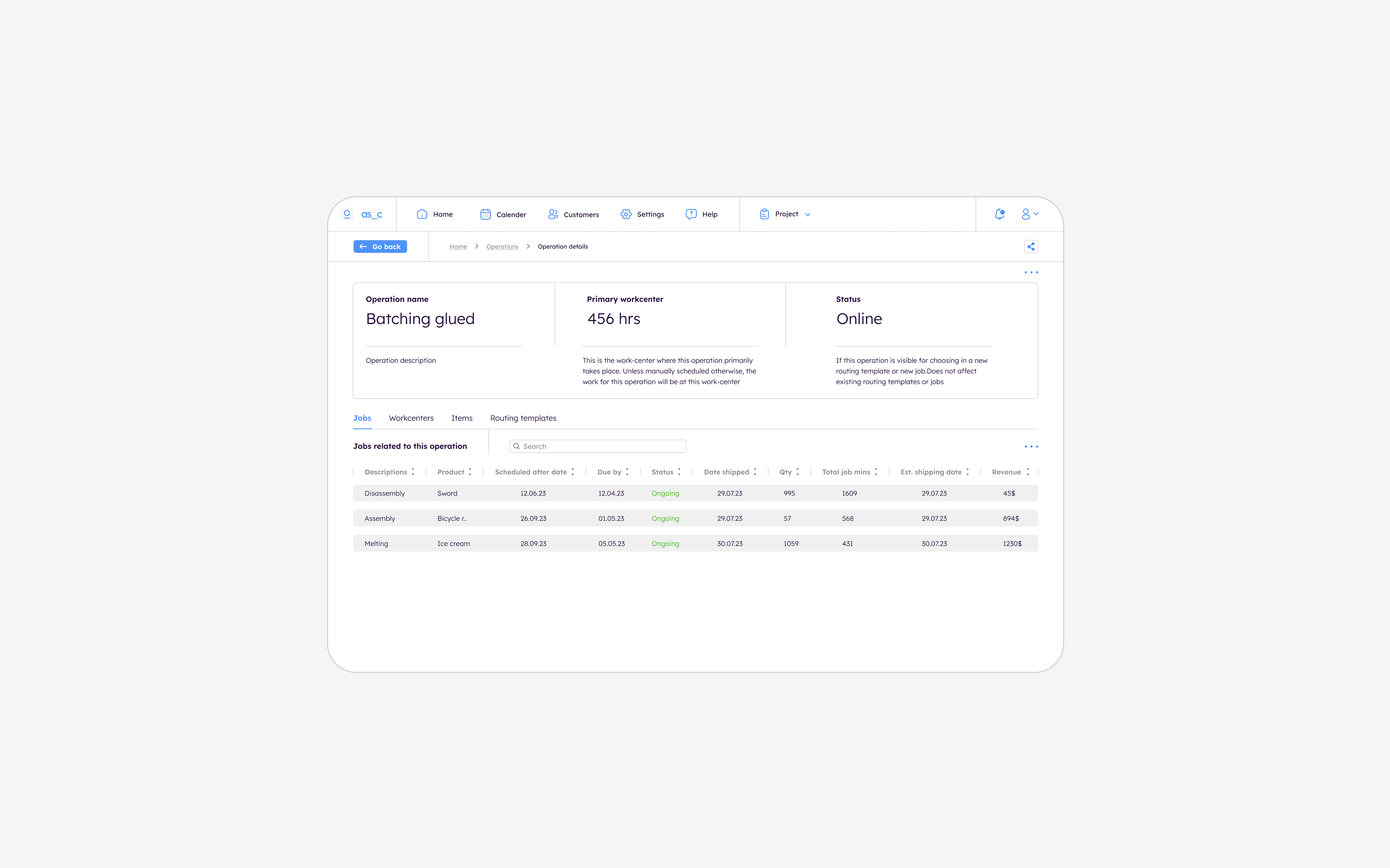
Production operations tab
Stage-based production management interface tracking each job in real time.
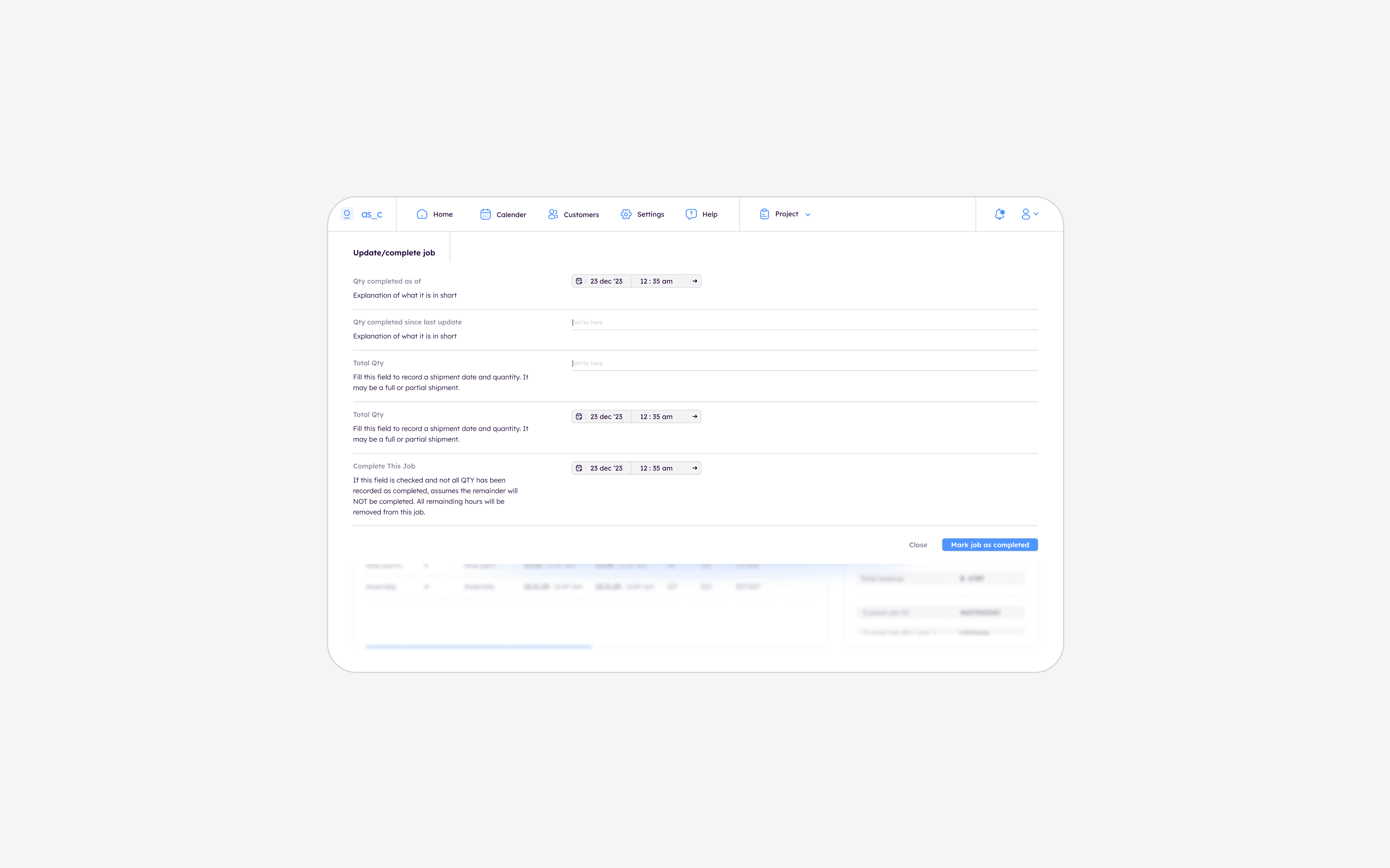
Clean dropdown style in updating jobs
User-friendly design to update job status at one go.
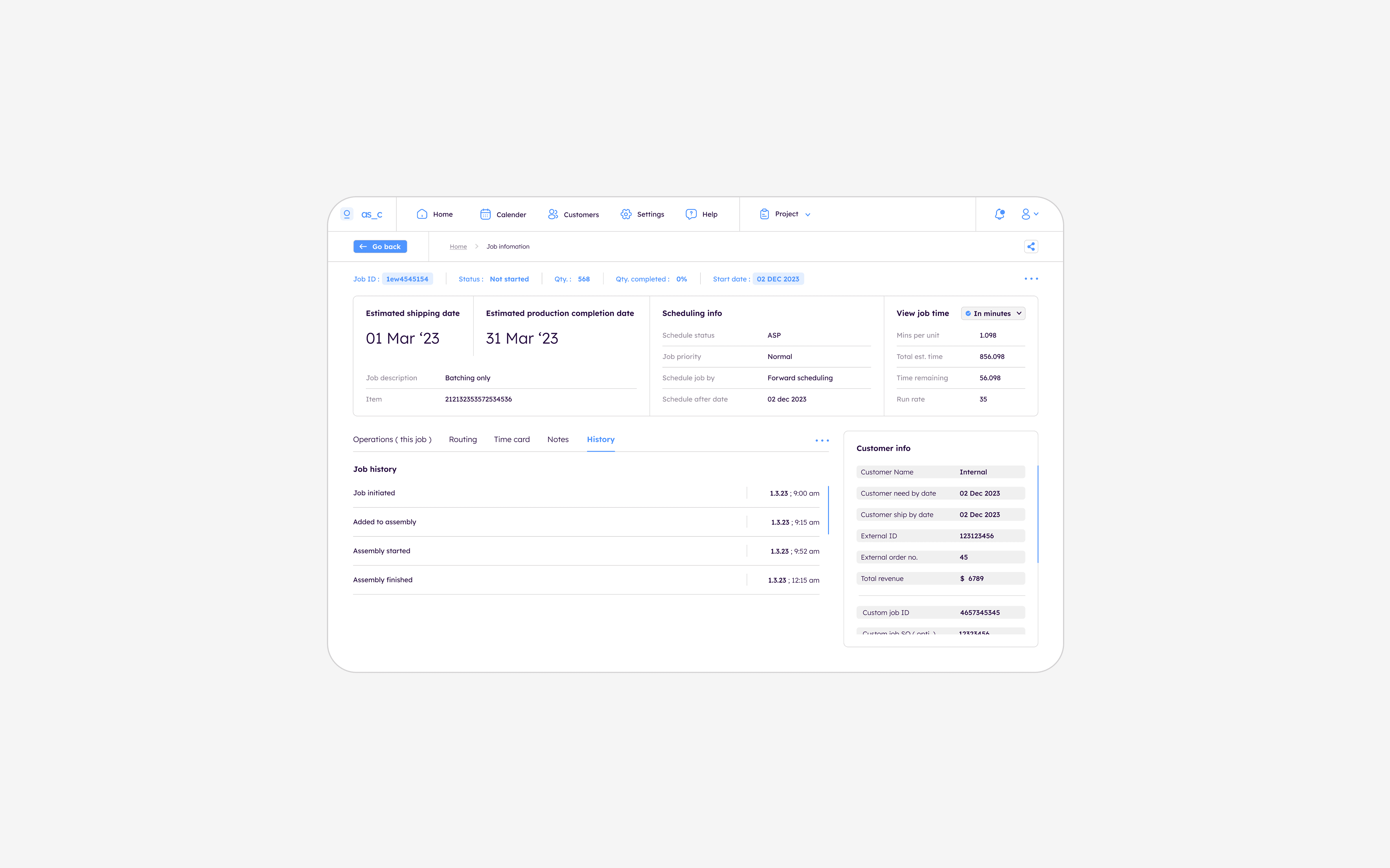
Production timeline record
History of the every stage is recorded and presented providing transparancy.
Outcomes
The ERP replaced the almost broken legacy tools and manual tracking methods. My observed impact included:
Reduction in lost or misaligned orders.
Improved cross-team production visibility.
More structured factory coordination.
Faster onboarding for new administrative staff.
By centralizing operational workflows, the system established a stable production backbone supporting continued manufacturing scale.
Thanks to Mahamud's detailed vision, we now have top-notch production software! We can't recommend him enough!

John Nadler
Chief executive officer of Tech
Walmart group, American Security Cabinets
My learnings
What I learned:
Operational tools require workflow depth before visual exploration.
High-density interfaces demand disciplined hierarchy, not minimalism.
Visibility is more valuable than simplification in industrial systems.
Process consolidation often delivers greater impact than UI refreshes.
Enterprise systems succeed when they mirror real operational behavior.